WATCH! FIRST REVIEW: 2027 Cadillac Escalade. A Few Changes But The Most Important Problem STILL Remains
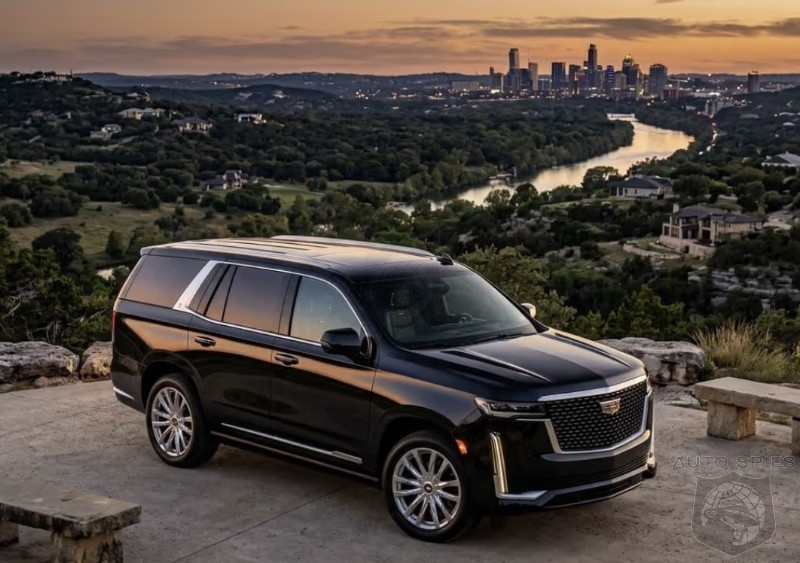
The 2027 Cadillac Escalade arrives as a refined carryover rather than a true refresh, and the updates are mostly cosmetic and administrative. Cadillac has dropped the entry-level base trim, pushing the starting price firmly into six figures, while rear-wheel-drive versions of the Platinum Luxury and Platinum Sport are gone—leaving four-wheel drive standard on the higher trims. A new Sandstone exterior color joins the palette (with a couple of previous shades retired), Digital Key support is promised via a later over-the-air update, the Onyx appearance packages have been reconfigured and repriced by trim, and trailer tire-pressure monitoring is now available.
Torque badges have disappeared, and a few accessory packages have been pruned. Under the hood, nothing meaningful has changed: the standard 6.2-liter V8 still delivers 420 horsepower and 460 lb-ft, while the Escalade-V retains its supercharged 6.2-liter V8 making 682 horsepower. The 55-inch Horizon display, Super Cruise, Magnetic Ride Control, and overall palatial cabin carry over intact. It’s still the same imposing, luxurious full-size SUV that has defined the segment for years.
Yet the most important problem remains completely unaddressed. In city driving, the 2027 Escalade with four-wheel drive is still rated at just 14 mpg with its 24-gallon tank, delivering a miserable roughly 335-mile range between fill-ups. Even the more efficient rear-drive versions manage only about 360 miles in the city. Highway numbers improve modestly to 18 mpg (or 19 for RWD), but real-world mixed driving keeps owners visiting the pump far more often than they should in a vehicle that can easily exceed $150,000 fully optioned. For comparison, my 2025 Ford F-150 King Ranch PowerBoost hybrid routinely approaches 700 miles on its roughly 30-gallon tank. The PowerBoost pairs a twin-turbo 3.5-liter V6 with an electric motor for 430 horsepower and strong low-end torque, while returning EPA figures in the low-to-mid 20s mpg—especially effective in the city where the hybrid system shines. That range difference is not subtle; it’s the difference between planning your day around fuel stops and simply driving.
How can GM be so far behind in the hybrid game? Ford has offered a compelling full-hybrid powertrain in the F-150 for years that delivers both capability and usable efficiency. Cadillac continues to rely on a thirsty naturally aspirated V8 (or a supercharged version that is even thirstier) with no hybrid option in the gas Escalade lineup, even as the separate Escalade IQ electric model exists. Dynamic Fuel Management cylinder deactivation helps on paper, but it does not solve the fundamental range problem. For a flagship luxury SUV positioned as the ultimate family hauler, the lack of a modern hybrid powertrain in 2027 feels like an unnecessary concession—one that leaves owners with shorter range, higher fuel costs, and a clear gap versus competitors who have already solved this. A few paint and packaging tweaks do not fix the issue that still matters most at the pump.
Copyright 2026 AutoSpies.com, LLC