House Should Shun Senate CAFE Standards
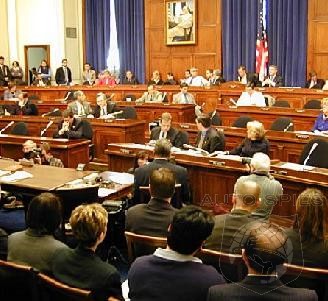
The House of Representatives should ignore the Senate's recent call to dramatically raise Corporate Average Fuel Economy (CAFE) standards, according to an expert with the National Center for Policy Analysis (NCPA). Raising CAFE standards will only serve to take away consumer's choice and put drivers at greater risk for injury or death in the event of an accident, according to Sterling Burnett, senior fellow with the NCPA.
"There are plenty of fuel efficient cars on the market today," said Burnett. "The truth is people don't buy cars for their fuel-efficiency alone. There are so many other factors that go into the decision, including safety. But safety considerations will have to be shunted to the side to meet stricter standards."
Burnett noted that automakers are unlikely to be able to produce cars that provide the traits consumers find important -- air conditioning, extra safety features, comfort and engine power -- and still meet the arbitrary fuel efficiency ratings the Senate would impose. Auto consumers would lose their freedom of choice, and put their lives more at risk every time they drove.
Further, conforming to stricter standards would do very little to accomplish the Senate's stated goal of reducing the U.S. dependence on foreign oil. Cars with higher miles-per-gallon are cheaper to drive, so people drive them more, thereby using more gasoline. For example, since the 1970s, cars and trucks have gotten more fuel efficient, but gasoline consumption has more than doubled.
"Not one Senator has ever designed a car or sold it for profit in a competitive marketplace," said Burnett. "They seem to believe they can impose any standard they want and everything will be peachy. The reality is, not only are the 'improvements' pie-the-sky ideals, but higher CAFE standards will result in people's deaths."
The NCPA is an internationally known nonprofit, nonpartisan research institute with offices in Dallas and Washington, D.C. that advocates private solutions to public policy problems. We depend on the contributions of individuals, corporations and foundations that share our mission. The NCPA accepts no government grants.
Source: National Center for Policy Analysis
Copyright 2026 AutoSpies.com, LLC