GM: Half of U.S. vehicles will run on ethanol by 2012
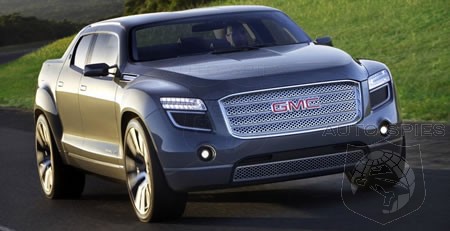
GM: Half of U.S. vehicles will run on ethanol by 2012
With the help of its new partner Coskata Inc., GM said that half its U.S. vehicles will run on ethanol by 2012. Speaking at the 2008 Chicago Auto Show, GM’s North American President Troy Clarke said GM is planning to have 11 ethanol-capable vehicles on the market this year and 15 in 2009.

He also mentioned that GM will be producing its first four-cylinder ethanol-capable model, the FlexFuel Chevrolet HHR, in 2010.

“We don’t only want to respond to the needs of the market. We want to...
Read Article

BigShow50BigShow50 - 2/7/2008 10:05:19 AM
+3 Boost
It's great to hear all the advances GM is setting themselves to con't to be a global leader. Just make sure GM lives up to their word...as we all know they can be all talk and show...but no go.


0to600to60 - 2/7/2008 10:57:25 AM
+2 Boost
Does anyone know the difference in cost of ethanol in relation to gasoline? Just wondering becasue I dont know. Im not trying to be smart so dont deboost. Just curious.

Thanks!


ShredmoShredmo - 2/7/2008 11:28:31 AM
+1 Boost
Where I live, E85 (ethanol) is often priced somewhere around 2/3-3/4 the cost of a gallon of regular gasoline.


SpectatorSpectator - 2/7/2008 12:47:02 PM
+1 Boost
0to60...there are two different prices for E85. There is the price you see at the pump, which is usually 20 cents ceaper than regular...

Then there is the real price. Which I can't find a good number for to tell you the truth. The real price is the UNSUBSUDIZED price.

You see in the grand scheme of things E85 is not cheaper than gas. It is subsidized to appear that way. So when John Q Public goes to his local gas station he thins..."Hey E85 is cheaper than gas...I should buy an E85 vehicle so I don't spend as much at the pump."

John Q Public would be correct. He wouldn't pay as much at the pump (leaveing out the argument that E85 is 15-30% less efficient than fuel). The problem is as E85 becomes more prevelant, 'who is paying for the subsidization'? answer...John Q Public.

So whereas he wont be spending as much at the pump...he will be spending it when tax time rolls around.


ShredmoShredmo - 2/7/2008 4:45:22 PM
+2 Boost
Only $.20 difference?
Wow, the midwest must subsidize this stuff even more than your location. It is $.65 per gallon cheaper than regular. We also have E10 that is $.05 cheaper per gallon on average than regular (no ethanol).


KillBotKillBot - 2/7/2008 5:26:44 PM
+1 Boost
Shredmo, where do you live? Just curios to see how fast/slow the E85 migration is going.


ShredmoShredmo - 2/8/2008 9:04:19 AM
+1 Boost
I live in northeast Iowa. As far as I can tell, a few stations began carrying e85 couple years ago and that was the end of the growth. I don't know anyone who actually uses it.


1970toyotamarc1970toyotamarc - 2/7/2008 11:19:03 AM
+1 Boost
F/U news story in 2012. Half the world's people suffer from starvation.


Threepoint1415926Threepoint1415926 - 2/7/2008 11:42:47 AM
-2 Boost
The only benefit to flexi-fuel vehicles in my opinion is the bigger fuel pump. Gives you the option of adding an after market supercharger without modifying the fuel pump.


PorschinatorPorschinator - 2/7/2008 3:37:26 PM
0 Boost
I know currently GM is working with various ethanol facilities to help make ethanol more efficient and produce more ethanol using less energy. I did not believe in ethanol initially but if they can make it much more efficient then I will be sold. Also using various source for ethanol will come to play as well.


KillBotKillBot - 2/7/2008 5:24:27 PM
0 Boost
That's great, really it is. As long as you live in the Mid-West. Seeing as how that's the only place where you can get E85.


0to600to60 - 2/7/2008 6:09:07 PM
+1 Boost
Well I think there still has to be a cheaper alternative.


motomoto - 2/7/2008 6:41:22 PM
+1 Boost
CORRECTION: Half of GM's vehicles will accept E85 fuel by 2012.

There's a big difference between the truth and the title of this article. Doesn't anyone do fact checking on this site?????

Doesn't really matter, anyway. the USA corporate farms rely on diesel to grow their ethanol feedstocks -- in vehicles that are exempt from emissions standards. Thus, the ethanol fuel from the USA will actually be a net negative for fuel economy, emissions, and your wallet. Consumers will keep buying the dinosaur juice.


mplsmpls - 2/8/2008 8:10:52 AM
+3 Boost
Will it not take away arable land used for grain, wheat and perhaps drive up the cost of food through the food chain.. ?

Is E85 really the answer ?


motomoto - 2/8/2008 6:13:57 PM
0 Boost

Corn is overproduced in the USA thanks to a lobbyist-pushed agricultural subsidy to this product above all other plants. It is practically impossible to find a pre-prepard food in the USA without corn filler in it, or a meat that wasn't raised on corn feed. Corn syrup has replaced sugar as a sweetener in almost all products, despite its lack of flavor.

But a modest cost increase in the price of corn is the least of our worries -- we should be worrying about loss of arable land due to climate change, which is slowly now starting to hit farmers.

There are many studies that offer insights, but obviously the agricultural lobbyists from Archer Daniels Midland, Monsanto, and Cargill will tell you that everything they do will save the world, and that ethanol is the future of energy. It's just too complex to simplify, but let me try:

In countries like Brazil, ethanol can work economically. Warmer climate is better for growing, sugar cane breaks down into ethanol with less energy, and labor is cheap (less emphasis on corporate return on investment).

In Europe and the USA, none of those factors apply. Small, self-sustaining farms are dying rapidly. Moreover, the "breadbasket" of the USA has a rapidly declining water table -- one nasty side effect of global warming. Since corn feedstocks require tremendous amounts of water (corn is not native to the plains; low-water plants like wheat and grass are), many midwestern fields are reliant on irrigation. In addition to the agricultural machinery, this water pumping is becoming a significant factor in the cost of food, and it is certainly harming the long-term health of the land.

But you won't hear that in any E85 commercial advertisement.


Copyright 2026 AutoSpies.com, LLC