Disappointing Results in Test Fleet of 115 Plug-In Prius Fail to Crack 50 MPG Average
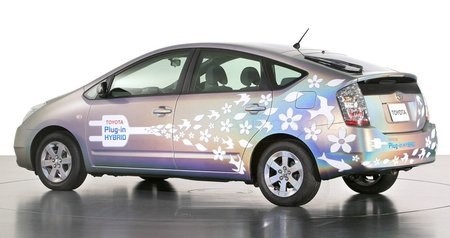
Disappointing Results in Test Fleet of 115 Plug-In  Prius Fail to Crack 50 MPG Average
When Consumer Reports tested out the Hymotion L5 plug-in Toyota Prius conversion earlier this year, they weren't overwhelmed with the results. Sure, the mileage they observed was boosted to about 67 mpg over the first 35 miles of the drive, but that didn't match the claims of 100 mpg (or more) that Hymotion and A123 Systems make about their product.

To be fair to Hymotion, their qualifies mileage talk about their plug-in Prius MPG "that can achieve up to 100 mpg for 30-40 miles" this way:
Hymotion PHEV fuel economy is based on independent testing performed at Argonne National Labs and Idaho National Labs. Actual mileage will vary based on each individual's driving style, route, traffic, climate conditions, terrain and other factors.
Read Article

Agent00RAgent00R - 6/16/2009 5:16:58 PM
+3 Boost
Not surprising.

EVs are a brilliant idea if everything you need is within 20 miles of your home.


inspirion7inspirion7 - 6/17/2009 10:22:16 AM
0 Boost
I believe most are mis-informed about EV's. Yes, to run only 20-40 on electric power is the limit, but you can go beyond that using gas if you need to.


upwardsupwards - 6/17/2009 12:10:50 AM
+2 Boost
i have seen a lot of usesd prius's on the lots as of late.


ChevyFan100ChevyFan100 - 6/17/2009 12:39:19 AM
-1 Boost
For the Volt to survive GM will have to also give it a non-plug-in hybrid engine


inspirion7inspirion7 - 6/17/2009 10:29:38 AM
+1 Boost
For longer trips, the Chevrolet Volt's on-board range-extending engine is used to drive an electric generator when the battery's energy has been depleted. The range extender, which can be powered by gas/E85 Ethanol, is able to generate additional electricity to power the car for hundreds of mile

Chevrolet Volt: Fast Facts

The 2011 Chevrolet Volt is a front-wheel-drive, four-passenger Extended-Range Electric Vehicle (E-REV) that uses electricity as its primary energy source and gasoline as its secondary energy source to propel the vehicle. Energy is stored on board in a 16-kWh, "T"-shaped lithium-ion battery pack.

The battery pack powers the electric drive unit, which is capable of meeting full vehicle speed and acceleration performance while driving the car electrically for up to 60 kilometers (based on MVEG city cycle) without a drop of gas.

For longer trips, the Volt's on-board range-extending engine is used to drive an electric generator when the battery's energy has been depleted.

The range extender, which can be powered by gas/E85 Ethanol, is able to generate additional electricity to power the car for hundreds of miles.

The Chevy Volt will use no gasoline and produce no emissions for up to 60 kilometers of daily driving, helping to save approximately 1,900 liters of gasoline a year (compared to a similar sized vehicle that averages 7.8 l/100 km).

GM estimates that drivers who travel 100 kilometers a day (more than 33,500 kilometers miles per year) could save about 2,100 liters of gasoline annually (compared to a similar size vehicle that averages 7.8 l/100 km).

The Chevrolet Volt operates differently from all other propulsion systems. An electric drive unit (electric motor) drives the wheels at all times and at all speeds. The Volt's range-extending engine serves only to create electricity to power the vehicle beyond 60 kilometers.

Depending on the drive cycle, an E-REV like the Chevrolet Volt will eliminate most initial engine starts and substantially reduce associated vehicle emissions.
Thanks to instantaneous torque, the Chevy Volt will be a fun-to-drive car with quick acceleration.

At current prices per kilowatt hour, GM estimates that an electrically driven kilometer in a Chevrolet Volt will cost about one-sixth compared to a conventional gasoline vehicle.

It is estimated that it will cost about 0.02 euro per kilometer to drive electrically vs. 0.12 euro using gasoline at current prices.
Most Chevy Volts are likely to be charged off-peak in the evening or overnight when consumption is lower, potentially further reducing the cost of recharging.

Charging the Chevrolet Volt about once daily will consume less electric energy annually than the average home's refrigerator and freezer units.

At a cost of about 1 euro a day for a full charge that will deliver up to 60 kilometers of electric driving, for most owners the Volt will be less expensive to recharge than purchasing a daily cup of your favor


Copyright 2026 AutoSpies.com, LLC