Japan Sends U.S. A Letter Stating Buy American Concerns
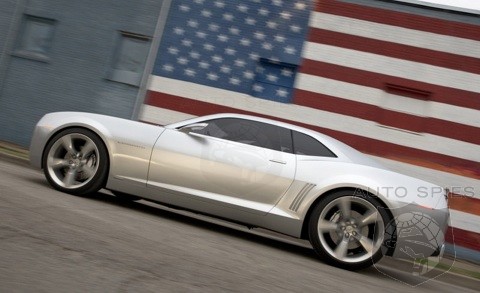
Japan Sends U.S. A Letter Stating Buy American Concerns
Japan’s ambassador to the United States, Ichiro Fujisaki, has sent a letter of concern to the United States on a bill that recently passed the U.S. House of Representatives that contains a “Buy American” provision. The letter was sent earlier this week to U.S. Trade Representative Ron Kirk.
Fujisaki expressed concern on a provision in the appropriations bill for energy and water development that said funds should not be used to buy cars other than those vehicles made by GM, Chrysler or Ford.
Read Article

fatandsassyfatandsassy - 7/24/2009 2:58:08 PM
-2 Boost
SUCK IT...JAPAN
I feel like buying an American car right now just for the hell of it


Agent009Agent009 - 7/24/2009 3:31:11 PM
+8 Boost
And you are entitled to do so. But there should never be a "Buy American" clause simply to protect companies that can compete but choose short term profits over long term investment.


camrydrivercamrydriver - 7/25/2009 11:56:23 PM
+7 Boost
I think Japan should pull out of the US market just to protest. And, maybe stomp their little feet a whole bunch, too all while saying "wha wha wha!"


_43LE_43LE - 7/24/2009 3:13:12 PM
+8 Boost
Canada voiced its concerns too about the same thing because buy American goes completely against the North American free trade agreement, which was signed in good faith on all sides.


Joe_LimonJoe_Limon - 7/24/2009 3:18:51 PM
+5 Boost
The free trade agreement was a laugh from the start. Look at the lumber restrictions the usa placed on B.C.'s lumber industry killing it for years.


upwardsupwards - 7/26/2009 7:19:25 PM
+2 Boost
Canada would gain from it, they build american cars and have no canadian cars to sell tell to the US.


_43LE_43LE - 7/26/2009 10:40:06 PM
+3 Boost
It's not as simple as you think. Many American cars that are built in Canada are made with Canadian sourced parts. In fact it is actually is a lot more complex than that. The US and Canadian economies, especially the auto industry, are interlinked which makes it even more difficult to determine a part or car's origin.


Joe_LimonJoe_Limon - 7/24/2009 3:15:47 PM
+5 Boost
When Japan opens it's borders they have a voice, until then they are spoiled whining babies.


kpaxxkpaxx - 7/24/2009 3:17:42 PM
+3 Boost
Correct! Japan total hypocrites!


inspirion7inspirion7 - 7/24/2009 3:33:17 PM
+1 Boost
America sanctions have existed in Japan for years. We as a free market continue allow others to give us the oki dok. We should have never allowed it. It's fine for others to exercise tariffs but when congressmen and senators sell their soul for the all might dollar in cover for jobs, then we will always get put out.


BigShow50BigShow50 - 7/24/2009 4:14:21 PM
+1 Boost
I guess Japan has no fear to say/express what they think when push comes to shove, especially in the U.S. Not like the big 3, Japan is just a tad more "pro-active". NO the saying "Too buy american", I find quite amusing...because that is saying in the nicest way...."It's okay to become an American failure as a person or business. So we are desperate to buy American, because us U.S. Government just bailed out/invested into the Big 2, with over $90 Billion dollars in tax payer's money and counting...so please help "Uncle Sam!"...cause we "FAILED!"...LMAO!!!


PerformanceGuyPerformanceGuy - 7/24/2009 4:41:41 PM
+7 Boost
I will stand by my opinion that people should buy whatever car they feel like, wether it be Japanese, American, German, etc. No one should tell anyone what to buy with their money that they work for.


BremboBrembo - 7/24/2009 4:45:09 PM
+3 Boost
I don't see Japanese in Japan driving a lot of American car! You gotta share!


inspirion7inspirion7 - 7/24/2009 5:45:47 PM
+4 Boost
Because protectionist mindset in Japan isn't seen like that here. Japan says we do as we say, not as we do. Our greed sometimes cause us to cut off our nose despite our face in the policies we choose.


inspirion7inspirion7 - 7/25/2009 2:39:01 PM
+4 Boost
invisible, what country doesn't practice it? The question is to what extent. We are the most open market anywhere period. That is why every possible Tom Dick and Harry is beating a path to the U.S. and feel like we have an obligation to them. We in truth only have an obligation to us. What is your point?


theman440theman440 - 7/24/2009 8:31:01 PM
+9 Boost
There is nothing wrong with being "pro-American" Every other country on this planet does the same thing, political correctness will destroy the United States of America.


tangotango - 7/24/2009 9:06:25 PM
+4 Boost
The US government instructing its agencies to only buy vehicles built by GM, Ford, and Chrysler doesn't necessarily mean these cars are American built. Cases in point: The hot-selling Camaro is built in Canada, as is the well-selling trio from Chrysler (300/Charger/Challenger), as is FoMoCo's Flex/Edge/MKX trio, amongst others. FoMoCo's Fusion/Milan/MKZ are built in Mexico, as are GM's Escalade/Avalanche/Suburban, and Chrysler's PT Cruiser and Journey. Want vehicles from further afar? FoMoCo has interest in Mazda, many of whose models are built in Japan (like the 3 and the RX-8). Let's not forget that FoMoCo still has interest in Volvo, built in Sweden and Belgium. GM still owns SAAB, built in Sweden, Austria, and (embarassingly for some) right on US soil in Ohio. So you see, colleagues, it's not as buy American as one might think.


tangotango - 7/24/2009 9:17:12 PM
0 Boost
@huu76: The only thing that comes from an asshole like you is shit. "Korean Chevys" as you put it, are built by a Korean-registered company. Most notably Daewoo. Daewoo is jointly owned by GM, Shanghai Automotive of China, and Suzuki of Japan. Your white owner is looking a little bit Asian right now. And your idea of protecting America from China just blew up in your dog face, you moron. Because about 10% of the money your white American ass just spent on that Chevrolet Aveo is going to the Chinese.


EL34EL34 - 7/24/2009 10:18:04 PM
-8 Boost
I will never buy another car built by the UAW.

I will never buy another Japanese car.


_43LE_43LE - 7/25/2009 1:23:14 AM
+4 Boost
You will never stop hating either.


EL34EL34 - 7/25/2009 8:30:57 PM
-2 Boost
I don't care if my next car id built by a German Union.

I simply despise nasty Liberal Unions in America and I can't wait until they are gone!


_43LE_43LE - 7/25/2009 11:57:12 PM
+4 Boost
I guess that you're really just a very unhappy person. Someone who hates that much can't be living a good life.


mocashflo924mocashflo924 - 7/25/2009 4:29:39 AM
+1 Boost
LOL, The Japs get it, they only buy cars that support their country, WTF dont we get it? We buys theres Jap cars and trucks an those AMERICAN dollars go over seas, even if they are built in America.

Funny they understand it an we dont.


XYZZXYZZ - 7/25/2009 7:35:40 AM
+3 Boost
only a FRACTION goes overseas.

the biggest chunk of the selling prices go to suppliers (largely american), american workers, american distributors and dealers, salesmen, lot boys, local and national advertising, etc. etc. you need to learn the difference between revenue and profits.

and even from the profits, a lot gets reinvested in new and better products, rather than fatten the bank accounts of WAY overpaid execs. (which is why the japs DO make better cars than detroit.)


toolatetoracetoolatetorace - 7/25/2009 5:33:58 PM
+2 Boost
A fraction, Hah! Do you think the Japanese are doing for their health ? . Back when the stock market was doing good, companys were making 20 cents on the dollar i,e; a 20 percent profit for their efforts. Building plants in the right to work states and using as many temp workers as they can find , you can bet they are getting a great return on the dollar


topneurotopneuro - 7/25/2009 12:19:01 PM
-2 Boost
American cars have (L) steering wheel.
Japan roads require (R) steering wheel.
And you still wonder why Japan does not buy more US cars?


inspirion7inspirion7 - 7/25/2009 2:34:52 PM
+5 Boost
So logics be damn! Why do we shift steering for cars going to England? What a brilliant lack of observation topneuro.


topneurotopneuro - 7/25/2009 11:55:11 PM
+1 Boost
Japan "borders" for foreign cars have been open for a long time (1995).
Japanese love foreign cars and motorcycles, refer to BMW and Harley Davidson. American cars still have difficulty battling an image of them as poorly made gasoline guzzlers. Both Ford Motor Co. and General Motors Corp. penetrate the Japanese market, not with cars made in America, but with Mondeos and Opels supplied by their German subsidiaries.

http://www.nytimes.com/1995/02/20/news/20iht-autocon.html


inspirion7inspirion7 - 7/26/2009 6:10:54 AM
+3 Boost
U.S. Trade Relations with Japan
Jin Wang, Ph.D.

Associate Professor of Economics
Division of Business and Economics

However, many observers point to Japan's nontariff barriers to trade as being key to the situation. For example, officials of the Ministry of International Trade and Industry (MITI) claim that the Japanese market for autos and auto parts has been fully opened because there are no tariffs. However, American automakers argue that the keiretsu system of interlocking ties between manufacturers and their suppliers and distributor makes it all but impossible for independent dealers to gain a foothold in Japan's market. Even Japanese automaker executives in the U.S. recently admitted that they would buy many more American parts, given their improved quality and low cost, but the company has to be concerned with maintaining employment at its suppliers' factories in Japan (Blustein, 1995b). Japanese auto makers also price cars more expensively at home to subsidize cheap sales abroad.


This is reflected by the fact that U.S. sticker prices of Japanese cars remain stable as the yen appreciated against the dollar in 1994 and 1995. All though Japan imposes no tariffs on imported automobiles and auto parts, this market is one of the most difficult to penetrate. The ratio of imported cars to domestically produced cars in 1993 was 2.4 percent for Japan, compared to Germany's 43 percent. The U.S. auto market has been wide open and Japan alone captured 27 percent of the U.S. market in 1993. When 1 toured a university campus in Japan, I failed to find any U.S. made cars. However, it is not impossible to increase auto sales in Japan. In 1992, Germany captured 58 percent of Japan's passenger car imports (104,680 units), the U.S. 20 percent (37,085 units), including cars of the Japanese companies made in the United States. It appears that the U.S. has to compete with both Germany and Japan to sell more cars and auto parts in the Japanese market.


The U.S. government has negotiated with the Japanese government for many years to open the Japanese market. The U.S. proposed policies to reverse its deteriorating trade position to include reciprocity, industrial policy, results-oriented trade talks, and reinvigorated American industrial competitiveness. There is no doubt that these negotiations have helped U.S. exports and made the Japanese market today more open than it has ever been. But, a trade deficit continues to loom.


ruetirueti - 7/25/2009 8:48:29 PM
+4 Boost
I don't see anything wrong with US government deciding how they want to use their money.

On why American cars don't sell well in Japan, having grown up in Japan I can say that American cars are simply not popular. They don't sell not because of government, but just that they are not attractive. They tend to be too big for streets in Japan, and since they are imported they are more expensive.

Basically, there is no effort to create a car targeting Japanese market. While Japanese car companies make cars that are attractive in each markets, especially in the US. No American company even produce their cars in Japan, while Japanese have many factories in the US for US market. For example, Ford Focus is doing well here in Europe, because it's done by Ford Europe for European market. Other than that American cars are nonexistent in Europe either, once again because they don't fit here, not attractive enough among other good 'local' choices available. To me it's simple, to be successful, you've got to put some effort into it...


I95SPEEDINGTICKETSI95SPEEDINGTICKETS - 7/26/2009 10:03:26 PM
+2 Boost
Some people are just too stupid to reason.
American cars will not sell well in Japan because they are too Large, too Fuel Inefficient, and have terrible Build Quality. You can talk all you want about Tariffs but it is just Hogwash and the smart ones know it.

Japan Has small roads like the UK and Some of Europe and Most Mini and Micro vehicle designs originated from Japan, so how the hell will the Denali and Escalade and Town Cars sell there in large enough quantities ?

Hell GM had to use a completely different Company and design team for Europe, Opel & Vauxhall in order to make any headway in Europe { Just look at laugh inducing sales figures of Cadillac in Europe}.

So for all you Pathologically flawed individuals who like to manufacture excuses for the dismal attempts your manufacturers have made in breaking into new markets; Just know that the rest of us are too smart to fall for your B*** S***.

Rant Over.


inspirion7inspirion7 - 7/27/2009 4:49:36 AM
+2 Boost
Japan Has small roads like the UK and Some of Europe and Most Mini and Micro vehicle designs originated from Japan, so how the hell will the Denali and Escalade and Town Cars sell there in large enough quantities ?


I95SPEEDINGTICKETS

So that is why Lexus sells the LS and the Camry and almost every car and SUV sold here, but the roads are too small. Stupid is what stupid does. Try again. Domestics didn't try to sell Denalis or Town Cars there.


inspirion7inspirion7 - 7/27/2009 2:41:19 PM
0 Boost
Japan doesn't control the companies and they aren't stupid. If a profit is to be made, then who will stand in the way. Anything that goes to the States stands a chance in profiting. Your statement is worded as such that Japan won't allow a company to sell a controlling interest. It's not the Union that makes the charge. The U.S. Government, Senators, Business interest and academia all have something to say about Japan and its protectionist practices they hide in plan sight. Damn, what redeemable interest do you guys have in constantly defending such sucks? You guys are like the raped having compassion for the rapist.


inspirion7inspirion7 - 7/28/2009 9:52:59 AM
+1 Boost
Let's focus on one arena, the auto market please, I thought that is were we were going. I gave some examples above from the professor that reference the U.S. / Japanese trade history. Sorry I couldn't have made that up nor anyone if they wanted to, that is historic and factual you can't change that. So, please if you must go there, let's walk through this "propaganda" step by step shall we.

Historically, as stated before in other examples, examples exist, but I will give others. "U.S.-Japan Auto Trade Agreement Not Meeting Objectives, U.S. Says.

"http://www.allbusiness.com/transportation/motor-vehicle-parts-manufacturing/320671-1.html


The United States government said Japan is moving too slowly to open its market to U.S.-made autos and auto parts, as stipulated in the U.S.-Japan Automotive Agreement. While sales of parts and vehicles increased in the years immediately following the signing of the Agreement, sales have slumped.

Information from the CATO Institute

http://www.cato.org/pubs/pas/pa-252.html


Executive Summary

For decades the U.S. government has singled out Japan as a country guilty of particularly grievous protectionist policies and has forced on it special trade arrangements. But trade disputes are often simply the result of American firms' enlisting government help to make up for their earlier neglect of Japan's market. They seek managed trade, not free trade. Three cases are examined:

U.S. claims that the Japanese government unfairly limits American auto and auto parts imports are based on phony statistics that purport to define America's "correct" share of Japan's market. But U.S. automakers offer only four right-hand steering wheel models in Japan, compared to more than 100 from European manufacturers who have managed to crack that supposedly closed market.
With the 1986 semiconductor agreement, up for renewal this summer, U.S. officials tried to guarantee a share of Japan's market for American manufacturers and to restrict exports of Japanese-made chips to the United States and third markets. But Japan's "closed" market was an illusion created by America's selective use of trade and production numbers. With 1995 global sales of some $150 billion, American produc- ers hardly need protection.
Kodak's current complaint that Fuji Photo Film unfair- ly blocks its access to Japanese retail outlets is particu- larly ironic since Kodak repeatedly ignored advise to estab- lish major offices in Japan, which it finally did only in the mid-1980s.

Recently as of 2 years ago


The Japan Currency Manipulation Act directs the Department of Treasury, in consultation with the Council of Economic Advisors, to work with the government of Japan to come up with a plan to draw down Japan's excessive levels of currency reserves, which will facilitate the proper realignment of the yen to the dollar. The legislation also directs the Treasury Department to work with our European trade partners, as well as the Interna


inspirion7inspirion7 - 7/28/2009 9:58:44 AM
+1 Boost

http://opencrs.com/document/RL33178


RL33178
Japan's Currency Intervention: Policy Issues
March 25, 2008

The rapid depreciation of the value of the dollar on foreign exchange markets is mirrored by an equally rapid appreciation of currencies, such as the yen (and Euro). This has raised concerns that Japan may intervene in currency markets for the first time since March 2004 to shore up the value of the dollar and slow the appreciation of the yen. Japan has conducted such intervention in the past by purchasing dollars and selling yen on foreign exchange markets. This intervention has raised concerns in the United States and brought charges that Tokyo is manipulating its exchange rate in order to gain unfair advantage in world trade. This coincides with similar charges being made with respect to the currencies of the People's Republic of China and South Korea. In the 110th Congress, H.R. 2886 (Knollenberg)/S. 1021(Stabenow) (Japan Currency Manipulation Act), H.R. 782 (Tim Ryan)/S. 796 (Bunning) (Fair Currency Act of 2007), S. 1677 (Dodd) (Currency Reform and Financial Markets Access Act of 2007), and S. 1607 (Baucus) (Currency Exchange Rate Oversight Reform Act of 2007) address currency misalignment in general or by Japan in particular. In the past, Japan has intervened (bought dollars and sold yen) extensively to counter the yen's appreciation, but since 2004, the Japanese government has not intervened significantly, although some claim that Tokyo continues to "talk down the value of the yen." This heavy buying of dollars resulted in an accumulation of official foreign exchange reserves that exceeded a record $979 billion (February 2008) by Japan.

I'm done.


Copyright 2026 AutoSpies.com, LLC