Suspension Part 1
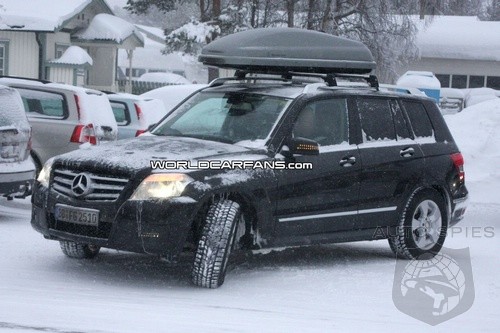
As promised, an intro to suspension.
In this article I will be discussing camber, camber gain, camber thrust, caster, toe, and bump steer.
Camber is a measure of how angled your wheels are. This angle is measured where every degree that the top of the tire points inwards is a degree of negative camber.
When a vehicle enters a corner, the moment we discussed last time forces the car to roll a bit. This rolling causes the outside of the tires to be loaded more then the inside (outside/inside relative to the corner). This unequal distribution of load across the tire manifests itself as a loss in traction. By adding camber to the vehicle you sort of preload the tires so when the car is in the corner its outside wheels are as close to flat as possible.
Camber gain is the awesome advantage that modern suspension systems have over the "barbaric" suspension systems of old. A description of the types will be in yet another article. What is important though is that on most modern cars as the wheel moves up relative to the car it will see a mild to moderate gain in its camber angle. This is a big thing considering that as your vehicle rolls in a corner the outside wheels do get loaded more and move up relative to the vehicle. Thus you can have relatively flat tires on the straight sections and when you hit the corner camber gain will try to keep your wheel upright.
Camber thrust is the side force created when you roll a wheel at an angle. The easiest way to visualize it is to imagine a point on the outside of the tire. As the wheel spins this point will eventually come in contact with the ground. When it hits the ground it sticks to the ground deviating from it's original curved path. This deflection causes the tire to add a side force to the vehicle pointing towards to the center of the vehicle if you have negative camber and away from the vehicle if you have positive camber. In a corner the increased loading of the outside tires will cause the camber thrust effect to be greater then the inside wheels, thus it will help force your car around the corner.
Caster is an important angle that your upright makes (upright is the term used for the structure that holds the wheel and brakes). It is usually angled with the top farther back then the bottom.
Caster has 2 main effects. The first being that as the front wheels pivot, it will cause the wheels to gain in camber (see picture below of the benz with way to much caster). The second effect is something called mechanical trail. This is a mechanically induced self righting mechanism... basically when you drive forward, the tires contact patch is behind the upright's pivoting axis, when you drive forwards any deviation (i.e. when you turn the wheel) will be countered by the tire. This countering can be felt, and is half of the reason why your steering wheel tends to pull itself straight. The other half is pneumatic trail, which I will cover in yet another tyres/tires article.
Toe is how in or out a wheel is pointing relative to the other wheel. The easiest way to visualize this is to stand up look down at your feet, if you point your toes together, then that is known as toe in...
What toe does is determines the amount of turn in response a vehicle has. Toe in will decrease the turn in response but make the vehicle very stable to drive at high speeds. Toe out will increase the turn in response and make the vehicle highly unstable at high speeds. Excessive toe will cause excessive tire wear, so if you really do need lots of it, then there is probably something else wrong with the vehicles setup.
Toe works on the idea that the outside tires of a vehicle will always travel around a larger circle then the inside tires. If you point the inside tire in more then the outside one in a tire it will more easily follow the tighter circumference. Thus making it easier for the vehicle to turn into the corner.
Finally, bump steer... bump steer is the phenomenon of a poorly designed steering system (If you want to know in detail how to design a steering system to avoid bump steer, let me know...). What bump steer does is every time a vehicle hits a bump, it will change the amount of toe that vehicle has. The last thing you want in a corner is to have your wheels changing directions because you hit a bump.
Tomorrow will be the third article on tyres/tires and it will be covering a few things have been bothering me that I haven't mentioned yet.
Copyright 2026 AutoSpies.com, LLC