Has Increased Complexity Made It More Dangerous To Drive?

Has Increased Complexity Made It More Dangerous To Drive?
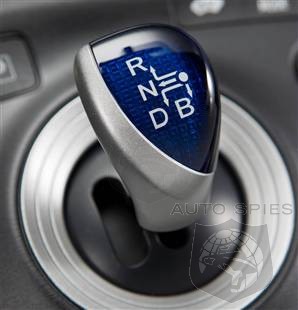
Cars are increasingly stuffed with fancy technology that not only makes possible the use of new gadgets from the driver’s seat but also novel ways of controlling familiar old hardware such as the transmission's shifter and the ignition switch.

Unfortunately, much of this advanced technology makes critical functions, such as shifting into neutral or reverse or shutting off the ignition in an emergency, confusing for drivers.

And befuddled drivers equal less safety on the nation's highways, freeways, streets and roads

SubscribeSubscribe


2010 Chicago Auto Show Photo Gallery

2011 BMW 335is Photo Gallery


2011 BMW 5-Series Photo Gallery


2010 Detroit Auto Show Photo Gallery


AutoSpies.com Photo Galleries

If you want to see your photos running on our homepage photo ticker, be sure to upload your photos on the go by sending them to Mobile@AutoSpies.com

Share on Facebook


Read Article

pennfootballpennfootball - 2/16/2010 10:54:04 AM
+3 Boost
To put it in perspective a Porsche engineer said a normal gasoline's engine's ECU has 5000 lines of code...a hybrid's Engine ECU has 25,000 lines of code! So it is 5 times more likely the beast living in the machine can work his way out now and again!


MSP6MSP6 - 2/16/2010 10:56:56 AM
+4 Boost
More dangerous ? not really. It's the responsability of each driver to learn how their car work. It is sometimes not more complex, just different. However, I think a lot of fancy feature tend to complicate vehicle operation while not being helpful at all to its driver.

Here's one example :

Key fob + Start engine button : In most cases, you need to enter the huge unpractical fob into a slot and then push a button. That's far more complicated and unconvenient than inserting a key in the starter and turning it.


Agent009Agent009 - 2/16/2010 11:22:09 AM
+6 Boost
I often wonder just how many people even read the manual other than the overview.


WhelanWhelan - 2/16/2010 12:47:25 PM
+1 Boost
I think the complex comes from the actual shift patterns shown, even though it is probably an up and down for R N D, the arrows do not really make it easy as they lead one to assume you have to return to a central point on the right before shifting.

That shifter is most likely from a hybrid like the Prius or Insight


XYZZXYZZ - 2/17/2010 6:52:50 AM
+1 Boost
i have believed ever since my college days that PROPERLY DONE, more complex systems can actually SIMPLIFY operating processes.

paddle shift automatics are a prime example. they are actually EASIER to drive, and drive FAST, than old manual trannys. but they are of course far more complex in their innards.

the stick in the illustration (from a prius?) is another example. with the CVT, there is not even a D2, D3, and L. the B sorta replaces L for extra regen braking.

fly-by-wire computer controls also keep advanced airframe jet fighters flying, which would ordinarily be IMPOSSIBLE to keep in the air with manual controls.


LexSucksLexSucks - 2/16/2010 2:15:02 PM
+5 Boost
Simple answer? People for the most part are just resistant to change when it comes to operating machinery (read dumb). If someone is having a rough time figuring out the gear selector pictured, then they shouldn't even be driving the vehicle IMO.


LexSucksLexSucks - 2/16/2010 2:34:40 PM
+5 Boost
Correction: "They shouldn't be driving ANY vehicle"


quizzquizz - 2/16/2010 2:53:07 PM
+1 Boost
The problem is not even the complication itself, but rather, assuming the driver knows how to work the car, what happens when there is a software bug/error/virus/malfunction? Or worse yet, design defect where the programmer forgot to include a brake override (ie/ Prius)?

In 25,000 lines of code, there is much more possibility of error than in 5,000 lines of code. For example, how many times have you bought software and out of the box it was defective? No problem, you just exchange it. Well, what happens when the defect arises while driving 60MPH on the freeway - it's hard to return the car for a new one after you've died in the collision. Again, like software, it's a 1 in 20,000 failure rate, or even 1 in 100,000, but guess what? The failure rate before drive by wire was much lower.

I believe the debate is whether it's worth it to shift everything from mechanical to digital for the sake of efficiency. At what point does the diminishing returns justify increasing the danger to human life as a result of software malfunction? Hardware malfunction is easy to spot, something is broken, torn or disconnected. Software malfunction is very difficult to identify and even easier to hide - again, see Toyota's argument that they still haven't identified the exact cause of the "unintended acceleration" and their earlier denial that it was software based has suddenly become a possibility now.


pennfootballpennfootball - 2/16/2010 4:02:38 PM
0 Boost
AMEN BROTHER


thstonethstone - 2/16/2010 4:36:04 PM
+1 Boost
Just so you know ...

In terms of lines of code, it is estimated that Windows XP has 40 MILLION lines of code and the newer Windows 7 is estimated to have 50+ MILLION lines of code. Apple Mac OS is around 90 million.

And that is just the operating system. Add another 30 million for Office and I am running about 70 million lines of code (using XP) just to type this posting to Autospies.


LexSucksLexSucks - 2/17/2010 12:10:12 PM
+1 Boost
It isn't the amount of lines in the code that makes it bad, it's how effecient those lines of codes are coded that really matters.


Copyright 2026 AutoSpies.com, LLC