E.P.A. Struggles Over Fuel Ratings for Plug-In Cars
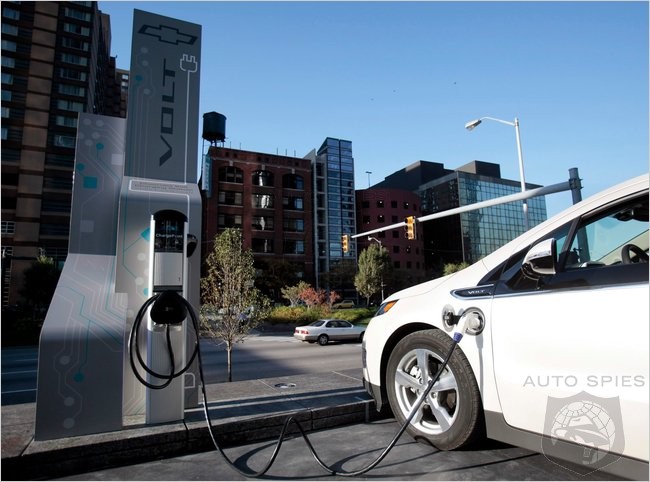
E.P.A. Struggles Over Fuel Ratings for Plug-In Cars
DETROIT — Just two months before two new battery-powered cars go on sale in the United States, the federal government is struggling with how to rate the fuel economy of mass-market plug-in vehicles.
How the Environmental Protection Agency rates the two cars, the Chevrolet Volt and Nissan Leaf, could have a big influence on consumers’ perceptions of vehicles that run on electricity. General Motors, which makes the Volt, and Nissan are anxiously awaiting the agency’s decision as they start production of the cars and complete marketing plans for rollouts in December. Providing the customary city and highway miles-per-gallon information would make little sense for the Volt, which can drive 25 to 50 miles on battery power before its gas engine kicks on, and even less so for the Leaf, which is powered by only a rechargeable battery. Cathy Milbourn, a spokeswoman for the E.P.A., declined to specify a date when the new ratings might be released, saying only that they would come “shortly.”
Read Article

topneurotopneuro - 10/15/2010 12:13:26 AM
+4 Boost
Not me but... the E.P.A. is concerned about those tormented by how the Volt differs from a Leaf with a weed whipper in the trunk.


SteveSteve - 10/15/2010 2:06:04 AM
+5 Boost
It seems pretty simple to me. In the case of a gas/electric hybrid, start with dead batteries, and do your standard MPG test. We are talking "Miles Per Gallon", right?

Now if we were instead to change to "Fuel cost per 100 miles," that would be a more meaningful measure, even if we had to assume gas at a certain cost per gallon, and electricity at a certain cost per kilowatt/hour. Or even of EPA stated Gallons per 100 Miles + Kilowatt Hours per 100 Miles, and the user could multiply using their local gas an electricity costs. Too complex for the average consumer? Likely.


deepwaterdeepwater - 10/15/2010 2:13:35 AM
+4 Boost
The calculation could be easy. The average range of the cars is 400 miles. The EPA test would be the fuel consumption on 400 miles.
In case of Leaf, lets drive 400 miles and calculate the necessary charges of the battery. The electric consumption can be transfered to the mix powerplant supply (gas, nuclear, solar, wind...), finally making equivalent with fossil source.
In case of Leaf, it would be calculated the more frequent battery replacement as well.
Finally the people can recognize, that the "new" green technologies are mostly "grey".
Go for hybrids.


Joe_LimonJoe_Limon - 10/15/2010 2:24:53 AM
-1 Boost
EPA is supposed to give the average fuel economy. So that in mind, don't aim for best or worst case scenario's. Look at the average distance a commuter does and base the test around those distances. Then, use a miles per gallon equivalent where it would be the equivalent mpg to cover the cost of electricity. Again, use the average cost of electricity. They should stop worrying about best and worst case scenarios and just look at what's normal.


topneurotopneuro - 10/15/2010 9:20:25 AM
+1 Boost
http://www.epa.gov/otaq/cert/mpg/label/nprm-label2010.pdf


Copyright 2026 AutoSpies.com, LLC