Shouldn't A More Expensive Vehicle Mean Better Quality Too?

Shouldn't A More Expensive Vehicle Mean Better Quality Too?

The Toyota Corolla is the bestselling car in the United States. The Ford F-Series pickup has been the bestselling truck for 34 years straight. But does that mean Americans consider them the best?

If you ask automotive research firms, the answer is Americans aspire to something a little more high-class.

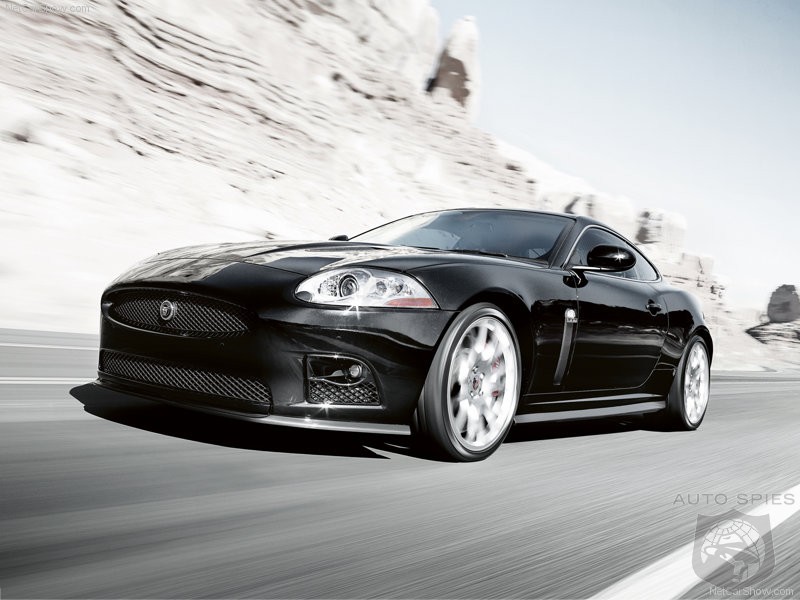
Cars that Americans think are the best:
 
1. Porsche
2. Lexus
3. BMW
4. Jaguar
5. Mercedes-Benz
6. Acura
7. Audi
8. Volkswagen


2011 Chevrolet Corvette ZR1 Photo Gallery

2012 Mercedes-Benz C63 AMG Coupe Photo Gallery

2012 BMW 6-Series Coupe Photo Gallery

2011 Geneva Motor Show Photo Gallery

Lamborghini Showcase Photo Gallery


AutoSpies.com Photo Galleries

If you want to see your photos running on our homepage photo ticker, be sure to upload your photos on the go by sending them to Mobile@AutoSpies.com

Share on Facebook


Read Article

SteveSteve - 4/1/2011 9:42:19 AM
0 Boost
You need to define "quality". Here are some definitions used by various people:
-- Outstanding handling
-- A high level of fit and finish
-- Using rare or exotic materials, usually in finish (e.g., bubinga wood)
-- Low number of defects (always)
-- Infrequent maintenance
-- Durability (e.g., it just keeps on running)

The problem with "quality" is that the unique definition is in the observer's mind. For example, a guy buys/leases a loaded BMW 3-series, and this puts him at the limits of his financial capability. In his mind, he expected the car to rarely, if ever, have any issues. During ownership, he experiences more repairs than he expected, and discovers that they, and routine maintenance, are expensive. He concludes that he expected higher "quality" for the money he spent, and he goes on the message boards to complain about BMW's "lack of quality".


LexSucksLexSucks - 4/1/2011 9:44:01 AM
-3 Boost
"The Toyota Corolla is the bestselling car in the United States"

- Which means that the Corrolla offers the best quality out of all the cars produced for/in America. Price doesn't matter.


HoorayforpeepeeHoorayforpeepee - 4/1/2011 10:08:23 AM
+4 Boost
I think that cars like the Corolla and Civic offer the best compromise at their price point of driving comfort / reliability / fuel consumption.

I have this belief that people usually crave whatever car the Hollywood firms put forth as the '' it '' car.

More important than marketting, I think that product placement will have a huge role to play in the way people buy cars in the future.

How many people bought the new Camaro just because they saw it on Transformers, how many people craved a Delorean for a while ...

Anywho ... my 2 cents


800over800over - 4/1/2011 10:45:53 AM
+1 Boost
1.21 gigawatts? 1.21 gigawatts? Great Scott!
Marty McFly: What-what the hell is a gigawatt?


CaraficionadoCaraficionado - 4/1/2011 1:48:09 PM
+2 Boost
Jaguar and VW perceived as quality...LOL


irishmikeirishmike - 4/1/2011 7:02:05 PM
+1 Boost
Many $$$thousands separate Mercedes from the more pedestrian brands. However, the perks offered in the more expensive brand don't justify the premium.
It's more competitive in the lower range, thus more value.


MeanVulcanMeanVulcan - 4/2/2011 10:05:25 AM
+1 Boost
Here is the thing.
More expensive cars are so because they either have a powerful engine and corresponding tuned features, and also because they have leading (advanced) technology. A car is desireable (at least to me) when a company takes risks in implementing new technologies. By risk, I do not mean safety risks, but reliability risks. Such examples include electronic systems. Highly advanced electronics will often imply a high level of complexity which in turn is likely to affect reliability. I actually value that more than another automaker which takes the safe route, it waits for all the reliability bugs to be sorted out, then copies the competition without incurring the risk.

So my response to this article is NOT NECESSARILY, and that is fine by me.


cdokecdoke - 4/3/2011 9:33:17 PM
+1 Boost
No.

As MeanVulcan pointed out, more expensive vehicles have a tendency to have novel and advanced technologies (read: are more complicated and less tested).

Let's say there are two devices that do the same thing- one has more components and is more complicated; the other is simple. For the complicated device to have the same total failure probability, its components must be manufactured to higher specifications. Importantly, because there is no such thing as a device with a zero probability of failure, even the SHARED components in the complicated device must be manufactured to higher specifications for the two devices to have the same failure probability.

In addition, the act of adding components would have a tendency to overwhelm any incremental decrease in the failure probabilities of the other components simply by virtue of the mathematics- i.e. your ability to decrease the failure probability in the other components is limited by economics and physics, whereas your ability to increase the device tendency for failure is essentially unlimited.


Copyright 2026 AutoSpies.com, LLC