Have Current Advances In Technology Rendered The Hybrid To Novelty Status?
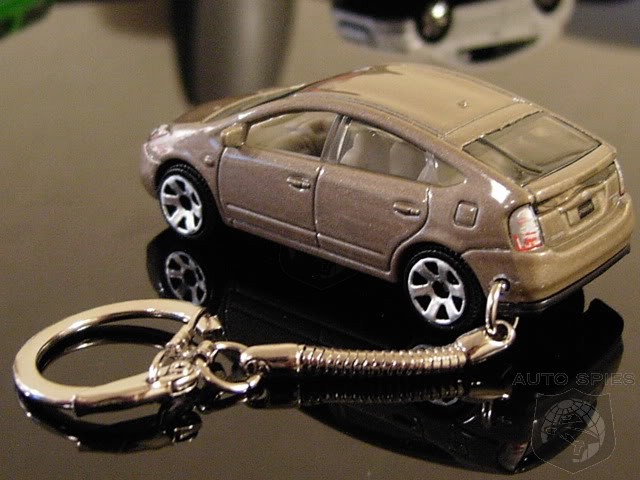
Have Current Advances In Technology Rendered The Hybrid To Novelty Status?
When Doug Hacker decided he needed a car that was light on gas, he figured a Toyota Prius hybrid was the way to go. Many of his co-workers at Procter & Gamble’s (PG) soap research lab in Cincinnati drove Priuses and bragged about getting more than 50 miles per gallon.

After a little research of his own, Hacker made a surprising discovery: While more costly hybrids still win the mileage competition, he could save more money by buying a Ford (F) Fiesta powered by a technology that’s been around for 151 years—the internal combustion engine. That’s because the efficiency of conventional engines has improved so much that the mpg gap is closing, making it harder to justify paying more for gas-electric hybrids.


Read Article

MeanVulcanMeanVulcan - 3/21/2012 10:25:32 AM
0 Boost
if you are looking for an car to drive to work, you can clearly opt between a Prius and a Fiesta, regardless of the class difference. The main point of comparison noted in this article is the mileage, and THAT is a logical comparison. Why buy a Prius when you can get a Fiesta. Not idiotic at all.

Many of us do not necessarily shop only within one class of car. I've shopped Sedan/Wagon/SUV for the same need, so comparing vehicles in different classes is perfectly acceptable when the parameter you are looking at (safety, cargo room, mileage, price) is comparable.


MeanVulcanMeanVulcan - 3/21/2012 10:28:10 AM
0 Boost
tsunami and flooding have long past. Toyota and LExus have been loosing market share 3-4 years BEFORE the tsunami ever hit. Its just a good excuse to use for their crapy showing. Toyota will see some pick up in sales for the Prius due to many people PANICKING over gas prices, but I don't see that lasting, specially with new diesels coming to market which have close enough mileage to a hybrid to not have to make that compromise.


SteveSteve - 3/20/2012 3:19:17 PM
+1 Boost
Buying a hybrid to save the planet is a "feel good" decision while having little, if any positive impact. It can be likened to meticulously sorting out your cans and paper and glass into separate recycling containers and dutifully leaving them on your curb, and not knowing that they all end up in the same garbage dump because your municipality's recycling program is still "being improved."

Hybrid buyers look only at one element, gasoline consumption, and believe that is the sole contribution to pollution while ignoring the pollution associated with manufacturing, maintaining, and disposing of the vehicle, and in the case of plug-ins, the source of that "clean" electricity (70% of which is made by burning dyno fuel or garbage). So much for a "clean" car.

In the majority of real-world use scenarios, equal or higher fuel efficiency can be obtained from an efficient gasoline or diesel engine. So much for saving on fuel costs.

And with more systems in the car (batteries, electric drive, hybrid control and monitoring subsystems), there is more to go wrong, and more to repair. These total costs simply do not offset the best-case fuel savings, if you should be lucky enough to attain them. So much for a simpler, less expensive car to own.

Lastly, the sticker price of a hybrid is heavily subsidized by tax-payers. Think of this as a mini-bail-out per car sold. This is a necessity in order to make the few prospective hybrid buyers think they're getting anything that remotely resembles a reasonably-priced vehicle. Take off the subsidies and the sales go from around 2% market share to 0% overnight.

Any way you slice it, hybrids are not a smart decision. But hey, if buying one makes you feel good, then that in itself is worth it. Right?


topneurotopneuro - 3/20/2012 5:55:41 PM
+1 Boost
Electric motors convert 75% of the chemical energy from the batteries to power the wheels—internal combustion engines (ICEs) only convert 20% of the energy stored in gasoline.
ICE (diesel or gas) do not sound so efficient don't they.


MeanVulcanMeanVulcan - 3/21/2012 10:38:46 AM
0 Boost
just to add to your comments ... the problem with the tree hugging expectations of the "eco-friendly" Prius is that the car's life cycle is expected to be around 10 years. If one were to own a Prius this long the yearly average total energy use (energy to build, operate and recycle) would be very efficient. The thing is that the profile of a Prius driver is a person who likes to be on the leading edge of technology and wants to replace their eco-friendly ride with the next best thing as soon as it comes to market. So, 10 years turns into 3 or 4, and the energy use per year doubles or triples, to the same levels of other ICE vehicles, thus producing no benefits. Sure, second hand owners will drive the car, but the opportunity of ownership does not change.

I could also mention the incredible amounts of pollution produced by smelters which create the special metals and minerals required to produce a large battery and the additional energy required to make the secondary electric drive, plus the pollution generated by the massive use of transportation between continents required to produce and assemble the Prius' components. I'm sure that is not mentioned in your eco-friendly Prius Manual.

People are only focused on the mileage. I call that looking through blinders. A well build diesel engine vehicle, has proven technology which does not require all the ADDITIONAL energy consumption and pollution required to add a secondary electric drive and battery components... and you don't compromise on range or performance.


MeanVulcanMeanVulcan - 3/21/2012 10:49:43 AM
0 Boost
topneuro, 1 ounce of gasoline stores more energy than 100 ounces of equivalent battery volume. Charging your battery in the US means using dirty coal power plants- the biggest pollution source in the world. If you want to talk efficiency, lets talk range. How far will a hybrid take you before it needs to run its own ICE and drop its efficiency? not much, and you have to drive it like a girl to even get decent mileage.

espia, 9 mpg is not a major difference, unless you are an extreme tree hugger who wants to brag about an extra .5 mpg to your friends. Second, I though the discussion was about mileage, not price. If we are arguing over a dime or two additional cost per gallon as being an issue then perhaps you should be bringing this problem to the welfare forum.

The cradle-to-grave energy consumption of a Prius is worse than a diesel VW Jetta. Actually, the Prius is worse than a Jeep Grand Cherokee and nearly as bad as a Hummer (do your own research). Tree huggers are often so naive to think that mileage alone determines eco-friendlyness without realizing there are greater sources of energy consumtpion such as production, transportation, maintenance, operation, and recycling.


vdivvdiv - 3/20/2012 3:53:02 PM
+4 Boost
The reality is that "hybrid" technology is making into more and more models and number of vehicles sold. Pretty much every brand now has hybrids or is about to introduce them. Engine stop-start systems and regenerative braking are now a common feature in many premium vehicles, and the features are making into cheaper cars. I read somewhere that a quarter of all new Buick Lacrosse cars sold are with an eAssist. Most public transit buses around here are now CNG hybrids.

It only took 12 years...


MeanVulcanMeanVulcan - 3/21/2012 11:00:25 AM
0 Boost
engine stop start and regenerative braking and others are an irrelevant comparison between hybrids and ICEs since these technologies are not exclusive of hybrids. They can be applied just as efficiently to ICEs. In fact other much less talked about technologies were first applied to ICEs than hybrids, such as aerodynamics. The aerodynamic profile of the Prius itself is a copy of the most efficient aero design in a small car, the european Audi A2, which Toyota adopted (copied).


knowitall1985knowitall1985 - 3/20/2012 6:52:30 PM
+1 Boost
Hybrid is here to stay....


MeanVulcanMeanVulcan - 3/21/2012 10:56:26 AM
0 Boost
I don't think so. With the recent technology breakthrough in battery energy density by an American company which doubles (or triples) the battery energy density while lowering costs, I believe we can expect EV sales to dramatically increase without any need of hybrid drives. Production of these new batteries is expected around 2014. In the meantime, diesels are good enough to compete with over complex and over compromising hybrids. Diesel sales have been growing faster than hybrid sales and I do not expect that to change given the weight reduction focus of many manufacturers.


thetruth01thetruth01 - 3/21/2012 12:45:45 PM
+2 Boost
So the anecdotal story of one guy who bought a subcompact because it was cheaper than a mid sized vehicle is news???? WTF?? O, and about 15,000 more people per month are choosing the Prius over the Fiesta. But that's not news.


Copyright 2026 AutoSpies.com, LLC