Diesel Power Beginning To Lose Ground To More Efficient Conventional Engines
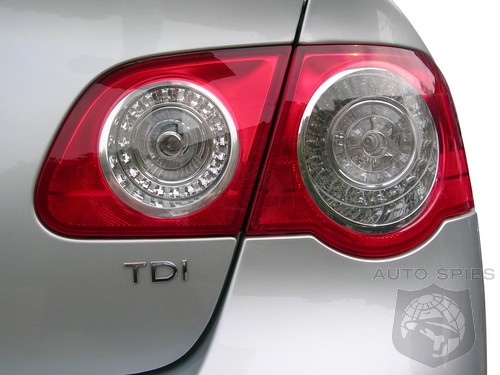
Diesel Power Beginning To Lose Ground To More Efficient Conventional Engines
General Motors and Chrysler are adding diesels to their U.S. car and truck lineups, but traditional gasoline engines and hybrids are becoming so fuel-efficient that American consumers have fewer financial and performance reasons to buy them.

Diesel-powered cars are losing ground to advanced gasoline engines: They cost thousands of dollars more than comparable models with gas engines. They no longer have nearly the advantage in pulling power, at least in passenger cars. They don't deliver significantly better fuel economy. And diesel fuel costs about 36 cents a gallon more than regular unleaded.

Improvements in gasoline engines have closed the gaps in fuel efficiency and pulling power, said Allen Schaeffer, executive director of the nonprofit Diesel Technology Forum. "There is quite a competitive landscape today, compared to what it was five or 10 years ago," he said.


Read Article

atc98092atc98092 - 4/1/2013 6:43:45 PM
+2 Boost
But the MPG gap will soon be widening again. Gas engines will soon have to have the same particulate filters as diesels, with the attendant fuel penalty. Using the exhaust fluid (urea) is allowing manufacturers to tune diesel engines for better mileage and are trending back up. For example, the diesel Passat is larger and heavier than the Jetta, but gets better mileage. Many owners are getting over 50MPG highway, while the Jetta is usually around 45-47 tops. That's the best I ever got driving my daughter's Jetta.

New diesels are already cleaner than almost every gas engine. My (gas) Tiguan had more soot in the tailpipe with 5,000 miles on it than my daughter's Jetta TDI with over 60,000. I just washed her car this weekend and stuck my finger in the tailpipe. It came out practically clean. Do that in my car and it comes out black.

Yes, diesel costs more than regular unleaded. However, many diesels have comparable performance to gas engines that require premium. Compared to premium you find diesel about the same, slightly lower or higher depending on location. Factor in the lower cost per mile and higher resale value, you find the "diesel premium" really doesn't amount to anything.


nguyenvuminhnguyenvuminh - 4/1/2013 8:15:37 PM
+2 Boost
I'm not an engineer, and I have never owned a diesel (but have driven quite a few) so correct me if I'm wrong here. My understanding is that a diesel engine lasts longer than a petrol engine due to less complexity. Trucks, trains, boats, etc. have diesel due to their durability (not just torque). The newer petrol engine is improving their fuel economy but requires more complex ignition, materials, etc and may not last as long as a diesel due to these complexities. So why is the article make it sound like diesel has clear disadvantages ? I would think that for over 3 decades, the disadvantages of diesel would have shown up by now to have the Europeans change their stance (?) and yet they are still buying diesel.


atc98092atc98092 - 4/2/2013 8:29:18 AM
+3 Boost
It is true that past diesel engines were far less complex than gas engines from the same era, but that has changed due to emissions. Modern diesels are fairly complex, with the same computer control systems that gas engines have.

That said, they typically are still longer lasting than gas. part of it is because diesel is an oil, so it helps lubricate moving parts. Gas is a solvent, and will remove lubricants from surfaces it gets on. They are also built stronger, since they require a higher compression ratio, which ignites the diesel instead of spark plugs. These things help a diesel to be barely broken in by 50,000 miles, and many older VW and Mercedes diesels have easily surpassed 350,000 to 400,000 miles with nothing other than normal maintainance (oil and filter changes, timing belts at 100,000).


FirewombatFirewombat - 4/2/2013 3:36:19 AM
+2 Boost
Both excellent comments and I agree wholeheartedly. I think the biggest factor in the future of diesel is the inherent greed from motor companies when pricing them.

As soon as turbo diesels became the standard for oil burners car companies locked on to the fuel savings buyers will would have the raised the prices and that strategy has remained.


vogeygolfvogeygolf - 4/2/2013 11:45:22 AM
+2 Boost
Perhaps...but there isn't a diesel currently on the market that to my knowledge, doesn't beat the EPA estimates pretty consistently. VW has come out and said the EPA methodology for measuring fuel efficiency understates the economy of the typical diesel.

Diesel's biggest problem is price...so much of the US diesel refinery capacity is being sold to Europe, which is driving up the price for us.


Copyright 2026 AutoSpies.com, LLC