Tesla Will Use New Found Financial Power To Target Nissan's Leaf
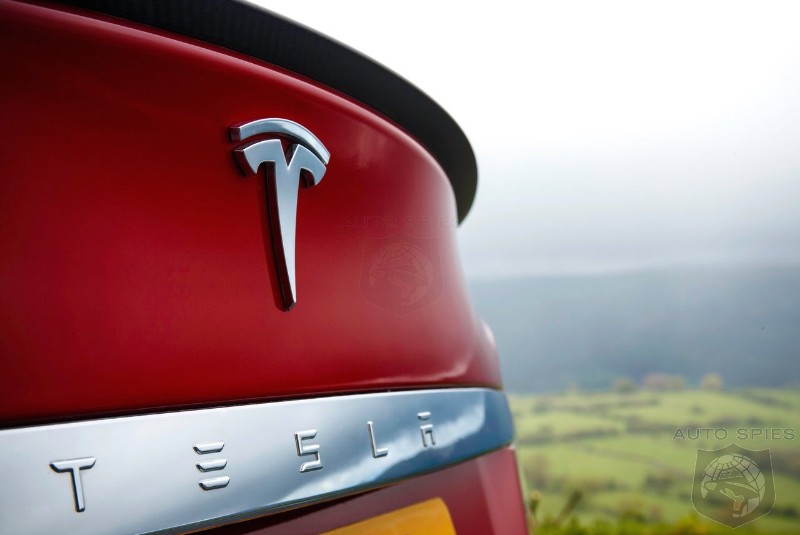
Tesla Will Use New Found Financial Power To Target Nissan's Leaf
Tesla will launch a new entry-level model within four years, CEO Elon Musk has said.

Musk hinted that the new car will be a rival to the Nissan Leaf. It will have a range of around 200 miles and will cost less than £26,500.

The new model is top priority for Tesla, with Musk saying he won’t consider selling Tesla or leaving the company until the car is built.

Musk added that he believes Tesla’s Model S is compelling but too expensive for the company to achieve mainstream growth.

Read Article

SanJoseDriverSanJoseDriver - 5/28/2013 4:22:04 PM
0 Boost
Sweeeeet!


Satriani1Satriani1 - 5/29/2013 10:52:53 AM
+2 Boost
So Tesla’s CEO Elon Musk said “he won’t consider selling Tesla or leaving the company until the car is built.” This is the reality with such young companies: the possibility of being sold or their key founder leaving is always great. That’s what such entrepreneurs tend to do, as people who have worked in start-up companies will tell you. Indeed, there is no guarantee that Musk won’t cash out his stocks and sell the company earlier if Tesla’s bubble stock reaches its limit and is poised to tumble.

It may take four years for Tesla to develop a car to compete with the Nissan Leaf. But within those four years, Tesla will no doubt be facing stiff competition from bigger car companies introducing viable electric cars in all categories – from compact to luxury class. There will be far more electric car models on the market than just the Tesla Model S, Nissan Leaf or Chevy Volt. That’s because by four years solutions would likely be found for the battery problems (cost, capacity, range and charging time) that have held back other car manufacturers from introducing their electric prototypes.

If not for these battery issues, cars like the Audi R8 e-tron would probably be sold today. That all-electric Audi prototype lapped the Nurburgring track in a stunning record 8:09 minutes in June 2012. For comparison the pole position at the recent Nurburgring 24 hour race was won by a Audi R8 LMS that lapped the Nurburgring in 8:17 minutes.
http://tinyurl.com/nrhngtp

This is a big issue for early buyers of Tesla cars. If the Tesla company is sold – which could happen around four years’ time, perhaps earlier – the likelihood is that several senior managers and staff will leave the company at the sale or soon after (this tends to happen with newly-sold companies). This could change the character and capabilities at the Tesla company – for better or worse. If the Tesla company stumbles, spirals downward or disintegrates, then what kind of service, support and guarantees will it be able to keep providing the early buyers of Tesla cars?


vdivvdiv - 5/29/2013 11:21:47 AM
+1 Boost
Well, so far Tesla has proven that it is very much committed to what they do, unlike some other established players, and regardless of your view on their "sleazy" emissions credits, which would apply to everyone that sells ZEVs, Tesla has done it well.

There are no guarantees, just ask a Saab owner :)


Satriani1Satriani1 - 5/29/2013 2:42:14 PM
+2 Boost
The views on emissions credits came from another poster (BobM), not me. The trading of these emissions credits – as opposed to forcing all car makers to meet emissions standards – is a questionable issue. Certainly EV makers like Tesla benefit financially from this state regulation on emissions credits, tax credits and other incentives (and the cost will be borne by other car buyers and tax payers). On the other hand, even without the $68 million revenue from the emissions credits and therefore a loss, Tesla would still be viewed (by investors) as a big success at this stage of its life.

Regardless of your view that Tesla has delivered on its commitments, my point still stands. Most entrepreneurs and primary investors of start-up companies expect to make huge sums of money from rising stock prices (e.g., selling their company when stock prices have peaked for the foreseeable future). For that to happen, they have to deliver on what they promised their company would do – a product that seems to generate profitable revenue. In other words, Tesla's executives certainly wanted to produce a product that seemed viable in the short term (if they intend to sell the company, then they don't have any incentive to ensure that the company is viable say four or five years down the road).


Copyright 2026 AutoSpies.com, LLC