Platform Sharing - Should You Love It Or Hate It?
Platform Sharing - Should You Love It Or Hate It?
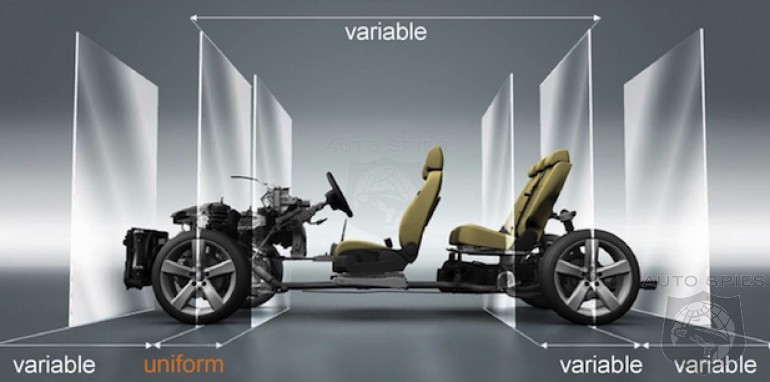
The premise of platform sharing is simple – car companies will share bits in order to lower costs. It could happen between two companies under the same overarching umbrella (think the VW Group or Renault-Nissan Alliance), or between different brands that need to pool costs and resources to achieve a particular outcome (such as the van collaborations between Peugeot, Citroen, Renault and Mercedes-Benz). Big car companies are talking more and more about this means of saving cash, with the most notable being the Volkswagen Group and its near-dozen automotive brands. If you didn’t know, the Volkswagen Golf, Audi A3 and Skoda Octavia are essentially fraternal twins – a product of the much lauded MQB underpinnings which allows the German giant to build a bunch of cars – from the next Polo city runabout to the upcoming Passat large car – from varied versions of the same architectural bits.
Read Article

TheSteveTheSteve - 8/25/2014 4:20:03 PM
+2 Boost
Love it or hate it? Neither. It is what it is. As long as the manufacturer creates something good for reasonable value, then that's a good thing. If they can reuse existing parts. Cool. If they need to design/build new ones. Fine.


chewychewy - 8/25/2014 10:45:02 PM
+1 Boost
True. Essentially everything has been consolidated. Almost everything from the best brands is now built on one or two platforms that are modular. And most brands now have about 3 engines which are scalable versions of themselves. But as long as the power keeps going up I don't think it hurts anyone either.


GermanNutGermanNut - 8/25/2014 4:51:58 PM
+3 Boost
It doesn't matter if consumers love or hate platform-sharing because 99% of consumers don't even know that it occurs nor do they care and car companies will do it anyway to increase profits.

Most consumers don't have a clue that the Audi Q5 and Porsche Macan are related. The same goes for the Porsche Cayenne, Audi Q7, Volkswagen Touraeg. Audi A4, Volkswagen Jetta, etc.

The bottom line for car companies is creating desirable products and increasing profitability and platform-sharing is a darn good way to achieve both those goals in a very efficient manner.


MattDarringerMattDarringer - 8/25/2014 7:58:38 PM
-2 Boost
Platform sharing is good so long as you're not building a $21K Fusion and a nearly $50K MKZ off the same platform. Ditto Honda/Acura.


dumpstydumpsty - 8/26/2014 1:14:01 PM
+1 Boost
It depends on how the different variations of the same platform is executed. The Fusion/MKZ could have been better, but Ford decided to keep the MKZ exterior fairly bland as the Fusion got sportier. When done with as much imagination as possible platform sharing is the best thing automakers can do to lower production costs on multiple vehicle models & types.

So far, I haven't heard anyone complain about the Durango/GL/Grand Cherokee. Seems like platform sharing is done well in some areas but almost total "fails" when automakers didn't need to be so cheap. Rule of thumb --- if the consumer looks at a premium/upscale/luxury vehicle & is obviously reminded of the cheap basic variant that shares the same platform, the automaker has failed to effectively differentiate their products which affects sales negatively.

People who bought Cadillacs hated being reminded that they were driving over-loaded Buicks & Chevy's.


CcoxxCcoxx - 8/25/2014 9:36:37 PM
+2 Boost
So true about the previous comments about the average consumer and caring about platform sharing. My Audi Service Advisor informed me that 90% of his Audi customers don't know how to open the hood of their cars. Scary.


W208W208 - 8/26/2014 6:02:23 AM
0 Boost
Platform sharing is all fun and games until you drive your Saab 95 to a GM dealer and explain that 300 miles is too far away to have it serviced, only to be told you're screwed.


40flash40flash - 8/26/2014 8:32:27 AM
0 Boost
Much of platform sharing is a good thing. More decent products to the market in a reasonable time frame and cheaper to buy & build than a stand alone product. One down side is weight. The 350Z was a shared platform with a Nissan smaller pick-up truck which is probably why it came in a few hundred pounds heavier than it's competition at the time. Should have been 3000 lbs or below instead of 3400.


MattDarringerMattDarringer - 8/27/2014 8:40:00 AM
0 Boost
It not that. It's more like using a 7 Series to make a Rolls Royce makes sense, but doing a Cadillac Impala tarnishes the brand.


Dr550Dr550 - 8/26/2014 2:07:59 PM
0 Boost
Platform sharing is understandable from a economic view. But to share engines, brakes, etc. and pretend that a luxury division is totally "separate" from the larger corporation is deceiving. The average consumer may not be aware but readers on Auto Spies can not be fooled. I hope.


Copyright 2026 AutoSpies.com, LLC