Are Collision Avoidance Systems Going To Make Bad Drivers Even Worse?
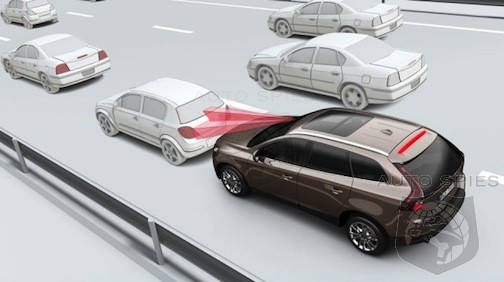
Are Collision Avoidance Systems Going To Make Bad Drivers Even Worse?

Hey, watch this, kids I said as I lifted my feet off the pedals off my 2013 Subaru Legacy. “This car’s so cool because it senses cars in front of it and stops itself.”

I should mention that I was on the Interstate going about 60 miles per hour as traffic up ahead slowed to a crawl.

With my car careening toward the brake lights, I trusted the car would perform as it always has and apply the brakes before I even had to worry.

Except I started to worry.


The brake lights approached way too fast with no indication that the car had any plans to interfere. I gave it another second before panic set in and I stomped on the brake pedal, safely bringing the car to a stop.


Read Article

Agent009Agent009 - 6/16/2015 2:44:41 PM
+2 Boost
In a nutshell... probably so.

The art of car control is the last generation of drivers is notably lacking.

Just as cars become for powerful and more fun, they also become so controlled that the driver gets a false sense of skill. The false sense of skill leads to big mistakes that can be tragic.

Yes you can argue they do save lives, but when you need to understand car control the ability is no longer there for a good portion of the drivers on the road.


MDarringerMDarringer - 6/18/2015 2:13:27 PM
+1 Boost
Agree. Driver training should be so much more than it is and getting a license should be so much more difficult than it is.


TheSteveTheSteve - 6/16/2015 3:21:09 PM
+1 Boost
Hey folks, does anyone remember the same argument about seat-belts, and antilock brakes (ABS)?

ABS is a good example, especially amongst motorcyclists. Motorcycle ABS used to be a rarity, with only premium motorcycle companies like BMW offering them as an expensive option. The argument was that if a rider knows he has ABS, he will ride less carefully, believing the ABS will be there to bail him out, thereby negating the benefits of ABS and possibly putting him at worse risk. True, *some* people will behave this way. Similarly, *some* people won't put their seatbelts on, so are seatbelts then useless? (Answer: ONLY for those who don't put them on!)

The fact is that a smart driver will drive prudently, as though they don't have ABS. In adverse driving conditions, they'll allow for more space in case of increased stopping distance (slower reaction time, lower-traction surfaces, etc.) They'll do this regardless if ASB is available or not, because it's the prudent thing to do. If they make an error or get caught surprised, then the ABS *MAY* be able to help them prevent an accident, or it'll at least reduce the effects of an incident by letting it happen at a lower speed.

The same applies to those collision-avoidance systems. If the driver adopts the mindset of "I no longer have to be a diligent and skilled driver because the systems will protect me," then they'll negate some or all of the benefits of the system. The better, more prudent drivers won't make this decision.

FWIW, ABS is standard on virtually all cars, and is now standard equipment on many motorcycles, and it's a good thing! Similarly, well designed and executed collision-avoidance systems are a good thing as a backup to prudent driving.


Agent009Agent009 - 6/16/2015 4:03:51 PM
+1 Boost
Lets take a page from the aviation industry.

Commercial pilots now are increasingly reliant on automation. So much so that there is a push to get them to fly more without the automation.

Why?

Simple, while the automation is very safe, the pilots are increasingly losing the skill of flying due to lack of hands on practice. When presented with a unusual situation or automation failure, the modern pilot may no longer have the real life experience needed to safely traverse the situation and therefore may do more harm than good.

Situational awareness is the key the driver and we are increasingly taking the driver out of the loop. The best thing you can do for a teen driver? Make their first car a manual transmission. This forces them to engage and be aware of the road and the situation. Yes you can text and drive still but in the most dangerous situations (intersections) you have to maintain control using both hands.

You really need to look no further than Malaysia flight 370. Much of the evidence points to the fact the craft was left on autopilot until it ran out of fuel and crashed. If the autopilot was that good, it would have never allowed the pilot to plot a course where there are no stops to refuel and it did not have the fuel to make landfall.

Automation is wonderful, but not a replacement for the human element.


TheSteveTheSteve - 6/17/2015 12:14:48 AM
+1 Boost
Agent009 writes "...pilots are increasingly losing the skill of flying due to lack of hands on practice..."

Are you actually a pilot, or closely following the aviation industry, because your statement tells only a small piece of the picture. *Some* recreational pilots have fallen prey to what you describe. You see examples in new Cirrus owners (for those who don't know, the Cirrus SR22 is the most popular piston single in production, as measured by annual unit sales. It's also very high tech, with standard "glass cockpit", autopilot, etc. It's classified as a TAA, or Technically Advanced Aircraft). Instructors have complained that *some* new Cirrus pilots, typically affluent tech-savvy guys, become overly enamored with the automation and rely upon it to fly, and consequently lack basic "stick and rudder" skills (ALA manually flying the aircraft without the assistance of autopilot, yaw damper, etc.)

This phenomenon is not widespread amongst single-engine recreational pilots, and certainly isn't the case with commercial pilots. Yes, commercial pilots sometimes make errors, and they sometimes result in catastrophic blunders. Those are the examples broadcasted by the media because they're sensational. What you typically don't hear about are issues that occur, in which a highly-trained pilot does the right things, and lands the plane without an incident. These are far, far more common, but they typically don't make the news. For more info about this, get an watch the TV series "Mayday: Air Crash Investigations" (running for over 13 seasons), which documents not only stupid pilot errors (nothing to do with not knowing how to fly manually), as well as lots of examples in which the flight crew pulled off near miracles, doing things that nobody taught them. They had to improvise, relying on their manual flying skills, system knowledge, and out of the box thinking. FWIW, the "Miracle On The Hudson" is just one of many examples in which pilots beat the odds by hand-flying aircraft.


Agent009 writes "...Automation is wonderful, but not a replacement for the human element..."

In some case it is, and in others, it isn't. To the best or my knowledge, *nobody* makes cars today in which the driver manually adjusts carburetor richness, and manually adjusts spark timing. These things were once performed by the driver, and are now completely automated, with no ability to be overridden by the driver.


Agent009Agent009 - 6/17/2015 9:15:43 AM
+1 Boost
You bring up good points, and yes I have a private pilot license.

Human nature and commercial demands will indeed allow some to become very dependent on automation. Just like texting and driving. There are a few out there that take it to extremes.

While the systems are becoming increasingly more advanced, I fear in the case of a system failure there will not be a human backup to intervene.

We do see the airlines actively telling pilots to use the automation more and more. The primary push is to save fuel costs, but the side effect is lack of REAL flight experience.

I see the easily happening in the automotive sector.


TomMTomM - 6/16/2015 5:14:23 PM
+1 Boost
The question is not what it will do to the drivers - it is what will actually happen in the real world. In this case - as long as the cars are operating properly - the avoidance systems should reduce accidents and or minimize injury in them - for ALL drivers.

Of course - that depends on having a vehicle that actually works properly. Noting that the Premium Manufacturers cannot even get their directional signals to consistently work (They hardly ever work in high priced cars in the real world!) - giving a "work around" to these aids will simply have them turned off for those drivers who need them most.


Agent009Agent009 - 6/16/2015 5:39:54 PM
+1 Boost
While you certainly have a point, if you automate everything then I would say the automobile would just be an appliance rather than extension of yourself.

If that is the case, then settle for the cheapest and most automated form of transportation and sit in the corner with your virtual reality on the cell phone.

That is the difference between an enthusiast and a person the feels driving is a hassle.

I prefer the visceral experience rather than something isolated and uninvolved.


Copyright 2026 AutoSpies.com, LLC