Are Dashboards That Act Like Smart Phones That Good Of An Idea?
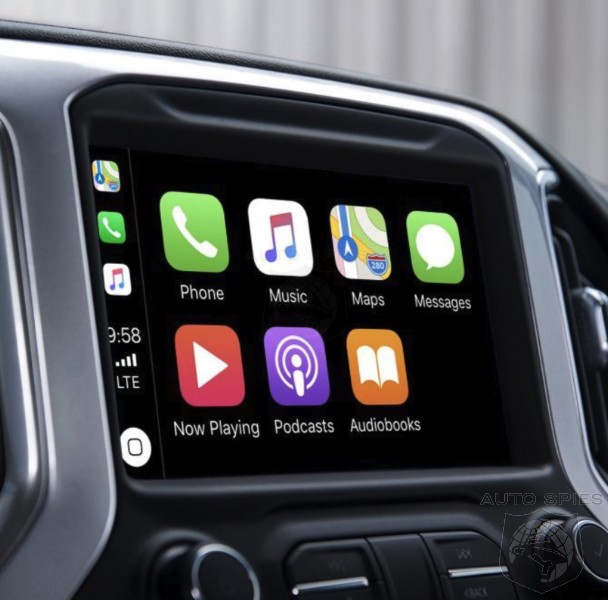
Are Dashboards That Act Like Smart Phones That Good Of An Idea?
When it comes to dashboard displays that are more like smart phones, two things are clear: Customers want them, and automakers are intent on supplying them.

But are they really a good idea?

Car companies answer with an emphatic yes. They say outsized dashboard displays that behave more like smart phones will boost revenue and attract buyers. And they also insist the new screens will make driving less dangerous, because of well-integrated voice controls and large touch screens that will keep drivers from fumbling with more dangerous mobile phones.

But the increasingly elaborate screens have also sparked a broad debate about how much technology is appropriate in a car.


Read Article

TheSteveTheSteve - 7/7/2015 2:36:55 PM
+4 Boost
It’s a shame that one of the last bastions of excellent user interface (UI) design, Apple Computer, Inc., has “passed on” along with the late, great, and obsessive Steve Jobs. Jobs used to obsess with things like font selection, chosen for legibility rather than fashion. He used to obsess about creating user interfaces that were deep, intuitive, complete, and elegant. Today, trendiness and ambiguity reign in Apple’s interfaces. Is it a label? Is it a control? They look the same. Figure it out by experimenting with the ambiguities, and memorize it for next time or get used to trial and error.

Regarding the user interfaces we have in cars today, the experiment was run in the 1980s, and those who were paying attention know the outcome. Prior to the 1980s, musical synthesizers had control panels made up of dedicated knobs, sliders, switches, and sometimes even patch cords. One control, one function. When the musician-performer wanted to change something, they simply reached for the right dial, slider, knob, etc., and moved it to the desired position.

In the late 1980s, computers became cheap enough to integrate into synthesizers. In short order, banks of knobs, sliders, and buttons disappeared to be replaced by an LCD screen, and very few buttons/sliders, and usually one big knob. The musician would now use the screen to navigate menus and pages, select parameters, and then use a multi-function knob or slider to change the parameter’s value. Sound familiar? Want to lower that boomy bass on that radio talk show? Select Sound System, click, select Audio, click, scroll to Tone, click, select Bass, click, rotate the dial to the required bass level, click to save new value, click Back, click Back, click Back, click Back, click Back… now you’re at the home screen. In the “old days”, you’d simply reach for the Bass knob and turn it counter-clockwise.

An interesting thing happened to synthesizers at that time. Repair shops started noticing that synths were coming in still loaded with their original factory preset sounds. Musicians, by and large, stopped programming their synthesizers’ sounds because (a) it was too complex, and (b) the user interface was terrible for real-time program changes during a performance. Musicians could no longer tweak a parameter while playing live, so they just opted to click a single button and call up a factory preset sound.

How this story relates to today’s cars, is the user interface we have is rubbish for real-time data entry. It’s suited for being stationary -- be that at your desk at your computer keyboard or parked and focusing on your car’s UI screen -- where you take your time navigating menus, reading labels, selecting parameters, and so on. It’s terrible for real-time programming while driving, just like it being terrible for real time changes during a musical performance.

Sadly, the auto industry has not learned this lesson. With today’s systems, you have to divert your attention from your primary task


TheSteveTheSteve - 7/7/2015 2:38:41 PM
+2 Boost
(continued...)

... -- safely operating your motor vehicle -- to navigating and programming your car’s infotainment system. The danger is so high, that we have abundant incident stats to back up the assertion that using a mobile phone while driving is risky. Many states have laws against using a mobile phone in a car, unless it’s hands-free. No texting while driving. No navigating a directory to look up a contact’s phone number to initiate a call. No using your gas app to find the closest location with the cheapest gas. All of these divert your attention from your primary task, which is safely operating your motor vehicle.

Creating or continuing to use phone-like UI’s in a car’s infotainment system is simply relocating an existing problem to an equally problematic yet slightly different place.


ScirosSciros - 7/7/2015 5:18:01 PM
+1 Boost
Well stated, TheSteve.

I have a screen on my phone that is dedicated to speed-dial shortcuts so I just swipe once and press. Looks like it will be a cold day in hell by the time an in-car alternative is simpler, less distracting, and more reliable than that option. Not sure if you can do that with iPhones but whatever.

Modern in-dash infotainment systems are progressively more and more distracting, and doing simple things is taking longer through a growing number of interactions.

Couple that with obtuse "safety" feature management in car infotainment systems and it ends up being easier, safer, and less distracting to use a phone while behind the wheel because at least you can move that screen closer to your field of view while driving. It's idiotic.

So my 2014 Subaru is telling me I can't speed dial someone while driving by pressing a tactile button that otherwise selects a favorite radio station. And you can forget about speed dialing someone through voice commands... conversing with this car takes more mental focus than doing almost anything on my phone.

Even my Corvette is hopeless when it comes to voice commands if I'm trying to call someone whose name is at all atypical. Struggling with that, when the car is like "what? sorry I didn't get that..." or "calling entirely-wrong-person on mobile," is 100x more distracting than just getting my phone out and calling from it.

It's pathetic.

And as cars get dashes that mimic phones it's really only going to get worse.


MDarringerMDarringer - 7/7/2015 7:13:37 PM
+1 Boost
Quite frankly I'd rather have a little electronic distraction as possible when I'm in the car.


PUGPROUDPUGPROUD - 7/7/2015 7:53:49 PM
+1 Boost
Less is more!


valhallakeyvalhallakey - 7/8/2015 12:50:28 AM
+1 Boost
Generally agree with the above comments. The less you are required to shift your focus from the road the better. Dedicated unique knobs, buttons etc... are far better than any touch screen for those functions that are frequently used.


atc98092atc98092 - 7/8/2015 8:07:40 AM
+1 Boost
While the RNS-510 is in general an outdated, slow to respond, pathetic radio/nav in my VW, its voice command system works well. I can easily call someone in my contact list with just their name, which the car reads back for confirmation (with sometimes humorous pronunciation), and just dialing a number is equally easy. I've heard horror stories about other voice command systems, but mine works well.

I completely agree that some interfaces are getting ridiculous. I can't believe how complicated it is to simply change a radio station with the latest Audi MMI interface. What happened to simple station preset buttons?


rumnycrumnyc - 7/8/2015 11:44:57 PM
+1 Boost
I love my idrive and with the configurable preset buttons its pretty good and better than anything else i have seen. you can control everything by 'feel' and you can have shotcuts to all the important places in the menu. you never need to look at the controls. you just need to glance the screen which now sit higher (closer to road level) without and ugly cowl.


MrEEMrEE - 7/9/2015 4:33:31 PM
+1 Boost
Developments that may help greatly are; larger screens that don't limit you one function display at a time, smart systems that don't require a lot of interaction while driving, and phone function pass-thru that at least use the owners phone interface that are familiar. The challenge is providing neutrality and updates. Supporting Google and iOS interfaces is not my idea of neutrality and I am not aware this is even on the industries radar. This may take Gov intervention given the corp mindset of locking users in. Also companies generally have no interest in supporting updates after end of production. At least the mainstream models I consider do keep essential controls for HVAC and audio (on stearing wheel) separately available.


Copyright 2026 AutoSpies.com, LLC