How Hybrid Vehicles Work
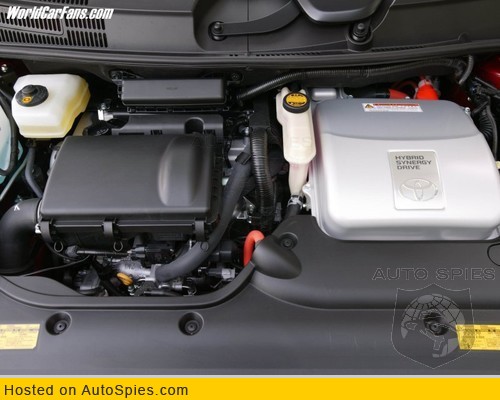
Mention "hybrid" to people not familiar with current trends in automotive technology and the first thoughts that come to mind might well be of some sort of genetically engineered corn that gives more bushels per acre. But in vehicular terms, hybrid refers to a powertrain that combines two different methods of propulsion, each augmenting the other in a way that enhances the strengths and minimizes the shortcomings of each.
In very simple terms, a hybrid powertrain, as used today in a variety of applications, utilizes an engine that's burning a fossil fuel, combined with an electrical system made up of a motor, generator and battery. Depending upon the individual system, the gasoline engine may be able to drive the vehicle by itself, or it may drive the electrical system only (which in turn will actually drive the vehicle). Or the electrical system might be able to drive the vehicle by itself, or both systems may be able to work together to varying degrees.
The current automotive internal combustion piston engine has been developed to an impressively high state of refinement. It delivers power levels, meets emissions and fuel economy requirements, and satisfies customer demands for smoothness, quietness, reliability and cost that would have been considered unthinkable just a few years ago. Its emissions levels and fuel consumption can still be improved upon—although, admittedly, not by a lot. Plus there's a basic problem that faces almost every vehicle on the road: Each of them has an engine that is, most of the time, larger than it needs to be.
A typical four-door sedan may have an engine rated at, say, 200 horsepower. That vehicle requires the full 200 horsepower very little of the time, normally only for quick passing maneuvers or while climbing steep hills. The vast majority of the time the engine is operating at a small fraction of its full, rated output. Once the sedan is accelerated up to freeway speed, as little as 20 or 30 horsepower may be needed to keep it moving. In fact, many drivers may seldom, if ever, call upon the full power output of the engines under their cars' hoods. What people really need is 200 horsepower every once in a while, maybe 100 horsepower from time to time, and about 30 or 40 horsepower most of the time. The fuel consumption and emissions benefits of such a powertrain should be obvious.
Could an electric car do that? The pure electric vehicle is quiet and smooth and generates none of the emissions currently regulated for vehicles with gasoline engines, but after over a century of research the electric vehicle still lacks a suitable battery and there is not a likely prospect of finding one on the horizon. The pure electric car has the same handicap it had 100 years ago—limited range. Exacerbating the limited range are a couple of other major concerns: while a car with a gasoline engine can be completely refueled in a few minutes, literally hours are required to charge up an electric car. And while the gasoline vehicle runs just as well on the last drop of fuel as on the first, the further an electric car goes the more its performance drops—because the battery is discharging—so the last of its "range" is at a pace that becomes increasingly slow.
In simple terms, the electric car doesn't have enough when it's needed; the conventional gasoline car has too much when it's not needed. The hybrid solves both those issues.
The road vehicle, because it has to deal with the widely varying speeds and conditions of traffic, has a more difficult duty cycle. Starts, stops, short trips, family vacations, stuck in traffic jams—all these create fuel consumption and emissions problems. To deal with this, the typical automotive hybrid system is comprised of a relatively small gasoline engine, which drives either the wheels directly, or a generator, or both. There's also an electric motor, which drives the wheels, sometimes alone, or sometimes in concert with the engine. A battery pack supplies the electric motor, and a generator makes the electrical power to recharge the battery. Sophisticated electronic controls watch over all these parts. As software is to computers, it's the controls that make the whole package work in harmony.
Hybrid Synergy Drive
The most sophisticated production hybrid system is Toyota's Hybrid Synergy Drive (HSD). HSD is featured in the second-generation Toyota Prius, which launched in 2003 as a 2004 model year vehicle and the Toyota Highlander Hybrid, which launched in 2005 as a 2006 model year vehicle.
Hybrid Synergy Drive in the Prius
With its Hybrid Synergy Drive, the Prius provides a case study of how these components work together. The Prius has a 1.5-liter, four-cylinder gasoline engine of 76 horsepower. With both the gas engine and electric motor, the Prius has a combined horsepower of 110. It's linked to the drive wheels and a generator directly via a unique transmission and, whenever it's running, it can also drive a generator that keeps the battery charged. The generator supplies electrical power to the electric motor or charges the battery, as needed.
Whenever the Prius is stopped, the gasoline engine is shut down. This means no unnecessary idling or fuel waste while stuck in traffic or at stop signs. When accelerating from rest at a normal pace, and up to mid-range speeds, the Prius is powered by the electric motor, which is fed by the battery. As the battery charge is depleted, the gasoline engine responds by powering the electric generator, which recharges the battery. Once up to speed and driving under normal conditions, the engine runs with its power split: part of this power goes to the generator, which in turn supplies the electric motor, and part drives the wheels. The distribution of these two power streams from the engine is continuously controlled to maintain the most efficient equilibrium. If the need arises for sudden acceleration, such as a highway passing maneuver or a quicker start from rest, both the gasoline engine and the electric motor drive the wheels.
And during braking and other types of deceleration, the kinetic energy of the moving vehicle is converted into electrical energy, which is then stored in the battery. At all times the state of charge of the battery is constantly monitored, and whenever needed the generator is powered by the gasoline engine to provide the necessary charge.
The result is a vehicle powered by a gasoline engine, in that it's the engine that drives the wheels or drives the generator that supplies (either directly or through the battery) the electric motor. But the engine is only as big as it needs to be. It isn't even running all the time, and if sudden acceleration is called for, both the gasoline engine and electric motor share the load. The engine in hybrid vehicles like the Prius run exclusively on gasoline, while the electrical portion of the power system never needs to be plugged in for a charge. There's no cord and no waiting. You can fill up at any normal gas station anywhere.
Highlander Hybrid – A More Powerful Hybrid Synergy Drive
The Highlander Hybrid is powered by a new version of Toyota's Hybrid Synergy Drive powertrain specifically developed to meet the load-carrying requirements and performance expectations of mid-size sport-utility vehicle (SUV) buyers. Its all-new high-speed electric motor operates at twice the speed and delivers more than twice the power as the motor used in the Prius, producing 165 horsepower alone. The gas and electric motors combined produce 268 peak horsepower. The Highlander Hybrid has a standard towing capacity of 3,500 pounds.
There are two motor-generators in the 4x2 models and three motor-generators employed in the 4WD-i models. Internally referred to as MG1, MG2 and MGR for the rear electric motor in the 4WD-i, each has a specific function and each does double duty as both drive motor and generator (although MG1 is a starter and provides no motive force). The engine-driven generator (MG1) can charge the battery pack, which powers other electric motors as needed, while the front electric-driver motor (MG2) and rear electric motor (MGR) can charge the battery pack through regenerative braking.
Power from the gas engine and MG2 is distributed to the drive wheels via a planetary gear-type continuously variable transmission, which eliminates specific gear ratios. Two planetary gear units are used in the system. The Power-Split unit divides the engine's drive force two ways: one to drive the wheels and the other to drive MG1 so it may function as a generator. The Motor Speed Reduction unit reduces the speed of MG2 and increases its drive torque, significantly boosting acceleration performance.
In addition to its motor-generator duties, the crucial MG1 adds two functions: one as a starter motor for the gas engine; and two, by regulating the amount of electrical power it generates (which varies its RPM), MG1 controls the output speed of the transaxle through the planetary gear set—without clutches or viscous couplings. This is one of the key elements of the hybrid powertrain and
the reason why Highlander Hybrid eliminates the "shift shock" that can typically be felt as even the most refined modern automatic transmissions change gears.
In conventional 4WD vehicles, the weight and friction of the additional drive components reduce the vehicle's acceleration performance compared to the same model with 2WD. Not so with the Highlander Hybrid. The innovative electric 4WD-i system employs a separate 50-kW electric motor (MGR) at the rear that provides up to 96 lb.-ft. of additional drive torque as required. The system electronically varies front and rear torque distribution depending on driving conditions.
The Toyota hybrid technology also allows extended electric-mode operation during low speed or stop-and-go driving conditions. The permanent-magnet front electric drive motor (MG2) produces peak torque from zero-to-1,500 RPM, giving the Highlander Hybrid powerful and instantaneous response that will be especially felt and appreciated in low- and mid-speed performance and in merging and passing maneuvers.
Hybrid Synergy Drive Benefits
The real benefits, to both the owner and driver of Toyota's hybrid vehicles, are the utility and numbers. The Prius is roomy enough inside to meet the Environmental Protection Agency's (EPA) midsize category, while the Highlander Hybrid provides the versatility of a mid-size SUV. The Prius accelerates from 0 to 60 mph in about 10 seconds, roughly equal to a four-cylinder gasoline-engine Toyota Camry. Highlander Hybrid 4WD models have an acceleration time of 7.3 seconds for 0 to 60 mph. Prius has a combined EPA mileage estimate of 55 mpg, making it the most fuel efficient of any midsize vehicle sold in America, and delivering twice the combined estimated mileage rating of its closest competitor. Highlander Hybrid's city/highway estimated EPA fuel efficiency rating of 30 mpg exceeds most V8 powered SUVs by more than 100 percent and is better than the current EPA average – 27.6 mpg - for a compact four-cylinder sedan. In addition, both the Prius and Highlander Hybrid have been certified as SULEV, or Super Ultra Low Emission Vehicle. A decade ago, these combinations were unimaginable.