Have Automobiles Become DISPOSABLE Pieces Of Technology, And Is THIS Being Reflected In Their Used Prices?
Have Automobiles Become DISPOSABLE Pieces Of Technology, And Is THIS Being Reflected In Their Used Prices?
Agent 001 and I were speaking yesterday, and catching up over a multitude of topics. Ranging from personal to autos to his recent trip to Mexico for the BMW 340i and X1 to used car pricing, we covered the spectrum. This is where he noted that used car pricing for luxury autos has cratered.

Having not noticed this myself, I decided to look into it. And, 001 was right. Used car pricing for luxury vehicles has seemingly taken a hit.

It looks like depreciation is really rearing its ugly head on luxury cars. What could it be?

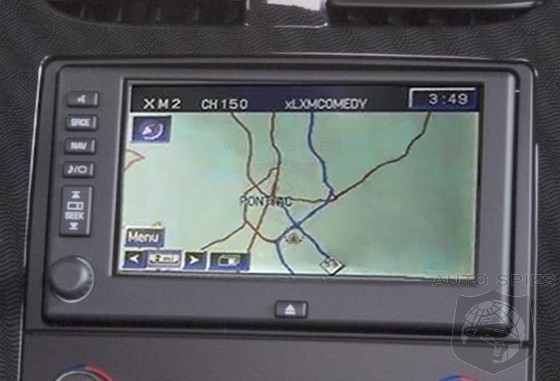
Well, I have a theory: Could it be that today's luxury vehicles that are loaded to the gills with technology are becoming essentially two ton laptops and mobile phones? THINK: These vehicles are tech gadgets that after a couple of years become extremely outdated with poor technology that is, frankly, not desirable. Who really wants a 2010 model year luxury vehicle with an infotainment system that has suspect graphics and a user experience on par with a 16-bit Nintendo? That tech is simply outdated and passé.

Chew on that for a second and answer this: Have luxury automobiles become DISPOSABLE much like today's mobile phones AND has that impacted used car pricing?

What say you, Spies?


TheSteveTheSteve - 10/13/2015 2:55:49 AM
+4 Boost
Hey gents, I think your theorizing runs contrary to the data that shows people hanging onto their vehicles longer than ever before, with the 2015 number being about 11.5 years old (the average age for a light, used vehicle). That number has *risen* slightly over last year.

So the average used car is 11.5 years old. Consider the prospect of someone using a 2004 PC with a single core (or maybe dual core) CPU, about 2 GB RAM, 100 GB HDD, dial-up internet, Windows XP. Compaq and Gateway were names to be reckoned with, in the day.

Nah, the car/computer analogy most certainly doesn't work well.


MDarringerMDarringer - 10/13/2015 9:06:49 AM
0 Boost
@TheSteve while people who buy their vehicles are holding on to them for 11.5 years, that is largely a function of economics i.e. they cannot afford to trade up sooner. However, leasing has gotten much more pervasive and that speaks to the disposability of cars.


TheSteveTheSteve - 10/13/2015 11:52:39 AM
+3 Boost
MDarringer: The "used car's age" stats don't seem to differentiate between "used car that's owned/financed" and "used car that's leased," so we don't know if leasing will throw these numbers off, or is already accounted for in these numbers. My *assumption*, is that a car that's 2 years into a 3 year lease is a used car, and would already be counted in these stats.

Also note that leasing only accounts for the first few years of the car's life, that being the life of the lease. After that, they are usually purchased by someone, and therefore show up in the "used car age" number.

All that aside, I don't agree with your economics-based reasoning as being the sole or primary cause for people hanging onto their car longer. These numbers didn't dip sharply when we had that last post-recession "boom". I believe the mindset has changed in a large portion of the population so they realize that if they hang onto and maintain their paid-for car for a decade, they end up with more money in their pocket than if they got a new car (or leased one) every 3 or 4 years. And they'd rather put that money elsewhere, like a vacation, a kid's college tuition, or a renovation, than into a new car that basically does what their old car did, but is just a bit newer and might have some latest whiz-bangery.

NOTE: My beliefs are NOT based on hard data. It's just my view on things.


MDarringerMDarringer - 10/13/2015 7:04:11 PM
0 Boost
@TheSteve the lease-to-CPO is a huge racket in the industry.


PUGPROUDPUGPROUD - 10/13/2015 7:37:40 AM
+2 Boost
What automobiles are becoming are packaging for the electronics industry.


mre30mre30 - 10/13/2015 9:42:50 AM
+3 Boost
The cratering of residuals for used luxury vehicles has little to do with technology and everything to do with low interest rates - on "new" purchases or leases only. It is a classic supply-demand imbalance on the used market.

If its cheap and easy to get into an expensive car, on a "monthly lease payment" or "car payment" basis, then more people will pile into those than would buy a premium used car. Thus, there is lower demand for used cars, which thus drives the price down. This process will self-correct over time, as lease residuals decrease and the cost of leasing goes up.

However, it takes a couple of years for the over supply of used cars to wash out of the system.

There is, in effect, a bubble in car sales due to low interest rates - a further distortion of our economy (yes there is still a "housing" bubble in many parts of USA and there is certainly a stock market bubble - most visibly in the tech sector (ahem, Tesla, Netflix, Google, and Facebook) where investors overlook whether or not a company is sufficiently profitable to justify its valuation, since they are buying the stock with low-interest borrowed money in their margin accounts.

As much as people hate the thought, interest rates need to go up soon or else we will have another blood bath like 2008.


TomMTomM - 10/13/2015 9:22:05 PM
+1 Boost
All of you are ignoring a simple fact = Who buys or leases New Luxury Cars - and who buys used Luxury cars - along with the shrinking of the upper middle class in the USA.

The new cars are either leased or bought by people who want the most current "it" car - and have the ability to afford it or write it off. That is largely the rich people - upper class - who would not consider buying a Pre-owned car.

Once their 3 year lease is up - or the 4th year restyle happens - these rich people buy/lease a new car - and their old car ends up on the Used car market. However - as noted in the economic data - the recovery has largely been in that upper class - and the number of higher paying upper middle class jobs has been steadily decreasing. Leaving less people around who can afford a $60,000 used Mercedes. As can be seen - the high end cars are really setting sales records- BUT the more they sell - the more used cars come to market - so- with increased Supply and decreasing demand - you get lower prices - it is simply a normal situation of capitalism.


Copyright 2026 AutoSpies.com, LLC