As we've pointed out numerous times previously, we believe that the Porsche 911 is one of the greatest sports cars of all times. Having undergone continuous development for over 50 years now, every single iteration takes the initial concept and improves upon it to a point that we're shocked.
Simply put, it's been amazing to watch Porsche squeeze more juice out of this thing. Every time you think, "This is it! The engineers in Stuttgart can't possibly do anything to make this vehicle better," it comes out with something that's staggering.
Porsche 911 TurboThe guys and girls in Germany should probably consider being magicians when all is said and done with the Porsches.
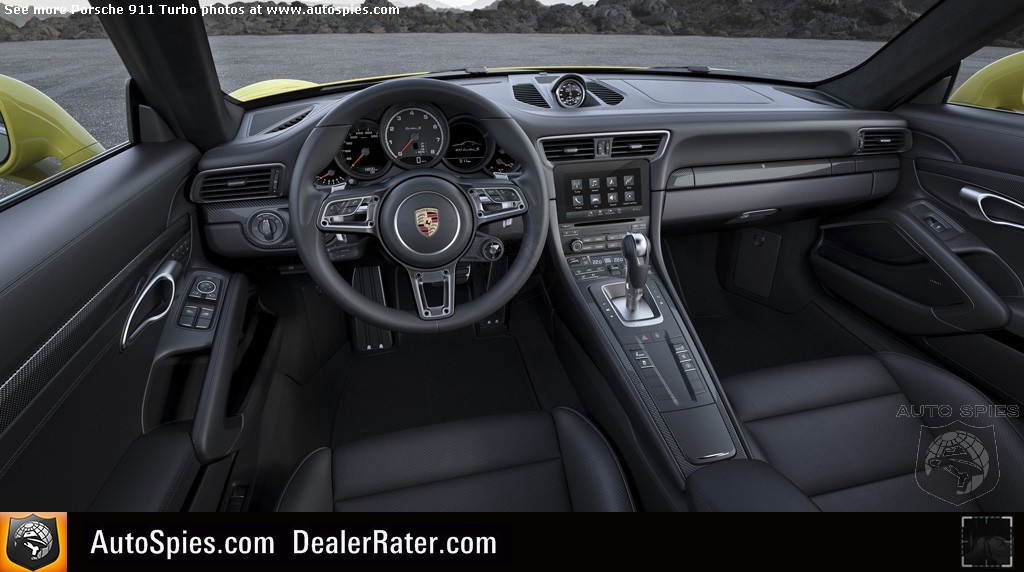
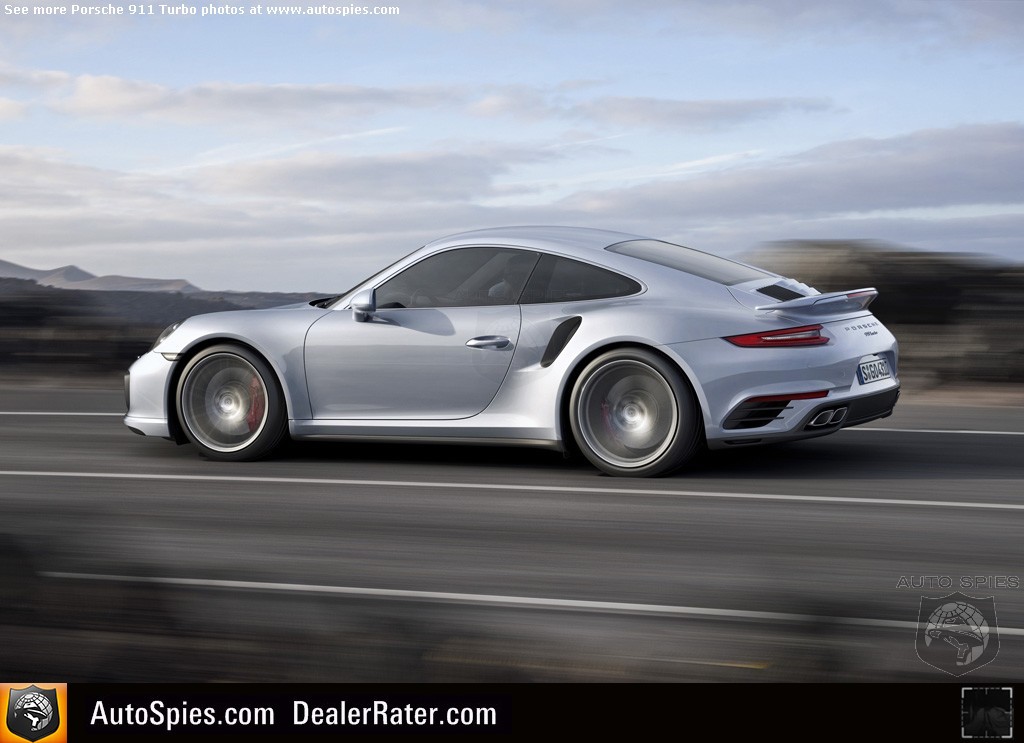
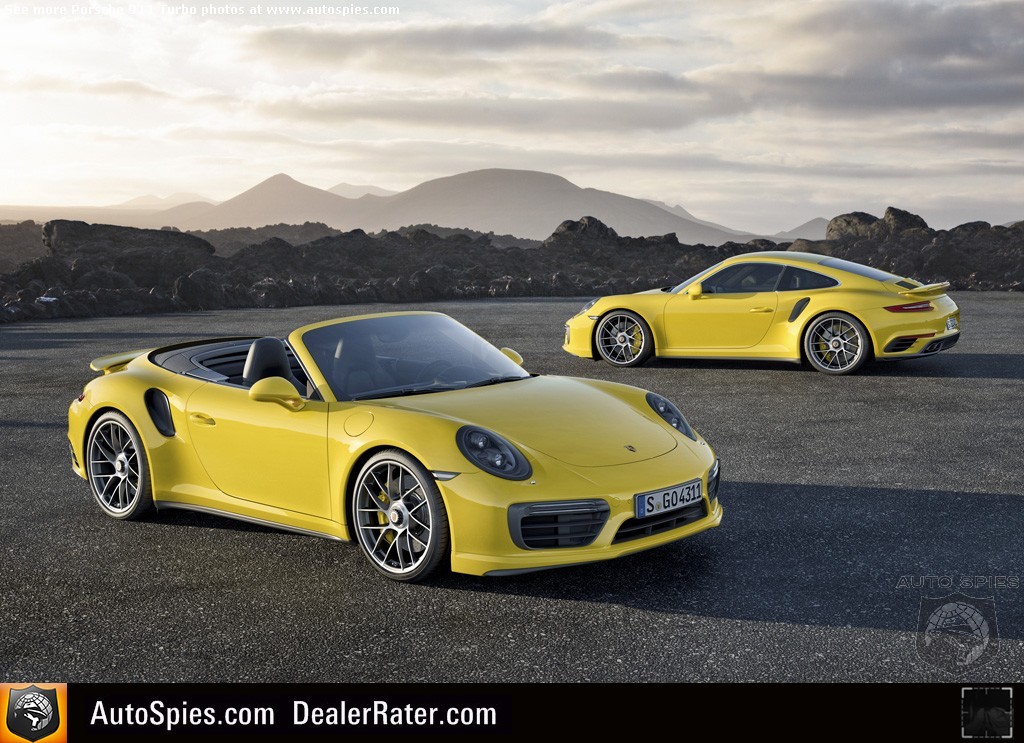
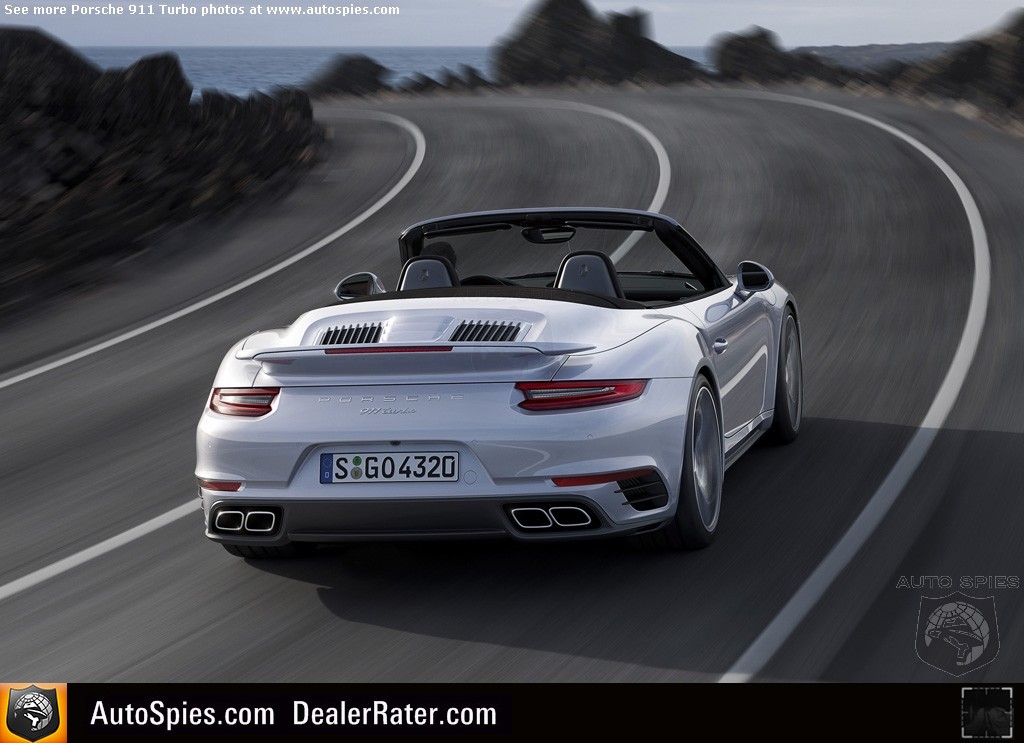
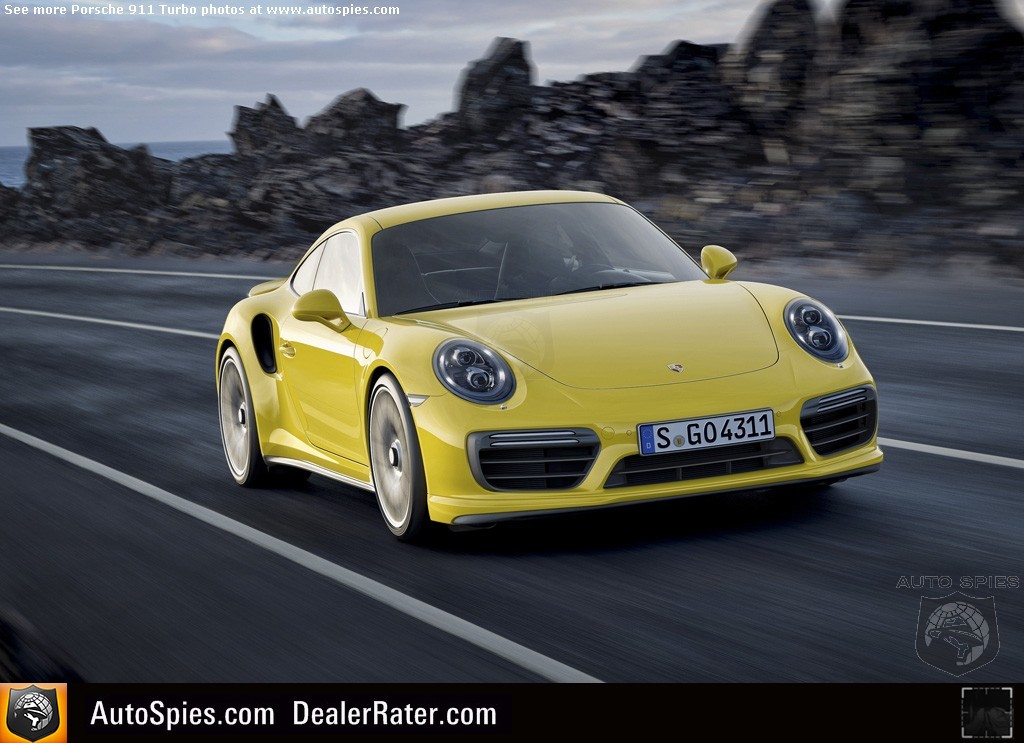
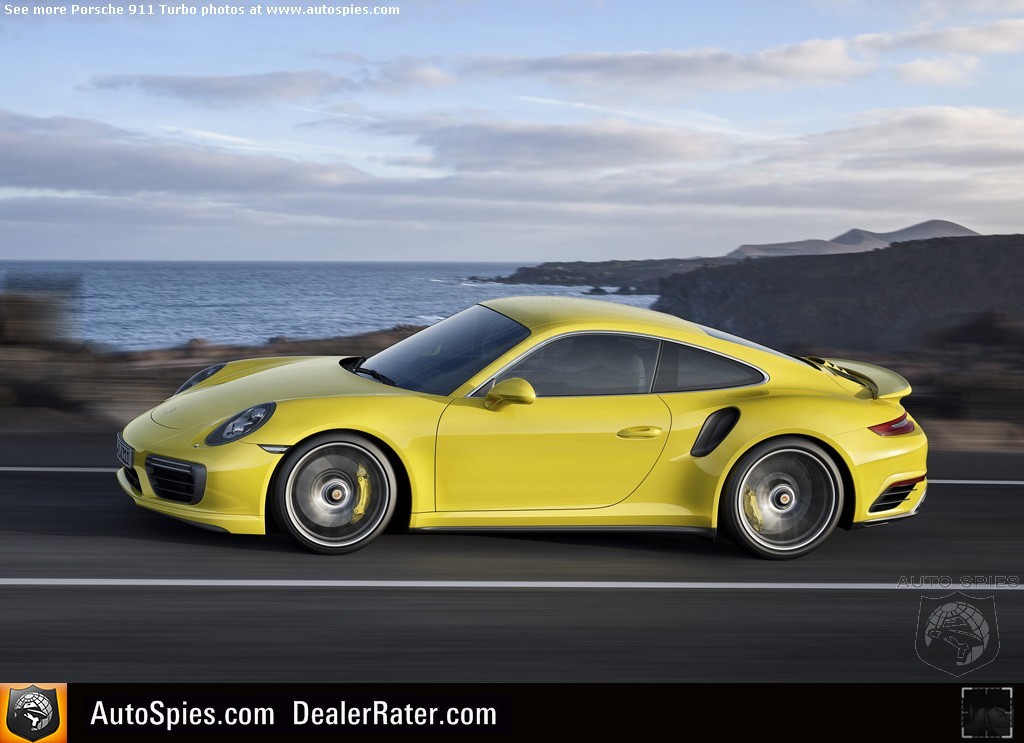
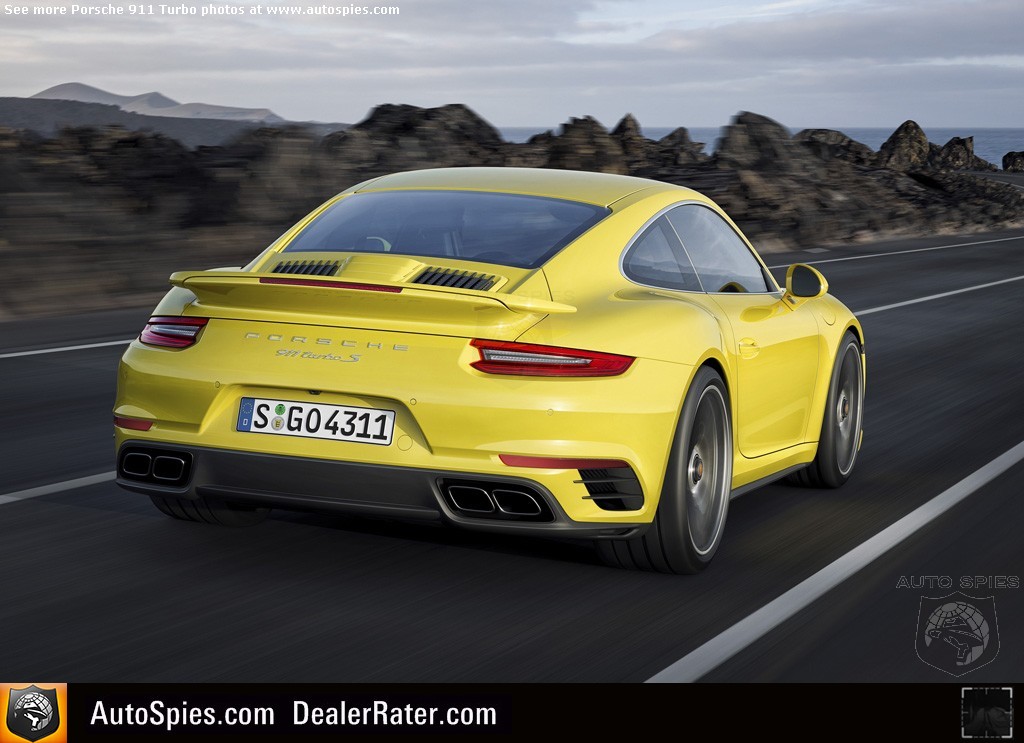
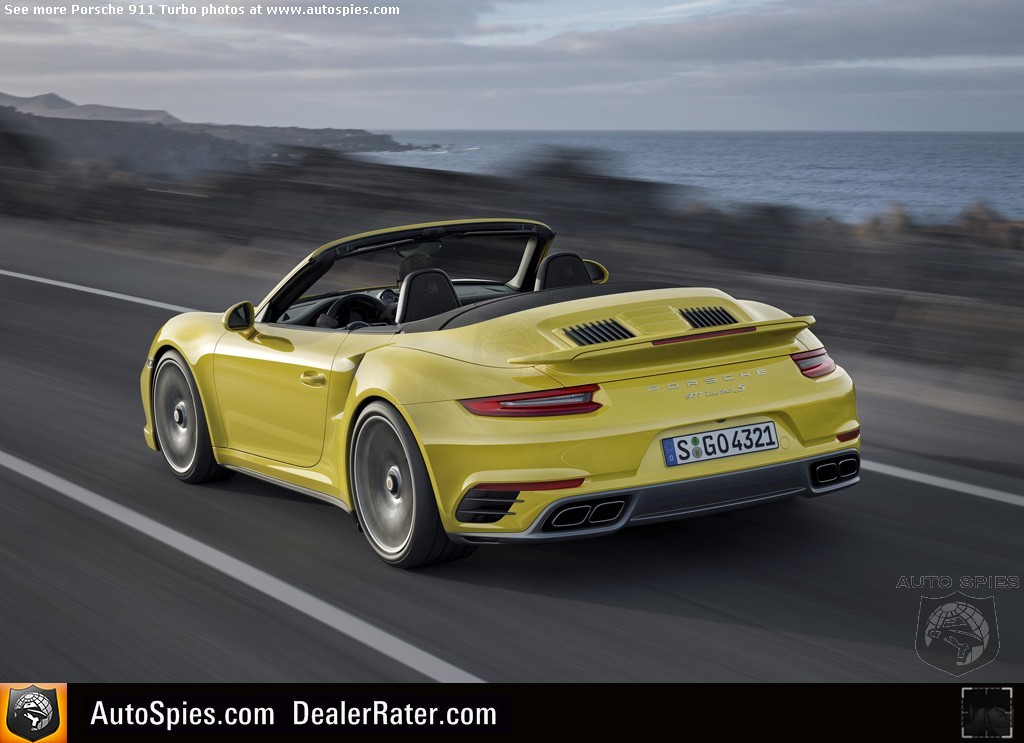
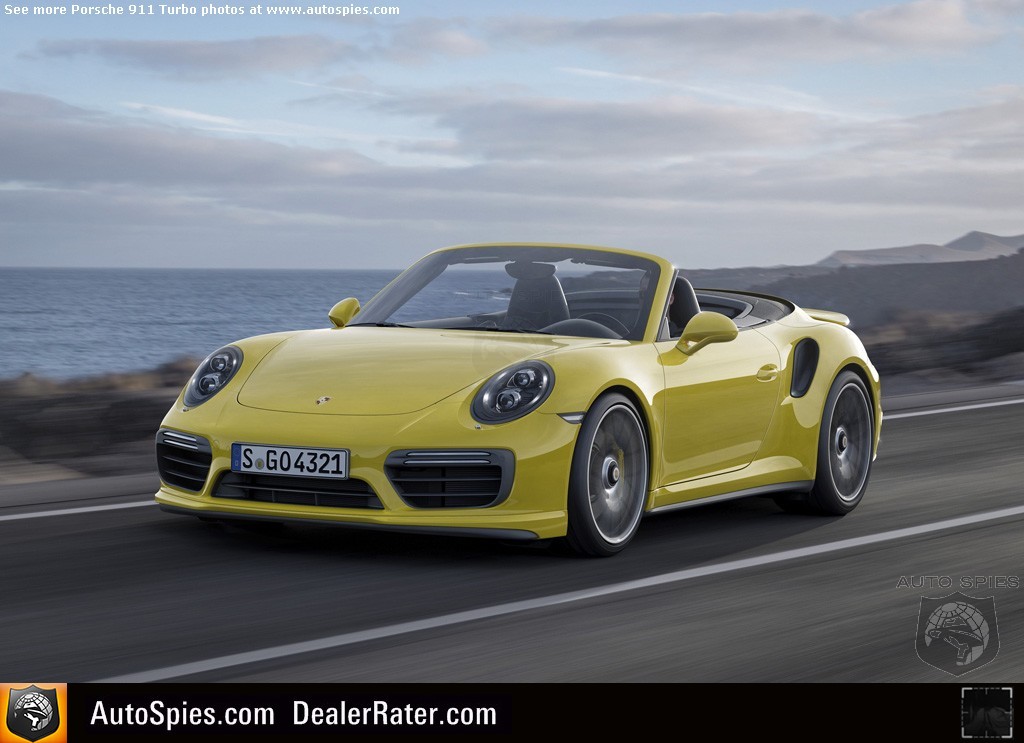
Taking a glance at the latest images to drop from the boys and girls at Porsche, it appears that the update 911 Turbo benefits from the usual. It has an all-new front/rear clip with modified headlights and taillights, the all-new engine cover, all-new wheels, and an updated interior that makes use of a new steering wheel and infotainment system. The screen, predictably, gets bigger.
Check out the latest images below and let us know: do these little changes make this the BEST 911 Turbo, ever?
Porsche 911 Turbo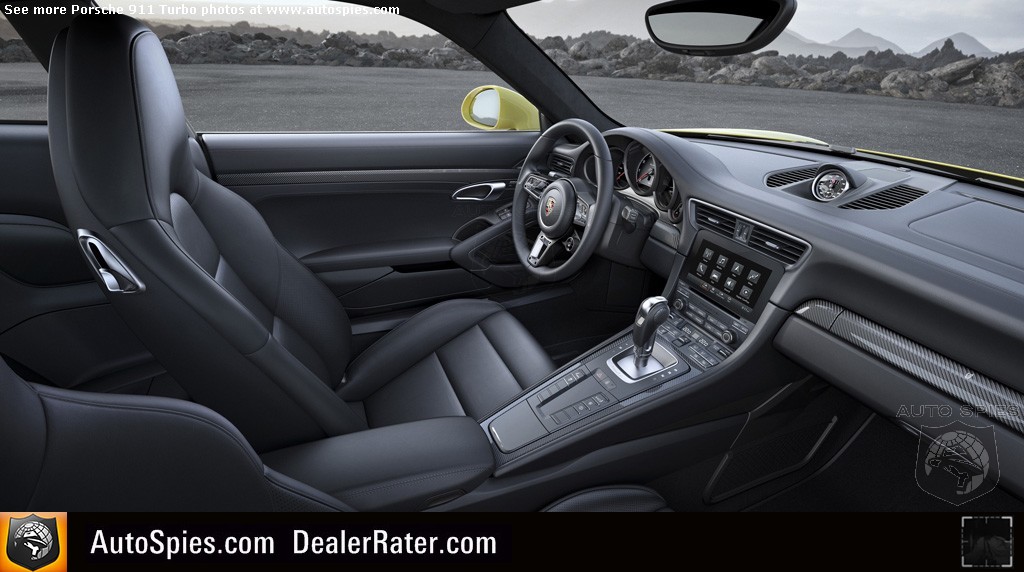
 Porsche's press release follows:
The ultimate 911 models: the new Porsche 911 Turbo and 911 Turbo S
Stuttgart. At the start of 2016 at the North American International Auto Show in Detroit, Porsche is presenting another highlight of its product range. The top models of the 911 model series – the 911 Turbo and 911 Turbo S – now boast 15 kW (20 hp) more power, a sharpened design and improved features. The models will be available in both coupe and convertible versions from the start. The bi-turbo six-cylinder engine in the 911 Turbo with 3.8 litres of displacement now has a power output of 397 kW (540 hp). This power gain was achieved by modified inlet ports in the cylinder head, new injection nozzles and higher fuel pressure. The 911 Turbo S now develops 427 kW (580 hp) thanks to new turbochargers with larger compressors. Porsche is still the only manufacturer to utilise turbochargers with variable turbine geometry in petrol engines.
The engines now also have what is known as a dynamic boost function to further improve engine response in dynamic operation. It maintains the charge pressure during load changes – i.e. when the accelerator pedal is released briefly. This is achieved by just interrupting fuel injection, whereas the throttle valve remains open. As a result, the engine reacts with practically no delay to another press of the accelerator pedal. The effects of this function are more pronounced in the Sport and Sport Plus modes than in Normal mode.
Overall, the new high-performance sports cars attain breathtaking driving perfor-mance, while fuel consumption is reduced even further. The 911 Turbo S Coupé sprints to 100 km/h in 2.9 seconds. Its top speed of 330 km/h is twelve km/h higher than before. The 911 Turbo reaches the 100-km/h mark in 3.0 seconds, and its top speed is 320 km/h – five km/h faster than the previous model. Nevertheless, the coupes only consume 9.1 l/100 km, and the convertibles 9.3 l/100 km. This repre-sents 0.6 litres less fuel per 100 km for all versions. The reason for this is further ad-vanced electronic engine and transmission management with revised gear change mappings.
A standard feature: Sport Chrono Package with mode switch and Sport Re-sponse button.
The new GT sport steering wheel – 360 mm in diameter and with a design adopted from the 918 Spyder – comes with what is known as a mode switch as standard. It consists of a rotary ring with stepped positions that is used to select one of the four modes Normal, Sport, Sport Plus or Individual. The Individual setting lets the driver configure and store a very individual vehicle setup. Another new feature of the Sport Chrono Package is the Sport Response button at the centre of the mode switch. In-spired by motor racing, it preconditions the engine and gearbox for the best possible responsiveness at the push of a button. In this state, the vehicle can produce optimal acceleration for up to 20 seconds, such as for an overtaking manoeuvre. An indicator in the instrument cluster in the form of a running timer shows the driver the elapsed time. Sport Response functionality can be called up as often as desired and from any of the driving modes.
Porsche Stability Management (PSM) in the 911 Turbo models now has a new PSM Sport Mode. A brief press of the PSM button on the centre console puts the system in a very sporty mode – which is independent of the driving programme that is se-lected. The separately switched PSM Sport mode alters the PSM’s intervention threshold much more than was the case in Sport Plus mode of the previous model. The new mode makes it possible to approach performance limits even more closely – e.g. on a circuit racetrack. In this mode, the PSM warning lamp lights up, and a message in the instrument cluster indicates that the PSM system's contribution toward driving stability is limited. However, PSM still remains active in background, even in the PSM Sport mode. A long press of the PSM button, though, completely deactivates PSM, as usual.
911 Turbo S has full set of driving dynamic features
The chassis of the new 911 Turbo models with PASM as standard now offers an even greater spread between performance and comfort. In addition, the 911 Turbo S offers a full complement of equipment for driving dynamics: PDCC roll compensation is standard as is the PCCB ceramic brake system. New options for all 911 Turbo models include the radar-based lane change assist and a lift system for the front axle that can be used to increase ground clearance by 40 mm at the front spoiler lip at low speeds.
Sharpened design with new characteristics
Naturally, the new generation 911 Turbo adopts significant characteristics of the striking design of today’s Carrera models, supplemented by typical 911 Turbo special features. The newly formed front end with side airblades and precisely laid out narrow LED front lights with double fillets give the front end a wider look in combination with the additional fin in the central air intake. In a side view, the high-performance sports car boasts new 20-inch wheels. On the 911 Turbo S, for instance, the centre lock wheels now feature seven instead of ten double spokes. Also new are the wheel dimensions for the 911 Turbo: with 9 J x 20 at the front and 11.5 J x 20 at the rear, the new wheels are now each half an inch wider. They are now the same size as the wheels of the 911 Turbo S. The new door handles now come without plastic shell inserts – just like on the Carrera models. The rear body was also thoroughly reworked. Eye-catching at first glance are the three-dimensional rear lights with their four-point brake lights and aura-like illumination, familiar from the 911 Carrera series. The exit openings for the exhaust system at the rear as well as the dual tailpipes were redesigned. The rear lid grille was also redesigned, and it now features three parts: the right and left sections have longitudinal louvres, and in the middle there is a separate cover for optimised air induction for the engine.
New Porsche Communication Management with online navigation
Along with the generation change in models, the newly developed infotainment sys-tem, PCM with online navigation, is making its way into the cockpits of the 911 Turbo models as standard. This system can be made out by a multi-touch monitor with high-quality glass surface, which is perfectly integrated into the centre console, and it offers numerous new and extended connectivity functions thanks to the standard Connect Plus module. Navigation can also access the latest traffic information in real time. Routes and places can be visualised with 360-degree images and satellite images. In addition, the system can now process handwritten inputs. Moreover, mobile phones and smartphones can now be integrated more quickly, easily and comprehensively than before via Wi-Fi, Bluetooth or cable. Select vehicle functions can now be controlled remotely as well. As in the previous models, the Bose sound system is offered as standard; a Burmester system can be delivered as an option.
Market launch and prices
In Germany, the new Porsche 911 Turbo will launch at the end of January 2016 at the following prices that include VAT and country-specific equipment:
911 Turbo 174,669 euros
911 Turbo Cabriolet 187,759 euros
911 Turbo S 202,872 euros
911 Turbo S Cabriolet 215,962 euros
Image materials are available in the Porsche Newsroom (http://newsroom.porsche.de) and, for accredited journalists, at the Porsche press database (https://presse.porsche.de).
911 Turbo: Combined fuel consumption 9.1 l/100 km, urban 11.8 l/100 km, extra-urban 7.5 l/100 km;
CO2 emissions 212 g/km; efficiency class (Germany) F
911 Turbo Cabriolet: Combined fuel consumption 9.3 l/100 km, urban 12.1 l/100 km, extra-urban 7.6 l/100 km;
CO2 emissions 216 g/km; efficiency class (Germany) F
911 Turbo S: Combined fuel consumption 9.1 l/100 km, urban 11.8 l/100 km, extra-urban 7.5 l/100 km;
CO2 emissions 212 g/km; efficiency class (Germany) F
911 Turbo S Cabriolet: Combined fuel consumption 9.3 l/100 km, urban 12.1 l/100 km, extra-urban 7.6 l/100 km;
CO2 emissions 216 g/km; efficiency class (Germany) F