TEASED! Hyundai Preparing An All-New Challenger To The Hydrogen Fuel Cell Game — Aiming To Take On Toyota Mirai
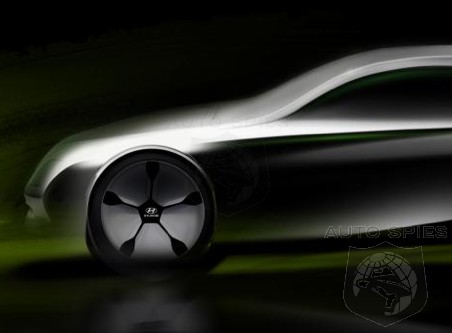
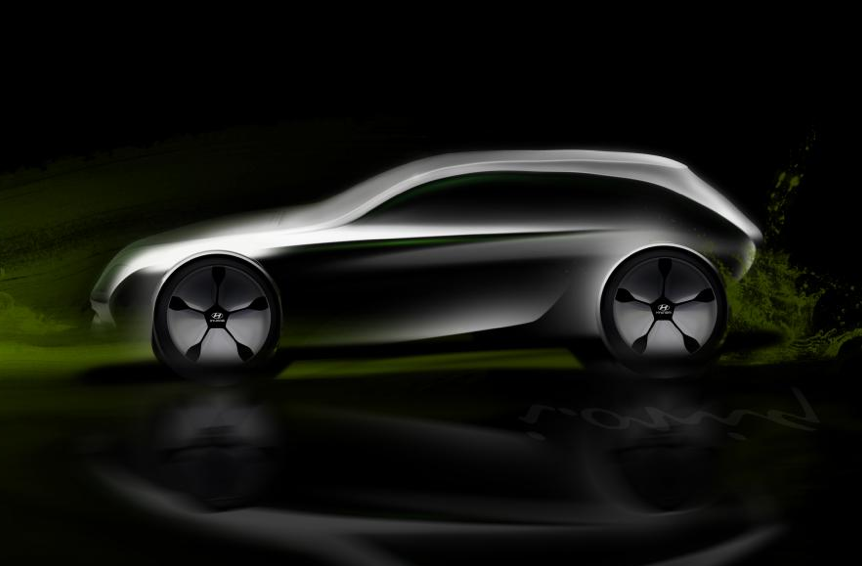
TEASED! Hyundai Preparing An All-New Challenger To The Hydrogen Fuel Cell Game — Aiming To Take On Toyota Mirai

Hyundai’s next-generation hydrogen-powered car will be a bespoke design, as the firm bids to challenge the Toyota Mirai for supremacy in the emerging fuel cell market.

Both Hyundai and Toyota put the first mass-produced hydrogen fuel cell vehicles on sale this year, but while the Mirai is a bespoke design, Hyundai’s model is based on the existing - and now superseded - ix35 SUV. Hyundai embarked on the project using an existing platform as a result of its pledge to sell a hydrogen car to any customer anywhere in the world and without a lead time of more than three months...

...“We will launch a dedicated vehicle, although it is not clear what vehicle type it will be based around,” said Sae-Hoon Kim, Hyundai-Kia’s head of hydrogen fuel cell research...


Read Article

MDarringerMDarringer - 12/30/2015 10:44:22 AM
-3 Boost
And if the Ioniq is any indication, the Hyundai product will be better looking than the Toyota Misery.

Wasn't Kia supposed to be getting a product based on the Ioniq?


TheSteveTheSteve - 12/30/2015 11:10:35 AM
-3 Boost
I thought that Hyundai was smarter than to jump on the "hydrogen as fuel" bandwagon. A quick recap of why hydrogen as a fuel is a stupid idea, today and in the foreseeable future:

(1) Requires LOTS of expensive electricity to convert ambient hydrogen into fuel form. Today, this makes hydrogen about 5x more expensive than regular unleaded gasoline.

(2) Most of the electrical grid is powered by burning fossil fuel or garbage. All things considered, this makes "clean" hydrogen fuel pretty dirty.

(3) The electrical grid is already running at or beyond capacity, so the idea of using still more electricity *inefficiently* to convert hydrogen into fuel form doesn't make sense.

(4) Inefficient: Hydrogen as fuel delivers relatively little energy compared to the massive amounts of electricity consumed during conversion to fuel form. Simply put, it's far, far more efficient to charge an electric battery in an EV than it is to convert hydrogen into fuel form, and then use the hydrogen in a fuel cell to convert it back to electricity in an EV, or burn it as fuel.

(5) No hydrogen fuel infrastructure exists for manufacture, transport, storage, or distribution. The handful of hydrogen stations that exist today are barely a proof of concept. So if you believe EVs have range anxiety, you ain't seen nuthin' until you try to use a hydrogen powered car just about anywhere in the world.

So until the day comes when we have:
(a) A cheap, reliable, clean source of hugely abundant electricity, and...
(b) a much beefed up electricity infrastructure to transport and deliver it, and...
(c) a massive infrastructure to convert hydrogen into fuel form, store, transport, and sell it...
...then hydrogen as a fuel is a way-stupid, impractical, wasteful, and polluting idea, today and in the foreseeable future.


MDarringerMDarringer - 12/30/2015 11:37:30 AM
-2 Boost
@TheSteve hydrogen cars have NOTHING to do with efficiency and 100% to do with political correctness and appearances.


TheSteveTheSteve - 12/30/2015 7:25:44 PM
0 Boost
MDarringer: Hydrogen cars are all about people's *BELIEFS*, which include...
- Using hydrogen as a fuel is 100% clean
- Hydrogen is hugely abundant, and therefore cheap

Armed with those two erroneous beliefs, you can pass off hydrogen vehicles as the obvious choice to replace internal combustion engines and expensive battery powered EVs and hybrids. People who don't know better will view you as being progressive, state-of-the-art, inventive, ahead of the curve, and other good things.

Well, that and if you're a manufacturer, you can secure taxpayer money in the form of government grants to research and develop such stupidity, which has no commercial market today or in the foreseeable future. See my post (2nd from top) for the reasons why that is so.


cidflekkencidflekken - 12/30/2015 12:37:24 PM
+2 Boost
Can Hyundai even be called a Korean company anymore? It seems that all of their department heads have been commandeered from other non-Korean brands.


MDarringerMDarringer - 12/30/2015 2:31:14 PM
-4 Boost
@cidflekken are you begrudging them for being an intrepid company or are being racist and implying Koreans can't do it themselves? Either way you lose.


Terry989Terry989 - 12/30/2015 6:49:35 PM
+2 Boost
A funny comment coming from our own Mr. Racist - Matty Darringer


W208W208 - 12/31/2015 6:58:54 AM
+2 Boost
@MDarringer.....for someone who is a self-proclaimed Conservative Republican, you'd think the whole "racist" thing wouldn't bother you.


MDarringerMDarringer - 12/31/2015 10:35:12 AM
0 Boost
@W208 and your comment shows you to be a bigot.


W208W208 - 12/31/2015 11:20:31 AM
+2 Boost
@MDarringer....only to the extent that a reference to race does not a racist make.


cidflekkencidflekken - 12/31/2015 2:40:17 PM
+1 Boost
To derive "racism" from my comment only demonstrates where your own mind is. And to derive Hyundai as an intrepid company for their ability to snatch leaders (and ideas..and designs) from already-successful companies is a whole other story.


kb2016kb2016 - 1/2/2016 2:28:54 PM
0 Boost
Your comment clearly shows how little you know about the hydrogen fuel cells and their alternatives. The efficiency problems you are drastically overstated. Probably because you have been listening to Elon Musk's propaganda. When you think about it logically you would realize that he is trash talking a competitor, not actually telling the truth. If he truly believed that it would fail, why would he waste his time bringing it up.

The making of the hydrogen is always going to be as efficient as the electricity used to produce it. The research and development costs being spent on the technology will reduce this over time, until it is able to be a viable alternative to gasoline. Also, while it may be inefficient to convert the electricity to hydrogen it does offer several other benefits, such as using the car to power a home in an emergency and faster refueling time.

Fuel cells are designed to release their electricity slowly and over long periods, which makes them the better choice for an alternative fuel vehicle. Batteries on the other hand are better at releasing their power quickly over a short time period. Additionally, batteries are extremely destructive to produce for the environment. In short, hydrogen may not be perfect, but moving forward it is a significantly better choice then its only alternative, electricity.


TheSteveTheSteve - 1/4/2016 12:53:19 PM
+1 Boost
kb2016: Your "rebuttal" is based on ignoring all the facts I present. For example, I cite the need for lots of expensive electricity and its polluting sources as a problem, and you handily dismiss them in an *imagined* scenario in which these factors simply don't exist. And you back that up by asserting that the problems I itemize are "overstated." Why? Because you imagine them not to be so? The facts remain, though you might choose not to acknowledge them, or possible see them at all.


HughJassHughJass - 1/3/2016 2:40:38 PM
0 Boost
Better put NASA on notice.


TheSteveTheSteve - 1/4/2016 1:03:10 PM
+1 Boost
HughJass: NASA's use of hydrogen fuel cells (e.g., the Apollo missions) didn't need to worry about the cost or the resources needed to manufacture hydrogen fuel, transporting it, storing it, distributing it, etc. If it cost them $5M for enough hydrogen fuel for a mission, that was just a drop in the bucket for a moon mission. It also doesn't matter if it's hugely polluting to make that hydrogen.

Today, hydrogen fuel costs about US$10/gallon, and that gallon delivers less energy than a gallon of gasoline for conversion into kinetic energy (movement) in a car, assuming you use it in a fuel cell. Remember how people were complaining when gas was $4/gallon in the US? Imagine paying 2.5x more at the pump, and getting poorer fuel economy. As you can see, NASA's use of hydrogen in fuel cells is completely different than how the world would relate to hydrogen as a replacement fuel source for cars, so the comparison is moot.


Copyright 2026 AutoSpies.com, LLC