#CES2016: Volvo XC90 To Become First New Vehicle To Use A Supercomputer
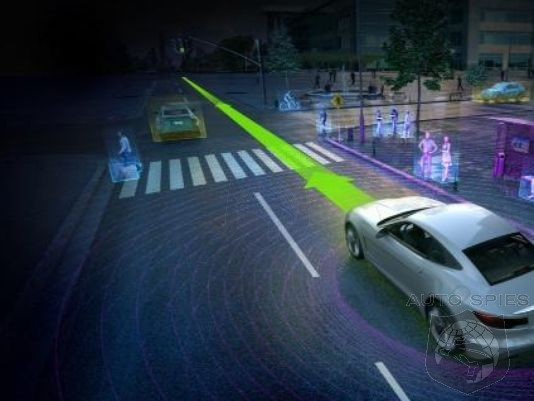
#CES2016: Volvo XC90 To Become First New Vehicle To Use A Supercomputer
Computer chip-maker Nvidia Corp. has created what it says is the first supercomputer for an automobile, and Volvo Car Group is the first automaker to purchase it.

Nvidia, at the CES 2016 technology trade show, announced its Drive PX 2 with eight teraflops of processing power — the equivalent to the power in 150 MacBook Pros — that can help in the complex sensor-detecting capabilities needed in fully driverless cars and trucks. That much power can allow the car to easily scan 360 degrees around the car to detect animals, pedestrians, cars, debris and other objects.


Read Article

TheSteveTheSteve - 1/6/2016 12:22:00 PM
0 Boost
This is an excellent approach for those who are enamored with tech for the sake of tech. Just like some folks will brag about how many horses they have under the hood and will look with contempt at those who have fewer (e.g., mine is better because it has more), there will be folks that'll be impressed with techy bragging rights (e.g., my car has a more powerful computer than yours).

Outside of that small community, car buyers will care much more about the "what" than the "how". They'll judge a car by the user's experience, using characteristics such as the driving experience, the real-time usability of the controls, interior and exterior styling, etc.


ricks0mericks0me - 1/6/2016 2:07:51 PM
+1 Boost
Steve: Normally I agree with your well thought out postings. This time I disagree. This much computing power allows for a much safer driving experience. If the auto owner wants to brag, he/she can but I would not participate in that conversation.


TheSteveTheSteve - 1/7/2016 12:43:37 PM
+1 Boost
ricks0me: If it does indeed translate into a much safe driving experience, then that will be what draws consumers to the product; not the fact that it has a "supercomputer". Guys raving that their infrared sensor saw bright red coming from a rig's axle, and after moving away, the tire blew out... or someone wowed by their FLIR spotting deer crossing the road before their headlights lit them up, giving the driver time to slow down and avoid possible collision... or "I did a shoulder check to make sure it was safe to pass when my car suddenly slammed on the brakes. When I looked front, I noticed someone had cut in front of me then hit the brakes because they didn't plan the gap well."

It'll all boil down to a meaningfully enhanced user experience... or not.

All we need to do is look to the Microsoft approach of buzzwords and bullets on a feature sheet, which could lead you to believe people will be clamoring all over this thing, when in fact, most people would rather have a non-Microsoft branded smartphone or phablet, rather than the latest MS OS with all its features, buzzwords, and tech, and hype.

Manufacturers need to put themselves in the consumers' seat, and answer the question "What's in it for me?" What value does it actually deliver, rather than what new buzzword does it deploy?


(From a purely technical standpoint, it's possible for a distributed computing architecture -- multiple discrete computers of lesser power -- to deliver more total computing power when combined, more effectively, than a single supercomputer. BTW, that's what manufacturers are doing today.)


w222w222 - 1/11/2016 7:14:21 PM
+1 Boost
Great more driving controlled by a computer. Let's see what happens when we see the car equivalent of the blue screen of death


Copyright 2026 AutoSpies.com, LLC