Is Driverless Technology Ready For Prime Time? Google Pressures Congress To Speed Up Adoption Of Driverless Cars
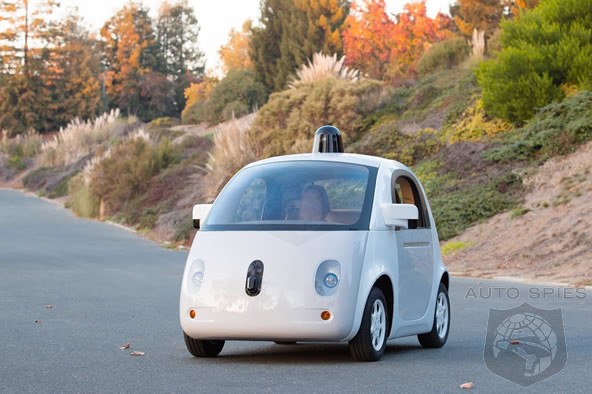
Is Driverless Technology Ready For Prime Time? Google Pressures Congress To Speed Up Adoption Of Driverless Cars
The head of Alphabet Inc's Google self-driving car program will urge the U.S. Congress on Tuesday to grant national auto safety regulators new authority to speed the introduction of self-driving cars on American roads.

Chris Urmson, director of Google's self-driving cars program, will tell the Senate Commerce Committee that legislators should grant new authority to the U.S. Transportation Department to help get fully autonomous vehicles on the road, according to his prepared testimony, which was reviewed by Reuters.


Read Article

Agent009Agent009 - 3/14/2016 4:01:38 PM
+1 Boost
Not yet, but that could all change if:
1. Google can tell me how it plans to get to my new house that isn’t yet mapped.
2. How Google will map around flooded areas or other natural disasters when they occur.
3. Can Google now tell the difference between a paper bag in the road, child or huge rock (didn’t used to)
4. As of a year ago, they had no plan for potholes because they couldn’t see them, then I heard crowd sourcing of pothole info. Where are we on this?
5. So you hit a bus. The video shows the bus never left the lane. So how do you hit a 30ft object?
6. What are the plans for areas with no internet access?
7. What are the plans if there is an emergency that requires a speed in excess of the speed limit?
8. What are the plans to not hinder traffic when you are not maintaining pace with traffic flow?
9. What are you security protocols to keep hackers out? (remember I have no driver controls)
10. With the bulk of cars on the road not being driverless, why are you asking for certain safety features not be required?


MorePowerMorePower - 3/14/2016 5:32:14 PM
-2 Boost
1. Smartphone with GPS to identify your coordinates and cameras on board the vehicle so it knows where it is and that is on a road.

2. Google has access to weather data that you do not, and in some cases, more than your local authorities.

3. Yes, it can with software. Anything over a certain size will cause your vehicle to stop. Though objects in the road should be replaced with parents that let their kids go un-monitored.

4. You are grabbing at straws to try to prop up your weak argument. Potholes exist and people run into them without seeing them. Nothing is perfect, NOTHING!

5. Another weak argument. People run into parked cars on a daily basis. Senior citizens drive into retail locations, off parking structures and into people more than statistical average. Why are they still permitted to drive?

6. Do not need a constant internet connection, maps can be downloaded. GPS and landmarks would help.

7. Another weak argument. There are a considerable amount of drivers currently that drive a measurable amount under current speed limits on days with "perfect" visibility and no road hazards.

8. How do you deal with a Prius driver, or even an i3 driver, when they feel that present "pace" is good enough regardless of your intentions or the fact that it is under the posted speed limit and conditions are safe?

9. What are the security protocols to prevent someone from taking over control of your current vehicle while you are in operation?

10. Outside of the rear view mirror requirement, which with camera and cheap sonar, is not really needed anyway besides redundancy, because you have a head and neck, what other safety requirements would not be required that were no covered in the article?


MDarringerMDarringer - 3/16/2016 10:35:33 AM
+1 Boost
Solution: outlaw them.


MorePowerMorePower - 3/14/2016 5:34:05 PM
-1 Boost
Google wants the data, so it can improve its system.

With an improved system and thousands of test miles, Google has, or would have, leverage over the auto manufacturers and other competitors.

Leverage = $$$


Vette71Vette71 - 3/14/2016 6:26:33 PM
+4 Boost
If it depends on smartphone GPS to get around, its DOA outside of urban areas. Even in the heavily populated northeast there a broad areas with spotty or non existent cell phone reception.


MorePowerMorePower - 3/14/2016 6:44:39 PM
-1 Boost
Map data could be uploaded by the user to his/her vehicle.

Map data could be downloaded through the user's home network.

Map data could be provided over cellular and wifi data points already in service like many vehicles currently do.


Vette71Vette71 - 3/14/2016 11:25:32 PM
+4 Boost
So in order to use an automated vehicle one has to plan ahead on a specific route just in case the vehicle can't communicate, do extra work downloading etc.. That doesn't sound like increased convenience for the customer.

As I am typing this the local news is reporting on a truck that hit a well known low bridge peeling off the top. It happens so often there that cameras are installed to supply news footage. The driver says he was just following his GPS and it didn't know about the low bridge. That's the point folks are making in the comments here. There are tons of situations where the autonomous vehicle will be lost, without human override.


MorePowerMorePower - 3/16/2016 2:58:44 AM
+1 Boost
The point is that human drivers make mistakes all on their own.

I love driving, but the writing is on the wall. Someone that drives his/her car into a lake and blames gps should have their license taken away.

These vehicles will always have a safety default until skynet comes online and eliminates us all. Nothing in life is guaranteed, but to come up with these crazy instances where something can go wrong is a poor basis for an argument.

Google, Apple and your chosen municipality have a lot of money that they do not wish to share with you! Will these vehicles be 100% safe, NO, but neither are 90% of the human drivers already on the road.


Agent009Agent009 - 3/16/2016 9:08:52 AM
+1 Boost
@ MorePower:

1. Smartphone with GPS to identify your coordinates and cameras on board the vehicle so it knows where it is and that is on a road.

Google currently can’t pick out a random house for a street address that it does not know, or can tell where it is. It all depends on data stored in the system that does not exist in this scenario. With no driver controls it will remain a challenge directing it to a destination that is unknown.

2. Google has access to weather data that you do not, and in some cases, more than your local authorities.

So Google maps flash floods and the times that they occur? Also Tornado damage after the fact? I think not.

3. Yes, it can with software. Anything over a certain size will cause your vehicle to stop. Though objects in the road should be replaced with parents that let their kids go un-monitored.

One of the most recent accidents that Google had was when it braked for a plastic debris that blew into the path of the self driving car. It stopped (when it shouldn’t have) and the driver behind rear ended them. Yes “technically” the accident was not Google’s fault, however the braking never should have occurred.

4. You are grabbing at straws to try to prop up your weak argument. Potholes exist and people run into them without seeing them. Nothing is perfect, NOTHING!

An observant human driver will miss the majority of them. As of 12 months ago Google had not mastered the technology to detect them by any means. HOWEVER that might have changed by now.

5. Another weak argument. People run into parked cars on a daily basis. Senior citizens drive into retail locations, off parking structures and into people more than statistical average. Why are they still permitted to drive?

Humans are fallible, but how does that make Google any safer?

6. Do not need a constant internet connection, maps can be downloaded. GPS and landmarks would help.

I will give you that one. Depending on memory and disk allocation it is feasible provided the system wasn’t rebooted and data erased.

7. Another weak argument. There are a considerable amount of drivers currently that drive a measurable amount under current speed limits on days with "perfect" visibility and no road hazards.

Still no provision for emergencies.

8. How do you deal with a Prius driver, or even an i3 driver, when they feel that present "pace" is good enough regardless of your intentions or the fact that it is under the posted speed limit and conditions are safe?

Tell that to the traffic this AM averaging 75 in a 65 on my commute. The Google car would have to be in the right lane the entire time to not impede traffic. If an exit ramp existed on the left, it would have to cross traffic flow at well under the pace to make the exit. Obviously hazardous. Remember that at least one Google car was stopped for impeding traffic but there was not a driver to ticket.

9. What are the security protocols to prevent someone from tak


MDarringerMDarringer - 3/16/2016 10:36:27 AM
+1 Boost
I have AT&T and you are CORRECT.


PUGPROUDPUGPROUD - 3/14/2016 8:05:00 PM
+4 Boost
How does a google car know when to break the law. On a two lane road with double yellow center lines the car in front stops due to mechanical failure. What does google car do if its been programed not to cross a double yellow lines? Just asking.


Agent009Agent009 - 3/16/2016 3:38:08 PM
+1 Boost
there are the many questions that are unclear. I have a 15 year old new driver and we talk about theory and real world all of the time.

In the real world you may "technically" violate a law to avoid an accident. But does Google see this as a gray area?


Copyright 2026 AutoSpies.com, LLC