Tesla To Offer $1.7 Billion In Stock To Fund Model 3 Production - Do You Plan To Get In On That Action?
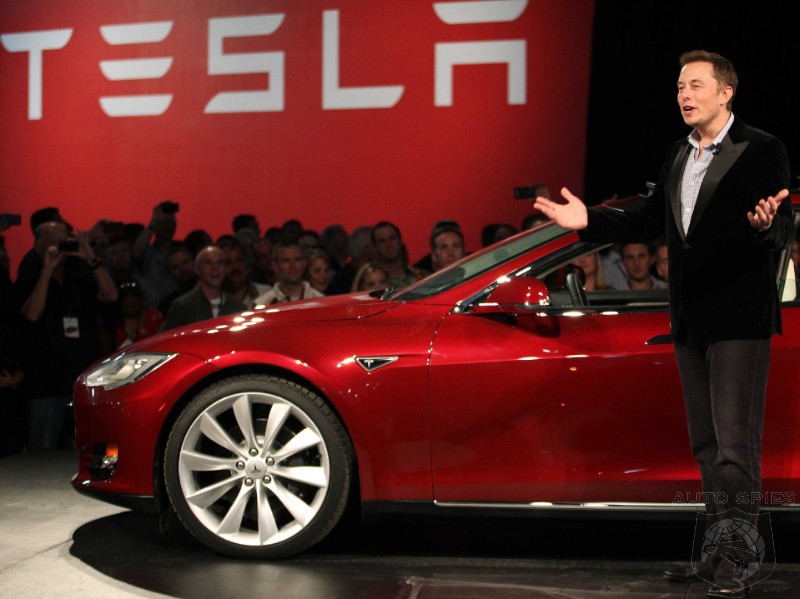
Tesla To Offer $1.7 Billion In Stock To Fund Model 3 Production - Do You Plan To Get In On That Action?
Tesla Motors Inc will offer up to $1.7 billion of new common stock to finance the accelerated launch of its new Model 3 electric sedan, the electric luxury car maker said on Wednesday.

Tesla shares fell 2.2 percent following the announcement, which came after the market closed. They were $206.59 in after market trading, well below the $242 a share price at which the company last issued new shares, in August 2015.

Tesla, which has posted operating losses since its initial public offering in June, 2010, said in a prospectus it expected to sell as many as 8.2 million shares at a price of $204.66 a share.


Read Article

TheSteveTheSteve - 5/19/2016 12:33:14 PM
+1 Boost
Recall my previous posts in which I stated I was wary of how Tesla conducts business, specifically in the way it obtains cash to survive. Tesla has never been profitable. They have *always* depended upon government grants and incentives, and on the stock market for the vital cash they needed to stay alive.

Today, Tesla has and alleged 388,000 Model 3 orders (400K alleged orders, less 12K alleged cancellations as recently reported in the news), and that excites the public, who (mis)understand an order to be the same as a sale. The reality is that Tesla doesn't even have the ability to deliver on those orders, unless the last of the deliveries happens in 2025 or so, using current facilities. Tesla needs more cash to built the factories to make the products to fulfill the orders, and guess what? They have no cash. They run at a loss, and always have. Their solution is to once again tap the capital markets and try to sell shares in a money-losing company in the hope that they'll raise enough money to build the factories, pay the salaries and support costs, and hopefully deliver on the orders they've taken.

I'm still wary. I deeply hope that I'm way wrong on this.


runninglogan1runninglogan1 - 5/20/2016 4:49:54 AM
+2 Boost
Steve, don't forget that Tesla loses money because of the massive capital investment Musk is making - R&D, gigantic new factories, etc. If he had settled on the Model S, Tesla would be very profitable by now. Musk is not a settler, whether that's to his peril or not only time will tell.


TheSteveTheSteve - 5/20/2016 11:19:33 AM
-1 Boost
runninglogan1 wrote “Steve, don't forget that Tesla loses money because of the massive capital investment…”


Your statement is absolutely false. You don’t understand Generally Accepted Accounting Principles (GAAP). Profit is shown on an “Income Statement”, also called a “Profit And Loss Statement”. The formula for an Income Statement is: Revenue (from sales) – Cost of Goods Sold – Operating Expenses – Related Interest – Related Taxes = Net Income (or Loss). Tesla’s Income Statement has always been running at a loss, historically at a rate of about $4,000 per vehicle, and most recently at about $18,000 per vehicle.

Money received from the sale of shares is not a Revenue item, and so it does not affect the Incomes Statement. Similarly, Capital Expenditures, such as the money it takes to invest in a factory or other infrastructure, DO NOT appear in the Income Statement, therefore they DO NOT affect profit. In laymen’s terms: The money Tesla spends on building a factory DOES NOT affect profit. Fact. Period.

Therefore, your statement “Tesla loses money because of the massive capital investment” is completely invalid from an accounting perspective, related to an Income Statement (Profit and Loss Statement), which is what the world uses to determine a company’s profit and loss. The fact is that Tesla loses money (generates a financial Loss) because their Cost Of Goods Sold and related expenses exceed the Revenue they make from sales. Fact. Period.

Capital Expenditures, such investments in a factory and other infrastructure, do affect cash flow, but they appear in a Balance Sheet. The formula for a Balance Sheet is: Assets = Liabilities + Owners’ Equity. The Assets category includes things such as Cash (of which Tesla has virtually none), Equipment (including the factory), Inventory, and Accounts Receivable. The Liabilities category includes Accounts Payable, Long Term Debt, and other Debts. By the way, Tesla has HUGE debts!

This concludes the lesson of why Tesla does indeed lose money (i.e., they make a financial LOSS), and it has nothing to do with capital investment (building factories).


runninglogan1runninglogan1 - 5/20/2016 1:10:12 PM
-1 Boost
Sorry Steve but my statement is absolutely right. Don't have time to explain but check this out if you like:

http://www.fool.com/investing/general/2016/03/27/how-tesla-motors-could-be-profitable-if-it-wanted.aspx


TheSteveTheSteve - 5/20/2016 2:43:40 PM
+1 Boost
runninglogan1: The article you cite is also wrong. It states “The reason why those attention-grabbing figures are misleading is that they include operating expenses, which includes all of the investments that the company is making to fund future growth.”

Any bookkeeper who’s worth their weight in sand (let alone a genuine accountant) will tell you as I have, that Generally Accepted Accounting Principles (GAAP, that translated into REAL ACCOUNTING, for laymen such as yourself), dictate “operating expenses” are completing different from “investments that the company is making to fund future growth”, and that’s why they are treated differently in accounting. Expenses contribute to the P&L (Profit and Loss Statement), while investments do not. Investments, commonly called Capital Expenditures, appear in a Balance Sheet.

You, and the article you cite, simply don’t know the most basic principles of accounting, and how profit/loss are calculated. You’re mixing up profit/loss with cash flow and capital expenditure, and you therefore arrive at a totally erroneous conclusion. And your lack of the most basic understanding of accounting betrays you, in that you cannot even see the errors of thought.

But hey, you get to believe whatever you want. You’re entitled to that!


TheSteveTheSteve - 5/20/2016 3:08:31 PM
+1 Boost
For runninglogan1 and anyone else who is getting mixed up as he is…

This example will hopefully help you understand profit and loss, as well as capital expenditures, and how they are different. It reflects Tesla’s reality.

Dave runs a lemonade stand. He sells each glass of lemonade for 10 cents. The lemons, water, sugar cost him 5 cents per glass, but he also has to pay Becky, the server, an agreed-upon price of 6 cents per glass that she sells. The formula for profit and loss is:
Revenue: 10c
-Cost of goods sold: 5c (lemons, water, sugar)
-Labor expense: 6c (Becky)
=LOSS: 1c per glass.

Dave manages to sell 100 glasses of lemonade, so his revenue, cost, and expenses, are all multiplied by 100, resulting is a $1 (100 cents) total loss. The more he sells, the more he loses. Simple math.

Dave is so sure that his company will one day make a huge profit, that he wants to build a store to manufacture and sell lemonade on a greater scale. Unfortunately, Dave has no money (he’s operating at a loss), but he’s an outstanding visionary, so he convinced 100 people to each invest $1,000 in their company. This does NOT affect his profit and loss. The way this shows up on his accounting books is in his Balance Sheet:
Assets (cash): +$100,000 (debit)
Liability (the part of the company he now owes to the shareholders): +$100,000 (credit)

Dave now takes the $100,000 in cash, and spends it all to build his building. The accounting for this is as follows:
Assets (cash): -$100,000 (credit)
Assets (building): +$100,000 (credit)
He has simply converted one type of asset to another, so total assets are unchanged. Also, his Income Statement, which states his loss, is also unchanged.

The fact is that Dave is operating at a loss, and always has. This is true even though he has borrowed money to build a store. His HOPE is that his new store might, someday in the future, allow him to operate more profitably. That’s the hope. Still, for the time being, the reality is that Dave operates at a loss, and he has no spare cash to invest, and he must borrow money (from creditors or the stock market), to finance his capital investment in building his store.

Simple accounting. But you, the reader, get to believe whatever you want!


TheSteveTheSteve - 5/20/2016 3:11:14 PM
+1 Boost
^^^
Correction for above: "Assets (building): +$100,000 (credit)" should read
"Assets (building): +$100,000 (DEBIT)"


ricks0mericks0me - 5/19/2016 3:27:01 PM
+3 Boost
Tesla To Offer $1.7 Billion In Stock To Fund Model 3 Production - Do You Plan To Get In On That Action?

I plan to run in the opposite direction as fast as possible. See the above comments.


supermotosupermoto - 5/19/2016 4:47:29 PM
+1 Boost
$1.7 billion is not even enough to fund their annual cash burn rate (last 12 months = $2.1 billion). Look for another equity offering in a few quarters.

It's going to be fun to watch their Accumulated Deficit of $2.6 billion fly through the roof.


MDarringerMDarringer - 5/19/2016 7:56:09 PM
+1 Boost
Yeah buy in now and when they do the next offering, watch your stock price collapse or worse if they go belly up--very likely--you lose it all.


mplsmpls - 5/20/2016 6:41:34 PM
+1 Boost
Who in their right mind would invest ? This is pure 'fools gold' !!!


MDarringerMDarringer - 5/20/2016 9:16:33 PM
+1 Boost
amen


40flash40flash - 5/20/2016 9:53:15 PM
+1 Boost
So then.... Would you consider shorting Tesla stock?


Copyright 2026 AutoSpies.com, LLC