The Tipping Point? Analysts Says EV's Will Be Less Expensive Than Traditional Powerplants By 2030
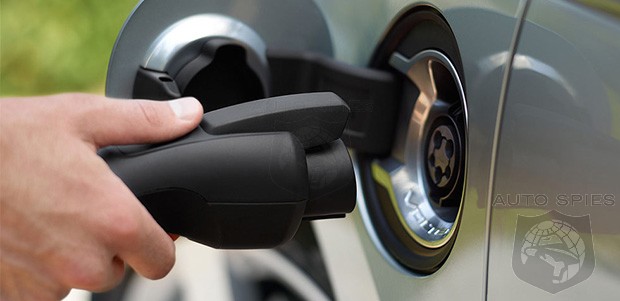
The Tipping Point? Analysts Says EV's Will Be Less Expensive Than Traditional Powerplants By 2030

Electric cars currently make up a small percentage of new car sales, and part of the reason for that is the premium buyers often have to pay over gasoline or diesel cars for EVs. Government incentives (when available) help in that area, but when will electric cars simply cost the same as their internal-combustion counterparts?

Very soon, according to MIT Technology Review. Citing multiple reports from Bloomberg New Energy Finance, it claims electric cars will actually become cheaper than internal combustion ones by 2030. The key is an expected increase in the number of battery factories, which will boost production capacity—and thus provide the economies of scale needed to make batteries cheaper.


Read Article

vdivvdiv - 5/25/2017 11:27:17 AM
0 Boost
Fewer moving parts. If you look at the component count of a single printed circuit board there can be hundreds of parts :)

The thing about lithium and coal is nonsense. Lithium is as abundant as salt and just like the lead in your 12V battery it can be fully recycled. Electricity is being produced by myriads of ways other than burning coal.


TheSteveTheSteve - 5/25/2017 12:37:58 PM
+1 Boost
At some point, EVs will be cheaper to buy and operate than today's ICEs, and they might even have longer range and 6-hour recharging from empty to full. Someday, we might have an electrical power grid that's actually clean, as compared to today's North American grid that generates 2/3 of its power from burning stuff, like coal, natural gas, and even oil and garbage.

That day is not here, now, but I look forward to its arrival!


HenryNHenryN - 5/25/2017 1:05:17 PM
-7 Boost
Germany already achieved 85% renewable energy mark this month

https://cleantechnica.com/2017/05/08/germany-breaks-solar-record-gets-85-electricity-renewables/

The major enemies for the US renewable energy are the stubborn fossil fuel mindset and the corrupt executive branch backed by the oil industry. As history often reminds us, it will take another crisis for the US to wake up. With both Europe and China already far ahead in this front, the US may have missed the opportunity to be a leader.

If not for Tesla, the EV industry would continue to be dominated by hybrids. With much progress in the last couple of years, there is bright future for EVs - even with the US Big 3 sitting out (the Bolt so far has been a sales failure, Ford is too slow in its EV development and Chrysler is no longer an American entity).


Vette71Vette71 - 5/25/2017 1:40:59 PM
+1 Boost
ON ONE SINGLE DAY with lots of sunshine (unusual for Germany) they got to 85%. One day does not make a trend. Indeed, as Germany found out as they started to shut down their nukes, they had to build a lot of backup natural gas plants to guarantee continuous sources of electricity. The CO2 levels in the country stopped declining and are now at record levels.


HenryNHenryN - 5/25/2017 1:52:13 PM
-6 Boost
That's one day mark - but a remarkable achievement nonetheless, and it did not get there by chance of a sunny day.

German TOTAL renewable energy has been steadily increasing in the last 15 years https://en.wikipedia.org/wiki/Renewable_energy_in_Germany


F1_DriverF1_Driver - 5/25/2017 2:38:01 PM
+8 Boost
I think you mean to say if not for Nissan and the EV for the masses Leaf.


HenryNHenryN - 5/25/2017 3:33:47 PM
-5 Boost
@F1_Driver: The Leaf is a decent EV, but it did not move my pulse one bit. For an economy car, its sales is anemic at best and it has no chance in changing the ICE auto industry.

Tesla is a game changer. It speeds up the adoption pace of EV, and it drives major automakers especially the German into strategic plans for EV. Three or four years ago, nobody would believe that EV sales would reach 1M unit marks by 2020 (total from all major makers). That number now is realistic and could arrive even earlier if Tesla can execute on its plan.


SanJoseDriverSanJoseDriver - 5/25/2017 1:13:06 PM
-4 Boost
2030??? I would say 2025 at the latest for all companies, and 2020 for companies that can hit ~$100 per KWh by then. If you factor in maintenance and cost of electricity vs gas, an EV is already less expensive than an ICE to a consumer over its lifespan.


MorePowerMorePower - 5/26/2017 6:57:43 AM
+3 Boost
By 2030, most people probably will not be driving their own cars.


SanJoseDriverSanJoseDriver - 5/29/2017 3:44:33 PM
+1 Boost
Agreed


Copyright 2026 AutoSpies.com, LLC