EV Vehicles Require Less Labor - German Unions Fear 75,000 Jobs Are At Risk
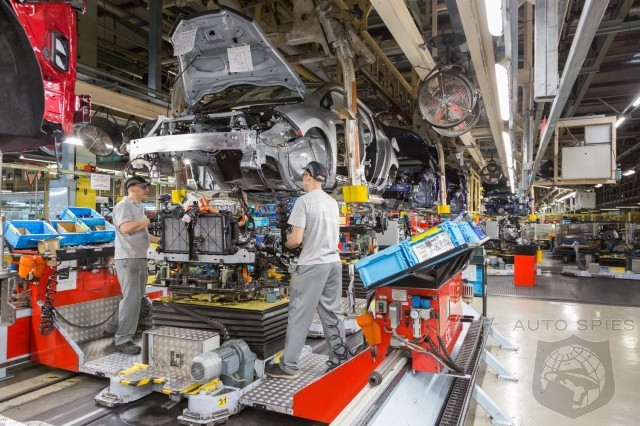
EV Vehicles Require Less Labor - German Unions Fear 75,000 Jobs Are At Risk
The German automotive labor unions have been fearing the electric revolution for a while now – claiming that it could lead to job losses.

They have now released a new study that claims that 75,000 jobs could be lost as the industry switches to electric vehicles.

IG Metall, Germany’s biggest trade union, commissioned the study from the Fraunhofer Institute of Industrial Engineering and it was reportedly based on data provided by Daimler, BMW, and Volkswagen.

Read Article

MDarringerMDarringer - 6/5/2018 6:14:04 PM
0 Boost
The greedy unions will find some way to become even greedier just watch.


qwertyfla1qwertyfla1 - 6/5/2018 8:34:06 PM
0 Boost
The only thing Unions (Dog Fuckers United) care about is extracting more mafia extortion money from the membership so yes they would object to tech that reduces the "marks" employment numbers or dissipates jobs.

Unions were needed 100 years ago but no longer with modern day labor legislation and safety regulations. Time to purge this business cancer vermin to the history books and let the people keep more of their money rather than pay the bloated 6 figure salaries of the Union Executive slime that pretend to give a shit about the workers...


TomMTomM - 6/6/2018 1:14:58 AM
+3 Boost
THere remains a real problem for EVS - and that is Infrastructure.
WE still do not have even remotely enough Electric generation capacity to power even 10% of the cars with electricity in the USA - and they have even less extra capacity in Europe. In addition - we will need a way to easily charge the cars that is public - in city areas where people do not even have a designated parking spot much less a garage for their cars.

ALL of this is going to create jobs. While production may require less people - automation was going to happen even in ICE vehicles anyway - that is the purpose of the Scalable Platform production model - implementation of EVS on a large scale will take large numbers of new workers in other areas. As I have pointed out in the past - permits to build new electric generation plants can take 20 years to get through the various challenges. SO - it will take a lot longer for a conversion to EV use than many people imagine.

Obviously - Battery technology that can be charged must faster must also become available. I once expected that Battery Packs themselves might be "exchanged" in some way to make this possible. However - even 20 minute charging times become a problem when you must stand in line for a connection to a charger.


vdivvdiv - 6/6/2018 1:52:23 PM
0 Boost
Who's WE Tom? PJM has a 28% reserve margin (16% required), so much that 3.8 GW of old plants are being retired throughout. That's accelerating as extra capacity from renewable sources are pushing the prices down and giving the nukes such a hard time that they are now begging to be saved. Wind is growing in the Midwest and Texas like mushrooms. Solar out west supplemented by battery storage is now flattening the duck curve and leaving hydro with extra capacity when needed.

A third of the vehicles on the road can be converted to electric today without the need of any extra grid capacity. No danger of that happening as the grid evolves regardless.

The charging infrastructure is lacking you say. Have you ever heard of the Supercharger network? Destination charging? EVs that charge at home and at work, have 250+ mile range? What about Electrify America? EVgo? ChargePoint? Blink? Greenlots? EV Connect? SemaConnect? What do you think all of these guys are doing?

Battery swapping doesn't work, it was proven once by Better Place, and a second time by Tesla. It makes no sense, it doesn't scale, and it's not all that fast assuming queuing times when one can supercharge.

It's all doom and gloom, right? Let's go back to "clean" diesel, or riding donkies, whatever you prefer.


Copyright 2026 AutoSpies.com, LLC