Study Reveals What You Should Have Know All Along - Cold Weather Kills EV Range
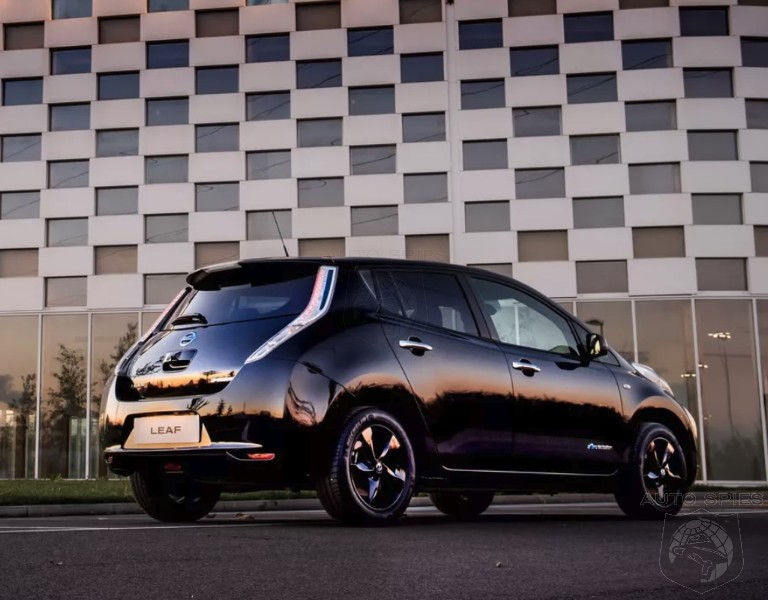
Study Reveals What You Should Have Know All Along - Cold Weather Kills EV Range

Electric cars are the future, whether you like it or not, though if they are our future they’re going to need to get a lot better than they are today. The batteries, in particular, aren’t good enough, the latest confirmation of this coming in a AAA study released today. Electric cars’ range falls by nearly half on average in temperatures under 20 degrees, according to the study, a number big enough to spook some buyers I’d think.

AAA tested five cars: the a 2018 Nissan Leaf, a 2018 BMW i3s, a 2018 Chevy Bolt, a 2017 Tesla Model S 75D, and a 2017 Volkswagen e-Golf. The average loss of range on all the cars was 41 percent in very cold conditions, primarily due to the heating system using up so much power. AAA also measured a corresponding affect in 95-degree heat because of air-conditioner use, but that effect was smaller, or 17 percent of the car’s range.


Read Article

SanJoseDriverSanJoseDriver - 2/10/2019 10:06:50 PM
-5 Boost
Your right to privacy disappeared a long time ago.


rockreidrockreid - 2/8/2019 12:59:10 PM
-1 Boost
I notice the drop in range with my Tesla Model 3 in this cold winter up here.

Instead of getting my usual 130 mpg-e during most of the year, I am now just getting about 70-80mpg-e.

So sad.


SanJoseDriverSanJoseDriver - 2/10/2019 10:09:54 PM
-5 Boost
I noticed about a 33% impact driving in 33 degree weather, uphill, heater on, at 65mph. Not too bad at all.


TheSteveTheSteve - 2/8/2019 2:36:47 PM
+3 Boost
Here are some undisputable EV facts:

…Today’s EVs have limitations that put off many gassers. They include a relatively short range, relatively long recharge time, significant cold-weather range reduction, and unknown battery life. Also, recharging points might not exist where you need them.

…Even with these limitations, EVs meet the needs of some drivers today.

…Battery tech is improving dramatically. For example, a specific (experimental) solid-state battery technology alleges it has 2x to 3x the driving range per battery pound, recharges from flat to full in about 10 minutes, is much less susceptible to ambient temperatures (i.e., freezing winter does not mean significantly less range), and expected to have a lifetime of around 60 years. The cost is about 1/2 of today’s Lithium-Ion batteries, and without the need for exotic or toxic materials. If these allegations prove to be true, then these new batteries would surely change the EV landscape in a big way. That’s a big IF, though.

…The biggest point most people still miss is: Why an EV? If your goal is to reduce emissions, then you must factor in how your electricity is generated. Across all of the United States, roughly 70% of all electricity is still generated by burning stuff, typically fossil fuels, and in some cases, even garbage. You can’t ignore this, because if your “clean” EV is getting its electricity from a coal-fired generating station, then your EV’s actual emissions (including electrical generation) are higher per mile than a current diesel SUV (with DEF and DPF in good working order). That’s a “holy shit” realization. Until we generate electricity more cleanly, we’re ignoring the elephant in the room.

So EVs *might* be the future. Maybe. If they are, then those future EVs certainly won’t be the kind of EVs rolling off production lines today.


SanJoseDriverSanJoseDriver - 2/10/2019 10:10:38 PM
-6 Boost
Look up the California energy mix. Also, producing energy from coal is still more efficient than an ICE.


hangtime010hangtime010 - 2/11/2019 9:43:15 AM
-6 Boost
It must be nice to have a fully charged and a pre-heated car every morning all ready for your daily drive, rather than spend 5 minutes outside in the frigid cold filling up.
ICE cars also have increased fuel consumption which is rarely touched on since it's such a normal part of life.


TheSteveTheSteve - 3/3/2019 12:30:21 AM
+1 Boost
Typical EV range reduction in frigid weather: 25%

That means you'd need >> 33% << more electricity to travel the same distance. While ICE vehicles become less efficient in frigid weather, they DON'T need 33% more fuel to move you the same distance. You *might* see as much as 20% higher consumption in an ICE, depending on engine and how severely cold the weather is.


mini22mini22 - 2/12/2019 1:44:02 AM
+1 Boost
Well if you re-program the I3 you would basically have the same vehicle that is sold in Europe. There until the 2019 year the range extender(Rex)was programmed to kick in once the battery juice was below 75%. However CARB in the US said in order to classified a true EV the Rex had to be programmed to kick in after the battery drained all the way down to 6%. It is much easier to keep a battery charged when it still has most of its juice than having to wait for the juice to come up. With the the reprogramming you can always gas up the Rex to keep the I3 battery going at 75 plus %. That gives it an advantage over most EV vehicles.


Copyright 2026 AutoSpies.com, LLC