Electric Vehicle Battery Fires STILL Difficult To Manage For Local Fire Departments
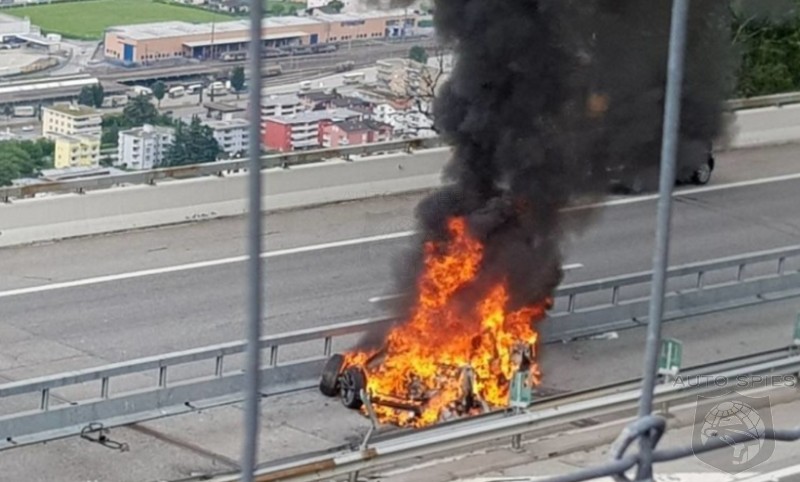
Electric Vehicle Battery Fires STILL Difficult To Manage For Local Fire Departments

Although electric vehicles (EVs) have been around for a bit of time now, it seems that they're not without their problems. Namely, how to stop a battery fire once it's gotten some traction.

Unfortunately, it seems like the problem can be solved either one of two ways — at this point: 1) Douse it with literally thousands of gallons of water; or, 2) Wait for it to burn out.

Considering that there are quite a few EVs on the road today, option two doesn't seem particularly realistic given that some battery fires can last up to 24 hours. So, I guess we should just close off all roads where an accident has occurred for up to a day?

If that were to happen outside of the Lincoln Tunnel or another major artery, we're talking about a lot of folks impacted. Having said that, I just wanted to share this Bloomberg story that actually discusses major issues with EVs and local fire departments that have to deal with them when they get wrecked.

I had thought these were non-issues today. Apparently not.


After an out-of-control Tesla Model S plowed into a stand of palm trees on a highway median outside Fort Lauderdale last month, police rushed to put out the ensuing blaze using a department-issued fire extinguisher. It was a wasted effort. The car kept on burning after the crash, which killed the driver.

The police may not have known lithium-ion batteries inside electric vehicles, once ignited, can’t be put out with chemicals from a conventional extinguisher. The battery fires are susceptible to a self-destructive chain reaction known as thermal runaway, causing a feedback loop of rising temperatures. The Tesla fire stumped a series of first responders in Florida. Firefighters eventually doused the flames with water, which seemed to work, but the wrecked car reignited twice more after being towed away. That prompted what a police report later termed “extraordinary measures,” including a call to Broward County’s hazmat unit for advice on stamping out the fire once and for all...


Read Article

ricks0mericks0me - 3/31/2019 6:16:42 PM
+5 Boost
These guys should be there to help since they fan the flames >>> Elon , San Jose Driver, EVisNow, rockreid


mre30mre30 - 3/31/2019 6:53:06 PM
+5 Boost
Tesla's are a hazard - pure and simple.

The sad thing is...over the current lifespan of Tesla, there have been about 550,000+ vehicles delivered (2,450-Roadsters; 265,000- Model S; 125,000 - Model X; and over 150,000 - Model 3).

Although there have been some fires so far when the Tesla battery compartments have been breached mostly during catastrophic traffic accidents, I postulate that about 50% of those 550,000 Tesla's will also suffer battery breaches (and thus fires) in the next 25 years as they get scrapped.

That means that if somebody just abandons or parks their Tesla Model 3/S/X when it stops working (perhaps because Tesla when t*ts-up and parts/tech is no longer available) and it is worthless, many of those improperly abandoned Tesla's will likely become fireballs at some point. Truly Horrifying to think about.

IMO there is no exit strategy for Tesla because I think there will be gigantic future product liabilities as these things deteriorate.


martinwinlowmartinwinlow - 4/1/2019 4:07:46 AM
-4 Boost
Utterly ignorant tripe.

Clearly, you are unaware of the tens of thousands of internal combustion engine-powered car fires that happen every year in the US alone, many of which result in *INSTANT* conflagration of the vehicle and its occupants (due to the petrol tank exploding on impact) and which account for some 350 deaths.

All bar 2 of the instances where Teslas have 'caught fire' have been post-exceptionally traumatic collisions where the battery pack has been split open. In the very first widely publicised instance where a towbar hitch had been run over and punctured the battery pack, it took 20 minutes for the fire to become an issue, giving the driver plenty of time to safely park his vehicle and exit it. Even in extreme collision situations, the batteries take some time to start burning (even if that is only a minute or so) which is still a far better scenario than a ruptured petrol tank where the fire is as all-encompassing as it is instant.

Battery packs are the single most expensive component in an EV and have very useful lives after they become impractical to use in an EV (due to capacity/range reduction - typically at about 70% of new capacity). There is already a burgeoning market in re-using them for stationary storage especially in conjunction with micro-generation. Ergo, EVs' battery packs are simply *never* just going to sit around like a dumped ICEV does when it (moronic) owner has done with it and it's going to cost more to scrap it than it is worth as scrap.


ricks0mericks0me - 3/31/2019 8:26:10 PM
+1 Boost
mre30: I agree with you except for the exit strategy. It's call bankruptcy. Takata (airbags) went down that road.

With all of these EV's set to come to market, will other mfg's have this problem?


mre30mre30 - 4/1/2019 9:01:52 AM
+1 Boost
My point exactly - Tesla's most likely future state is bankruptcy because no other company will end up touching it in its current form.


martinwinlowmartinwinlow - 4/1/2019 3:37:58 AM
-4 Boost
This is complete claptrap. The obvious third option is to dunk the car in a tank with about a foot of water in it. This is an industry standard method of making safe EVs when its battery has been compromised by crash-damage. Simple, no drama - but where's the FAKE NEWS click-bait in that?


ricegfricegf - 4/1/2019 8:24:04 AM
-1 Boost
It's obvious the local fire department's training plan is outdated, since they had no idea how to deal with an electric vehicle fire. Now that EVs number in the millions worldwide, with sales growing over 60% per year, it's time to add EV fires to the training manual!


mre30mre30 - 4/2/2019 7:05:01 AM
+1 Boost
The improperly junked ones will be doing that decades into the future, most likely.


Copyright 2026 AutoSpies.com, LLC