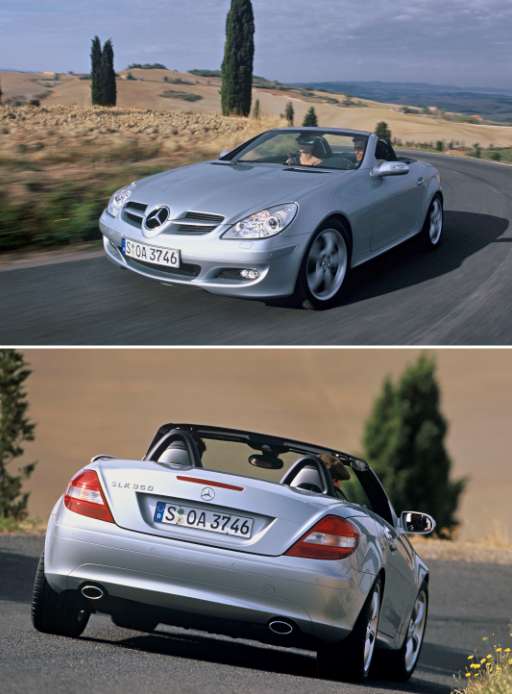
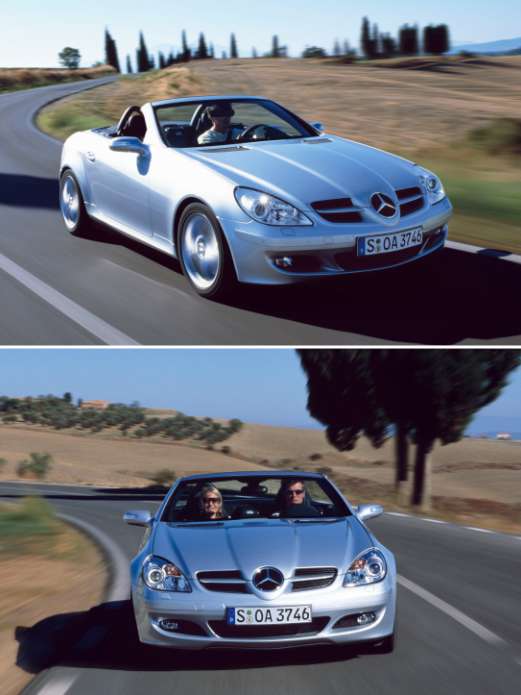
Sleeker New SLK Opens Up
SLK review…source Autobild
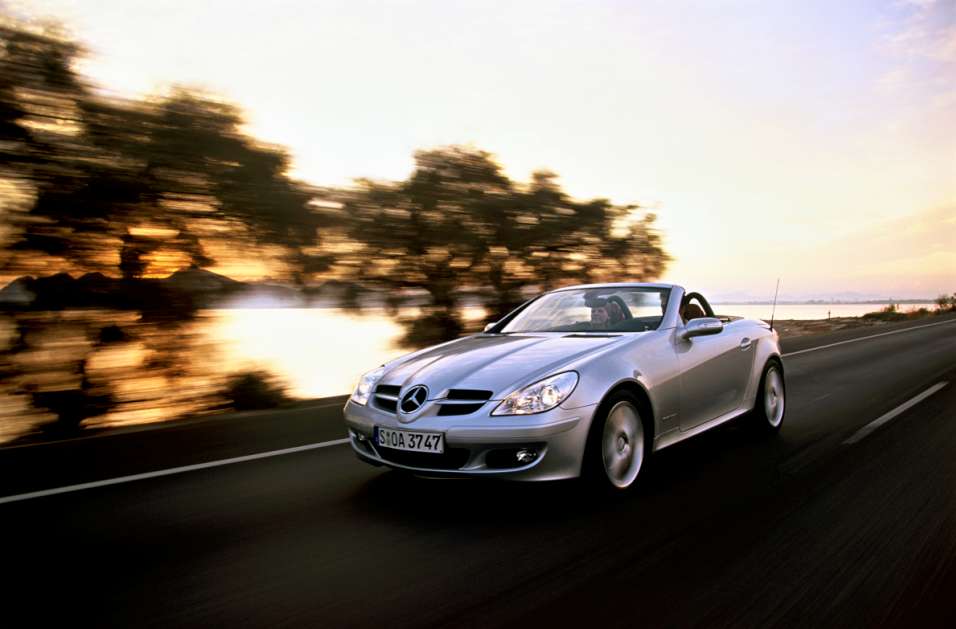
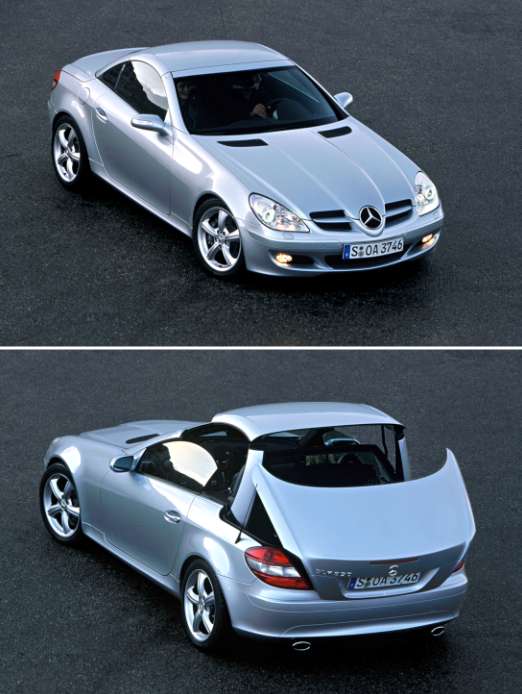
The Mercedes SLK-style folding roof has become something of a legend in motoring folklore. It's spawned imitators ranging from the Peugeot 206 CC to its own bigger sister, the SL. Today, the coupé-cabriolet theme is emerging as one of the biggest growth areas for new cars - and the latest folding tin-top to emerge is... the Mercedes SLK.
The all-new version of the popular roadster goes on sale here late in the summer, and replaces the current model, which has been around since 1996. It's completely new, and Mercedes says it will address some of the dynamic issues that blighted the original car, which was often criticized for its lumpy ride and wooden steering.
We drove one of the first cars off the production line to put the firm's claims to the test. Our model was an entry-level German spec SLK 200 - the UK version arrives in the autumn. Brits will get the mid-range SLK 350 first, followed by the 200 and 55 AMG. But with a price of around £27,000, the SLK 200 is expected to sell best in Britain, Europe's strongest market for convertibles despite our poor climate.
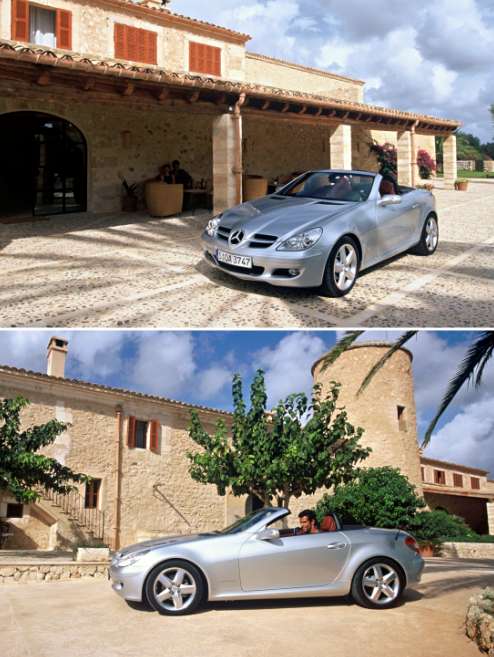
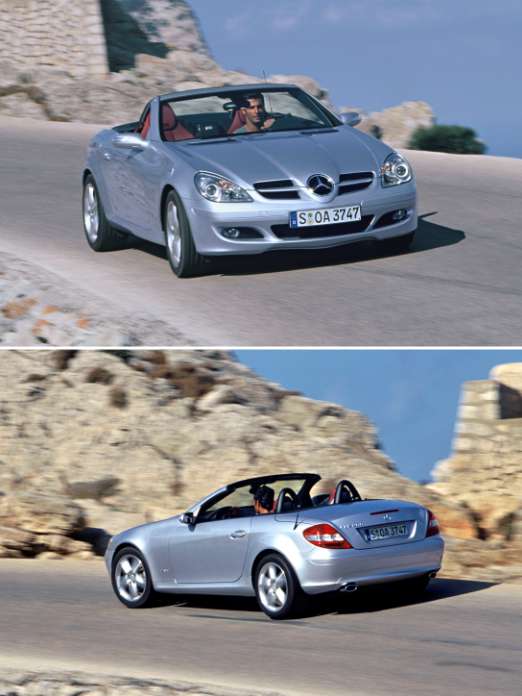
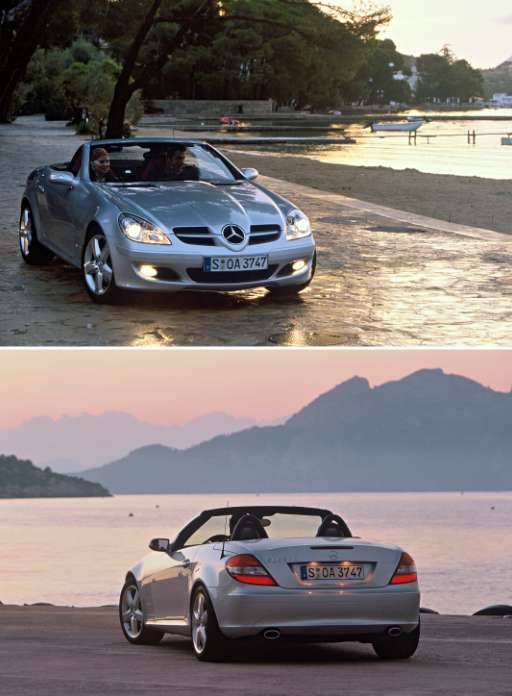
In the metal, the newcomer looks bold, neat and compact, but the inspiration of more extreme Mercs is evident. The nose is practically a scale replica of the McLaren SLR supercar's, while the rear has a hint of mini SL.
The cabin is a mix of formal and stylish. Vastly improved, it features a large centre console with stereo, sat-nav and electric roof controls. You sit low in the cabin, with an outstretched, but comfortable, driving position. With the roof up, it feels a touch claustrophobic, but it's well insulated.
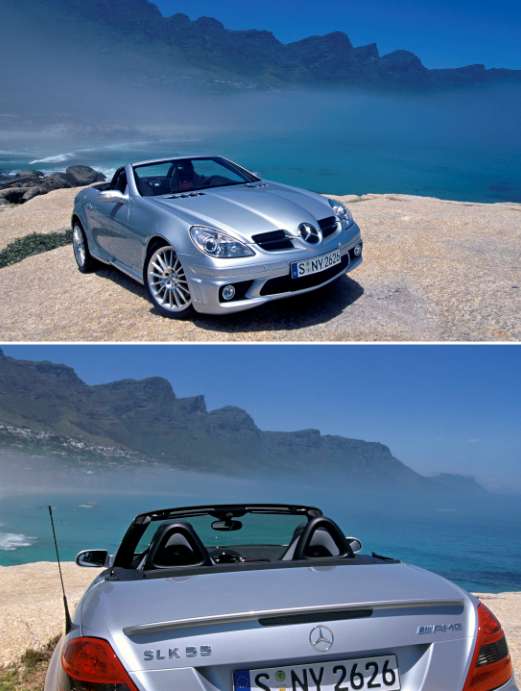
Turn the dial alongside the gearknob and the roof whirrs down into the rear tonneau with near-silent efficiency, completing the switch from tin-top to open-air in 22 seconds. The stowed roof takes up about a third of the boot space, but even with the lid down there's 208 litres of load area - 64 more than the old car had with the roof up! There's nothing new about the 200's 1.8-litre supercharged engine, though, which is carried over from the previous car. It delivers a fairly modest 163bhp, but power delivery is smooth and acceleration surprisingly lively.
Where Mercedes has made serious improvements is with the six-speed manual gearbox. The clumsy, vague shift has been replaced by one with more lightness and precision, which boosts the SLK's driver appeal. This has been further enhanced by a new chassis, which is far more supple, offering added grip and poise through bends. The electric power-steering still isn't great, though, and could do with feeling weightier at speed. Buyers will also be able to specify a new option called Airscarf, which directs a stream of warm air around occupants' necks.
Mercedes has also gone for safety in a big way with the new car. It gets upper and lower seat airbags along with those in the dashboard, while all models will come with ESP and Brake Assist driver aids as standard.
Bearing in mind how popular the old SLK was despite its compromised dynamics, we reckon the new one will be even more of a hit. Perhaps sales are about to go through the roof?