
Porsche GT3 Cup
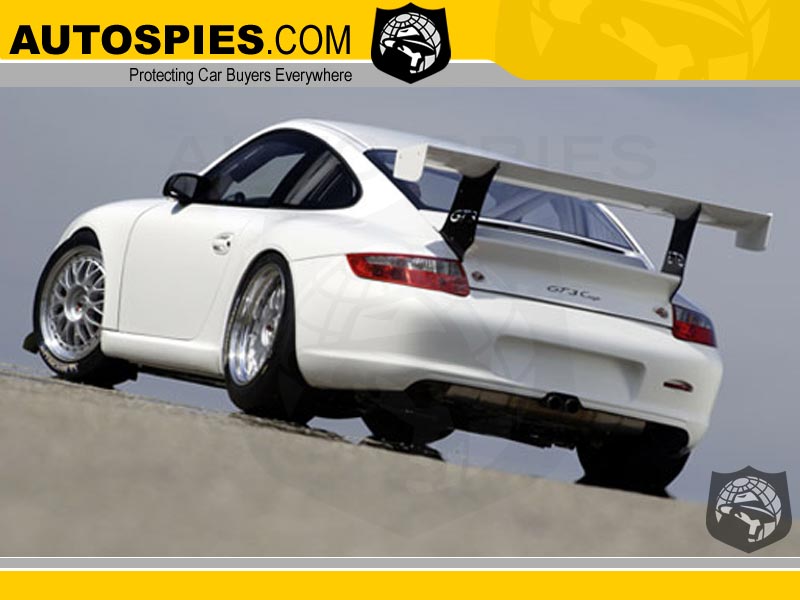
In the line-up for 2005: The new 911 GT3 Cup.
After the public presentation of the new 911 Carrera, we are now pleased to unveil the first racing version of this sports car. The 911 GT3 Cup 2005 is intended as a near-series vehicle for racing by customers and will initially compete exclusively in the Porsche Michelin Supercup in 2005.
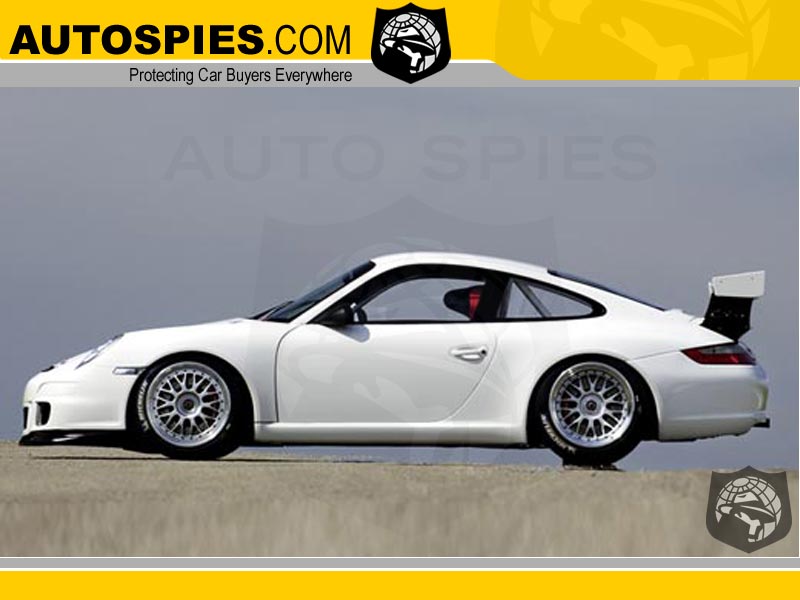
The GT3 Cup 2005 features a sequential transmission with interruption of tractive power which enables upshifting at full throttle. The chassis has been revised for even greater precision and further enhanced driving dynamics. And for the first time, Porsche is deploying the revolutionary Porsche Ceramic Composite Brake (PCCB) in motor racing.
The engine: As lively as they come.
The necessary thrust for racing is supplied by the enhanced six-cylinder horizontally opposed 3.6 liter engine, which has provided the basis for successful near-series motor racing at Porsche for six years now, combining exceptionally lively performance with spontaneous power development.
The forged pistons, the titanium connecting rods and the valve drive have been produced in uncompromising lightweight design, employing high-strength materials and sophisticated manufacturing processes. The absence of a vibration balancer on the crankshaft enables a two kilogram reduction in rotating masses, which also contributes to the engine's lively performance.
A dry sump lubrication system with separate oil tank ensures optimum supply of the engine with oil, even at extreme acceleration rates.
• water cooled flat six-cylinder boxer engine
• 3,598 cc, stroke 76.4 mm, bore 100 mm diameter
• max. power: 294 kW (400 BHP) at 7,300 rpm
• max. torque: 400 Nm at 6,500 rpm
• max. rpm: 8,200 rpm
• dry-sump lubrication
• two-stage resonance intake manifold, central inlet air duct
• electronic engine management system MS 3.1
• race exhaust system with lambda-probe-equipped catalytic converter
The bodywork: Downforce improved, weight reduced.
In modifying the classic lines of the 911's body for use on the race track, the primary focus was on attaining high negative lift, low weight and the best possible cooling of the racing engine and transmission.
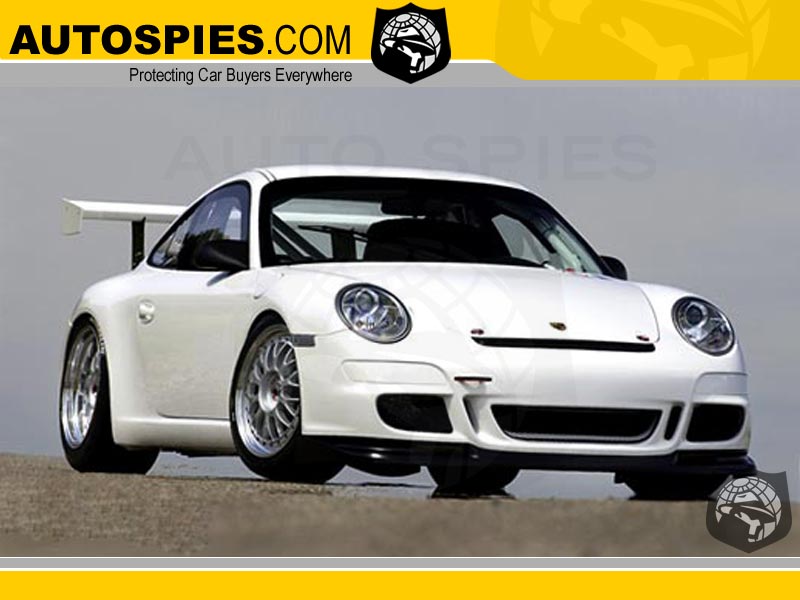
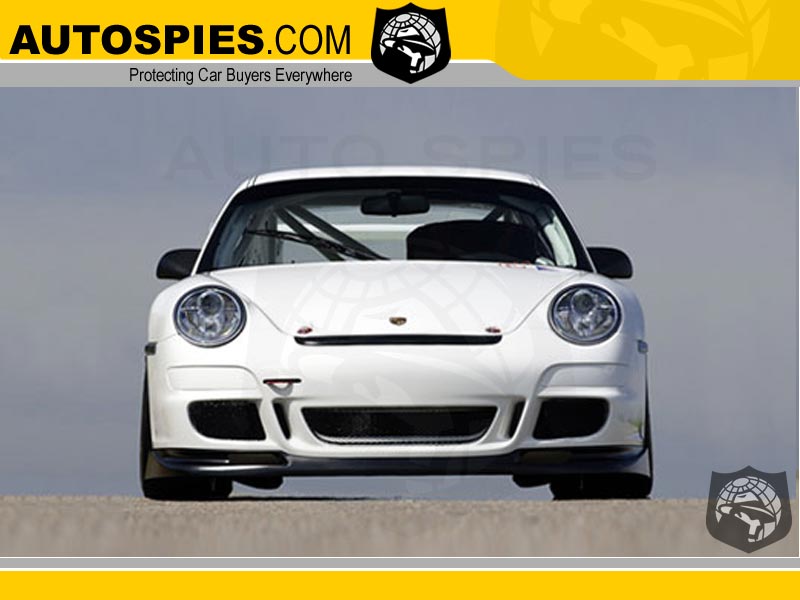
Numerous points of details have been revised to optimize the body for racing. The exhaust air from the center radiator at the front of the vehicle is discharged upwards in front of the luggage compartment lid, for example. The wheel house liners in the front wings incorporate openings which channel air to the brake system.
In developing the latest Cup Carrera, the motor racing department accorded priority to a lightweight body despite a 46 millimeter increase in the width of the vehicle's rear section, and to ensuring high rigidity and optimum safety. The welded-in seamless tubular steel safety cage meets all FIA requirements.
The doors, the rear lid and the rear apron are produced in a composite carbon fiber material; the door windows, side windows and rear window are made of plastic.
• self-supporting bodyshell made out of galvanized sheet steel
• carbon fiber doors with window frame and plastic rear-view mirrors
• carbon fiber rear lid with adjustable rear wing
• welded-in roll cage
• air jack system
• aerodynamically optimized front bumper and front spoiler edge
• carbon fiber rear bumper
• racing seat (driver side only) with fire retardant upholstery
• six-point seat belt
• removable steering wheel (with quick-release coupling)
• electric fire extinguishing system
• 16.9 gallon fuel tank
• Vehicle Weight: approx. 2,535 lbs.
The power train: Gear-shifting at full throttle.
Drawing on the experience which it has acquired with sequential transmissions in international Gran Turismo competitions, Porsche is now deploying this type of transmission in a Porsche Manufacturer's Cup for the first time in the new 911 GT3 Cup.
The new Cup Carrera's sequential six-speed constant-mesh countershaft transmission features a shift force sensor for the interruption of tractive power. This solution enables fast upshifting at full throttle and offers minimal shifting times while at the same time reliably protecting the transmission from incorrect operation. The close-stepped gearing ensures that the engine's maximum power range is available at all times. Weight has also been saved in the area of power transmission by adapting the gear sets precisely to the engine power and by using a 5.5" three-disk sintered metal clutch with low rotational mass. As on the predecessor model, the transmission is cooled by an oil-water heat exchanger.
• six-speed sequential dog-type gearbox
• pressure-oil lubrication
• oil-water heat exchanger
• single-mass flywheel
• hydraulic clutch center-release mechanism
• 5.5" triple-disc sintered-metal clutch
• limited slip differential 40/60 per cent
The brake system: Reduced mass, variable brake force distribution.
The 911 GT3 Cup 2005 is the first racing car to feature the Porsche Ceramic Composite Brake (PCCB), an innovation from Porsche which is absolutely unique throughout the world.
The most obvious advantage of PCCB on racing circuits is the reduction in unsprung rotating masses. This advantage results in a reduction in the weight of the 911 GT3 Cup's brake system by around 44 pounds in comparison to steel brake discs. In racing use involving numerous braking operations in quick succession from high speeds, it is particularly significant that the friction coefficient of PCCB does not diminish when the brakes are hot.
As a novelty in Manufacturer's Cup racing, the driver in the 911 GT3 Cup 2005 is able to alter the brake force distribution during the race by means of a single tree balance control. This facility does away with the need for an anti-lock brake system (ABS). This development takes account of the fact that numerous 911 GT3 Cups are used not only in the Manufacturer's Cups, but also in Gran Turismo championships worldwide in which ABS is not allowed.
• brake system with adjustable bias bar
• front aluminium six-piston calipers, single-piece
• internally vented brake discs, 380 mm diameter, race brake pads
• rear aluminium four-piston caliper, single-piece
• internally vented brake discs, 350 mm diameter, race brake pads
The suspension: A study in precision.
The suspension of the new 911 GT3 Cup essentially corresponds to that of the series production vehicle, with a McPherson front axle and the Porsche multi-link rear axle.
The wheel carriers with double clamping on the front axle, which were premiered on the more powerful 911 RSR racing car, have now been adopted on the Cup Porsche, resulting in markedly more precise wheel guidance and a subsequent improvement in driving dynamics. These wheel carriers guarantee even greater rigidity, resulting in improved response of springs and dampers. Wheel carriers from the 911 RSR are also deployed on the rear axle. Continuously adjustable stabilizers are an additional new feature on the front and rear axles.
Front axle:
• McPherson strut-type axle
• Sachs gas pressure shock absorbers
• double coil springs (main spring and helper spring)
• two-piece lower control arms for camber adjustment
• blade-type anti-roll bar
• power steering with electro-hydraulic pressure feed
• three-piece BBS center-lock aluminium rims (9J x 18), rim offset 43 mm
• Michelin rain tires (24/64-18)
Rear axle:
• multilink rear suspension with solidly mounted subframe
• Sachs gas pressure shock absorbers
• double coil springs (main spring and helper spring)
• two-piece lower control arms for camber adjustment
• reinforced, continuously variable rear axle track rod
• blade-type anti-roll bar
• three-piece BBS center-lock aluminium rims (11J x 18), rim offset 30 mm
• Michelin rain tires (27/68-18)